
Lieferung heute & morgen

Qualitätsgarantie

Willkommens-Angebote freischalten: KOSTENLOSE Lieferung | Bis zu 80 % RABATT | Kostenlose 30-Tage-JoyPlus-Testphase
App herunterladen
A robot vacuum that not only vacuums and mops but also cleans itself sounds like the ultimate household convenience. The market for these fully automated systems is growing, but so are the potential disappointments alongside the manufacturers' promises. Many devices that impress on paper turn out to be high-maintenance and inefficient in practice.
As your Joybuy Product Recommendation Officer, I'm here to help you distinguish crucial features from empty marketing promises. Before you make a purchase, you should know the three most common pitfalls that lead to frustration and unnecessary expenses.
To avoid these problems, you should focus your attention on three core technical areas. These define the true performance and convenience of a modern robot vacuum and mop.
A true all-in-one station, often marketed as a robot vacuum with an auto-empty dock and cleaning function, should do more than just empty dust. Look for the following features in a comprehensive self-cleaning mopping robot:
A robot vacuum with intelligent navigation is the foundation of autonomous operation. While LiDAR sensors (laser navigation) ensure precise room mapping, a more advanced technology is required for object recognition. Systems based on a combination of a camera and artificial intelligence (often called AIVI or similar) can detect and actively avoid small obstacles like socks, toys, or pet waste. This is an indispensable feature, especially for robot vacuums for pet hair.
High suction power, measured in Pascals (Pa), is particularly relevant for households with carpets and pets. Values over 5,000 Pa indicate strong performance. However, suction power alone is not the whole story. Pay attention to the entire system:
Based on the criteria above, we have identified a model suitable for users seeking a comprehensive, low-maintenance solution.
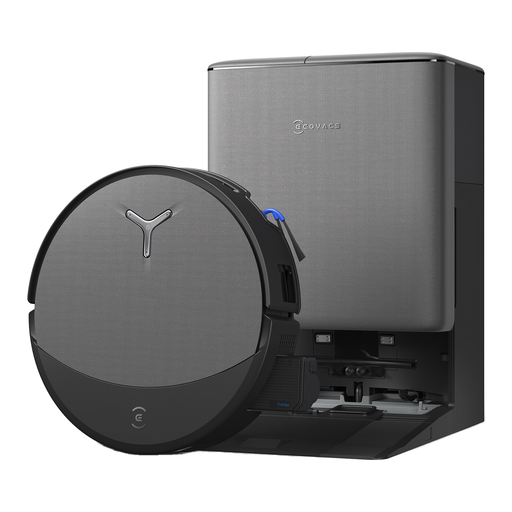
Why This Fits Their Persona: This model is designed for maximum autonomy and performance. It is suitable for large living spaces with mixed flooring (hard floors and carpets) and for households with pets that require thorough, hygienic cleaning without daily intervention.
The OMNI station provides fully automatic mop cleaning and drying. The AIVI 3D 4.0 navigation reliably detects and avoids small obstacles, while the TruEdge 3.0 system ensures thorough edge cleaning.
According to the manufacturer, the device offers a very high suction power of up to 30,000 Pa. The ZeroTangle 4.0 system minimises hair entanglement in the brush, and the TruePass Adaptive 4WD system overcomes thresholds up to 24 mm.
We have compiled a complete, up-to-date list of products that fully meet these strict selection criteria and German safety regulations.
Although the station significantly reduces daily maintenance, it is not completely maintenance-free. The fresh water tank needs to be refilled and the dirty water tank emptied, typically every one to three weeks, depending on usage. The dust bag in the station has a capacity of several weeks and needs to be replaced approximately every 30 to 60 days. Additionally, it is recommended to clean the sensors on the robot and the station with a dry cloth monthly.
Yes, provided the model has the right features. A robot vacuum for pet hair should have high suction power (over 5,000 Pa) and a brush with anti-tangle technology. Automatic carpet detection is also crucial: when the robot moves onto a carpet, it should automatically lift or retract its mopping pads to avoid wetting the carpet.
Pascal (Pa) is the physical unit for pressure and, for robot vacuums, it measures the vacuum pressure generated by the motor. A higher Pa number means stronger suction. For hard floors, 2,500–3,000 Pa is often sufficient. For deep cleaning carpets and effectively picking up pet hair, models with high suction power of 5,000 Pa or more are recommended. However, note that suction power is only one factor; the efficiency of the overall system, including brushes, filters, and navigation, is just as important for a good cleaning result.