
Lieferung heute & morgen

Qualitätsgarantie

Willkommens-Angebote freischalten: KOSTENLOSE Lieferung | Bis zu 80 % RABATT | Kostenlose 30-Tage-JoyPlus-Testphase
App herunterladen
A robot vacuum with mopping function can make everyday floor care easier, but it does not automatically replace every manual cleaning task. In homes with children, pets, hard floors and carpets in particular, it is worth taking a closer look at the technology, maintenance requirements and operating limitations. A high figure on the packaging alone says little about whether the appliance is right for your home.
Figures such as 4,000, 9,000 or 15,000 Pa describe the nominal suction power. However, they do not show on their own how well a robot copes with carpet fibres, pet hair, corners or fine dust. Brush design, filters, seals and navigation also affect the cleaning results.
If you are looking for a robot vacuum for pet hair, you should also check whether the main and side brushes can be easily cleared of hair. An apparently powerful model can become impractical if it requires a great deal of maintenance.
A self-emptying robot vacuum transfers the collected dust to a station. Depending on the design, this may use a dust bag or a bagless container. Filters, brushes, sensors and mop pads still need to be cleaned regularly.
A station with large containers means you can leave emptying it for longer. However, this does not mean that maintenance is eliminated entirely. Before buying, you should also check the space required and the distance from walls and furniture.
A robot mop usually works with a damp pad or rotating mop heads. Carpets must not be unintentionally wetted. Map functions, no-go zones and automatic mop lifting are therefore useful features, provided the model in question offers them.
For untreated wood, delicate parquet or certain laminate floors, the flooring manufacturer’s care instructions should be the deciding factor. A pad that is too wet may be unsuitable for these surfaces. For spillages, sticky residues or larger messes, a manual or corded or cordless wet and dry vacuum cleaner is often the more suitable solution.
A robot vacuum with LiDAR navigation uses a laser to create a digital map of the room. This allows it to navigate rooms more systematically, while the app often lets you set areas, cleaning sequences or no-go zones. This is particularly useful in homes with several rooms and lots of furniture.
Even so, cables, loose clothing, fragile items and small toys should be removed from the floor before starting the appliance. Obstacle detection is not equally reliable in all lighting and on all surfaces. Sensor systems may have limitations on dark carpets or near open staircases.
For robot vacuums for hard floors and carpets, multiple suction levels and a suitable brush design are useful. A lower setting is often sufficient for hard floors, while carpets may require more power. Operating noise generally increases at higher power levels.
When it comes to mopping, the following points are particularly relevant:
A robot vacuum with an auto-empty station requires a permanent position on a level, hard floor. There should be enough clearance in front of and beside the station so that the robot can dock safely. App controls can manage schedules, room cleaning, maps and virtual walls. Many models only support 2.4 GHz Wi-Fi, so this should be checked before setup.
Running costs should also be included in your calculations. These may include filters, side brushes, main brushes, mop pads and, where applicable, dust bags or cleaning solution. A larger station container can reduce the amount of hands-on maintenance, but it does not remove the need for replacement parts.
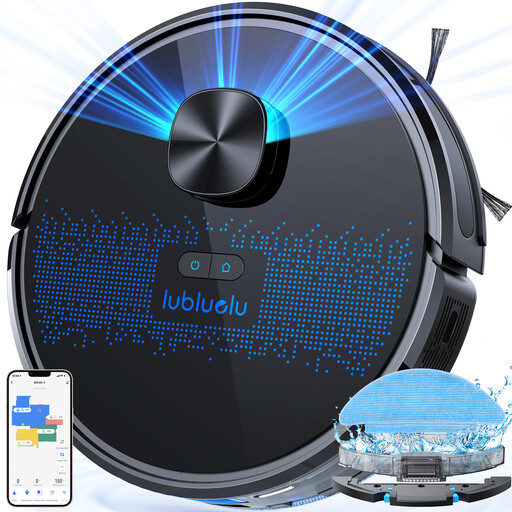
Why this product suits the profile: This 2-in-1 model combines vacuuming and mopping, offers laser navigation and app control, and can store up to five maps. Its specifications state 4,000 Pa, 55 dB and suitability for pet hair, carpets and hard floors.
The mapping and app functions help you limit mopping areas precisely. The instructions also highlight the need to clean the dust container, filter, brushes and mop pad regularly.
Laser navigation, app control, five maps and combined cleaning for different floor types.
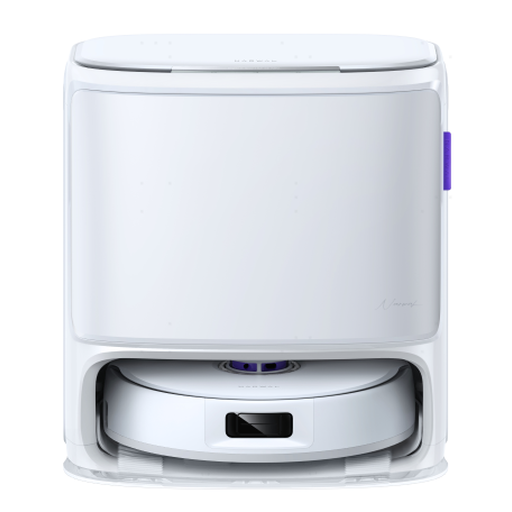
Why this product suits the profile: According to the product specifications, this model offers 15,000 Pa, rotating mop heads, a self-cleaning station and automatic mop drying. The station has a 5-litre clean-water tank and a 4.75-litre dirty-water tank.
The station takes care of several maintenance tasks. However, the dirty-water container, sensors and floor areas still need to be checked. Support for 2.4 GHz Wi-Fi should be confirmed in advance.
Mop washing and drying in the station, automatic dust emptying, extendable mop and LDS navigation.
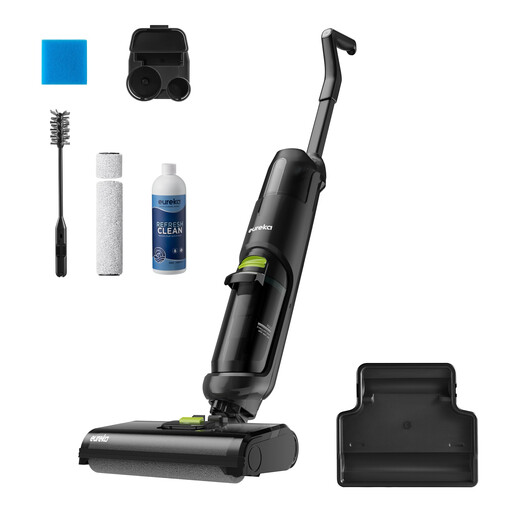
Why this product suits the profile: This cordless wet and dry vacuum cleaner is not a robot solution, but an additional appliance for sealed hard floors. It vacuums and mops at the same time, keeps clean and dirty water separate and, according to the product specifications, offers up to 30 minutes of runtime.
This appliance is designed for controlled manual cleaning, not for carpets or unattended operation. This lets you respond specifically to wet or sticky messes.
Two-tank system, self-cleaning function and flexible movement on sealed hard floors.
We have put together a complete, regularly updated list of products that fully meet these strict selection criteria and the safety regulations applicable in the EU.
This depends on the size of your home, the amount of dust and whether you have pets. Mop pads should be checked and cleaned after every wet-cleaning session. Brushes, filters and sensors require regular care. Pet hair may make more frequent brush cleaning necessary.
Many models can vacuum carpets, but not every model is suitable for mopping them. Before buying, check for carpet detection, mop lifting and virtual no-go zones. For delicate or deep-pile carpets, the manufacturer’s specific approval is crucial.
In addition to electricity consumption, you may need to buy replacement filters, side and main brushes, mop pads, cleaning solution and dust bags. Bagless stations reduce the need for dust bags, but their filters and containers still need to be cleaned. You should check the availability of compatible replacement parts before buying.