
Lieferung heute & morgen

Qualitätsgarantie

Willkommens-Angebote freischalten: KOSTENLOSE Lieferung | Bis zu 80 % RABATT | Kostenlose 30-Tage-JoyPlus-Testphase
App herunterladen
A robot vacuum with mopping function can make everyday floor care considerably easier. However, not every model actually reduces the workload. Some devices require frequent cleaning, detect carpets unreliably or advertise impressive suction power without offering a suitable mopping system. Households with pets, children, large living areas or a mix of floor coverings should therefore take a closer look at the technical details.
The Pascal rating describes the negative pressure at the suction inlet. It cannot always be compared directly across brands and measurement methods. Actual cleaning performance also depends on the brush design, airflow, carpet detection and the ability to pick up hair from corners and gaps.
A robot vacuum with strong suction power can offer advantages on carpets. On hard floors, however, an effective side brush and precise edge cleaning are often just as important.
Basic devices simply pull a damp cloth across the floor. This may be sufficient for light dust, but it does not necessarily replace manual cleaning when dealing with dried-on stains. More advanced systems use rotating or vibrating mop modules, automatic water delivery or a multifunctional cleaning station.
A mop lift for carpets is equally important. If the mop module does not lift high enough, moisture can reach the carpet fibres. The actual lift height and the available app settings should therefore be checked before purchase.
A robot vacuum with an auto-empty station automatically empties the dust container. Depending on the station, this may also include water changes, mop washing, drying and detergent dispensing. Filters, brushes, sensors and tanks still need to be checked regularly.
Bagless stations eliminate the need to purchase replacement dust bags. Models with bags generally provide cleaner disposal, but they incur ongoing costs. Claims such as “up to 45, 90 or 150 days” depend on the level of dirt, the size of the home and how frequently the device is used.
For a robot vacuum for pet hair, anti-tangle technologies are particularly important. Look for:
The Pa rating should always be considered alongside these features. Product specifications such as 8,000, 13,000, 16,200 or 25,000 Pa come from the respective manufacturers and are not necessarily measured under identical conditions.
A robot vacuum with LiDAR navigation uses a laser to map the rooms. This is particularly useful in larger homes and across multiple floors. Models with 3D sensors or structured light can additionally detect cables, furniture legs and objects left on the floor.
Check whether the app supports the following:
A robot mop with two rotating pads works differently from a model with a mop roller. A mop roller can be continuously supplied with water and cleaned during operation. If the station offers hot-water cleaning, the specified temperature should be clearly stated.
For example, the Eureka J15 Pro Ultra product description specifies 75°C hot-water cleaning, automatic mop washing and drying. The ECOVACS DEEBOT X9 PRO Omni is described as offering temperature-controlled mop washing between 40 and 75°C, along with hot-air drying. These functions can reduce maintenance, but they do not replace regular upkeep in accordance with the user manual.
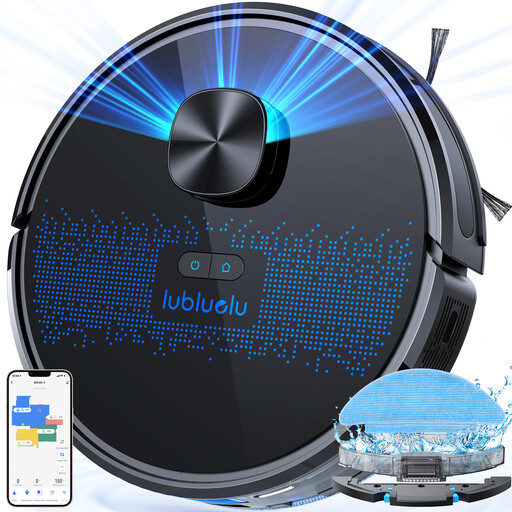
Why it is a good fit: This 2-in-1 model is designed for households with carpets and hard floors that want app control and straightforward laser navigation.
The product specifications list laser navigation, five maps and app control. Mop washing remains a manual task and should be factored into the maintenance routine.
4,000 Pa, 55 dB according to the product specification, app control, and suitability for pet hair, carpets and hard floors.
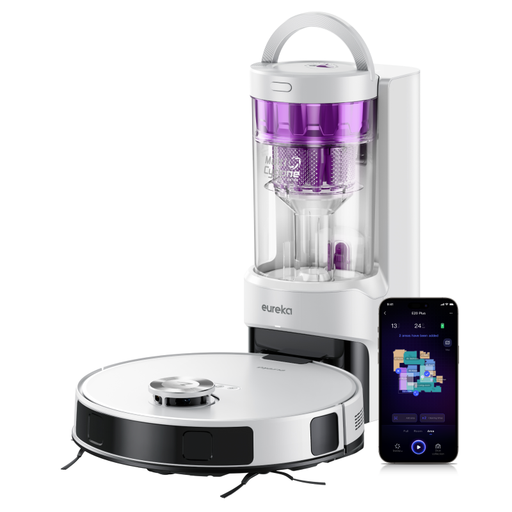
Why it is a good fit: For pet hair and frequent cleaning, the combination of an anti-tangle system, station and large dust container offers practical relief.
The product description specifies a 10 mm mop lift, LiDAR navigation and an anti-winding design. Carpet and hair performance still depends on pile height and usage.
Up to 10,000 Pa according to the product specification, 180 minutes of runtime, a 2-litre dust container, and app or voice control.
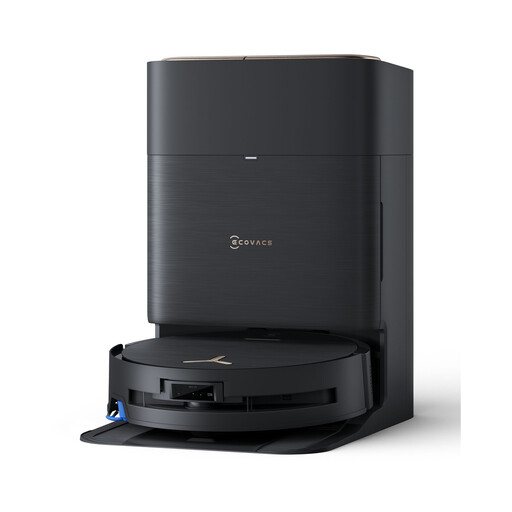
Why it is a good fit: Households seeking maximum automation get a mop roller, an Omni station, and app and voice control.
According to the product description, the station handles mop washing at 40–75°C, drying and dust emptying. The water tanks and cleaning tray still require maintenance.
16,600 Pa, up to 200 minutes of runtime, an OZMO roller mop and automatic obstacle detection according to the product data.
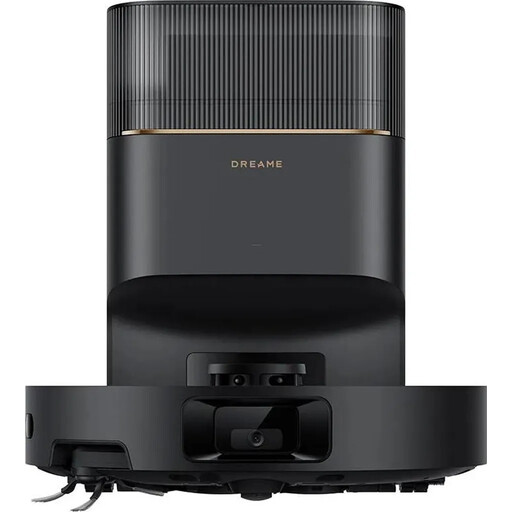
Why it is a good fit: This model is designed for long runtimes, large areas and automatic dust disposal.
According to the product specification, the 5-litre dust-bag capacity reduces how often the container needs to be emptied. The mop should still be rinsed and dried after use.
13,000 Pa, up to 285 minutes of combined runtime, a stated 150-day dust capacity and 3D obstacle detection.
The full category includes additional household robots with a range of navigation, mopping and station functions for homes in Germany.
That depends on the system. Brushes and filters should be cleared of hair and dust regularly. Mop pads need to be rinsed after cleaning and dried completely. Stations with mop-washing functions also require attention to the clean- and dirty-water tanks and the cleaning tray. The manufacturer’s instructions in the relevant manual are the authoritative reference.
Many models detect carpets and increase suction power accordingly. An automatic mop lift or a no-mop zone is nevertheless important to keep carpets dry. Navigation may be restricted on high-pile carpets, very dark surfaces or high door thresholds. You should therefore check the specified threshold clearance and the app’s carpet settings.
In addition to electricity consumption, you may incur costs for dust bags, filters, brushes, mop pads and cleaning solution. Bagless stations reduce the need for dust bags, while stations with hot-water cleaning may consume more energy. Before buying, check replacement-part prices, availability and warranty terms for Germany.