
Lieferung heute & morgen

Qualitätsgarantie

Willkommens-Angebote freischalten: KOSTENLOSE Lieferung | Bis zu 80 % RABATT | Kostenlose 30-Tage-JoyPlus-Testphase
App herunterladen
Manually cleaning windows is a tedious, time-consuming, and, for high windows, even dangerous task. A window cleaning robot promises a solution: streak-free cleanliness at the touch of a button. But the market is flooded with devices making bold advertising claims. Not every model lives up to its promise, and often, small but crucial flaws lead to frustration instead of sparkling results.
As your Joybuy Product Recommendation Officer, I'm here to help you separate the wheat from the chaff. We'll shine a light on the most common pitfalls and show you which technical features truly matter, so you can make an informed decision.
Many devices look similar at first glance, but their details often hide weaknesses that severely limit their everyday usefulness. Pay close attention to these three points to avoid a bad purchase:
To avoid these pitfalls, you should check three core technical parameters before buying. These are the primary determinants of your future helper's performance, safety, and efficiency.
Suction power, measured in Pascals (Pa), is not only crucial for cleaning performance but, most importantly, for safety. An automatic window cleaner must be able to reliably adhere to the vertical glass surface.
An intelligent navigation system is the key to seamless, gap-free cleaning. It ensures that the window cleaning robot works systematically and efficiently.
The way the robot loosens and absorbs dirt determines the final result.
Based on these criteria, we have identified a few models that represent a considered choice for different user profiles and requirements.

Why it's a match: Ideal for users looking for a straightforward and affordable solution for standard windows in an apartment or house. The remote control operation is intuitive and requires no app installation.
The automatic route planning avoids the chaotic random pattern. The 30-minute emergency power supply and safety tether address the fundamental safety requirements.
The dual water spray function ensures even moistening. It is controlled simply via remote, which simplifies handling.
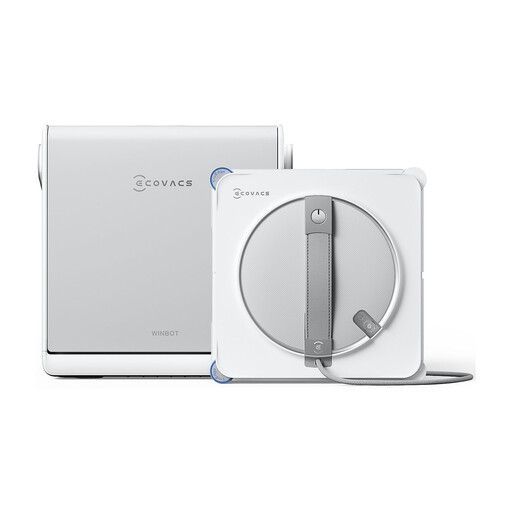
Why it's a match: Perfect for homeowners with large, hard-to-reach window facades, conservatories, or shop windows. The multi-functional station continuously powers the robot, enabling long cleaning cycles.
The TruEdge technology is specifically designed for thorough edge cleaning, bypassing the "Clean Middle" trap. The WIN-SLAM 4.0 navigation ensures complete coverage, and the 12-stage safety system offers maximum reliability.
The high suction power of 8,000 Pa and a long runtime of up to 110 minutes allow for cleaning large areas in a single pass.
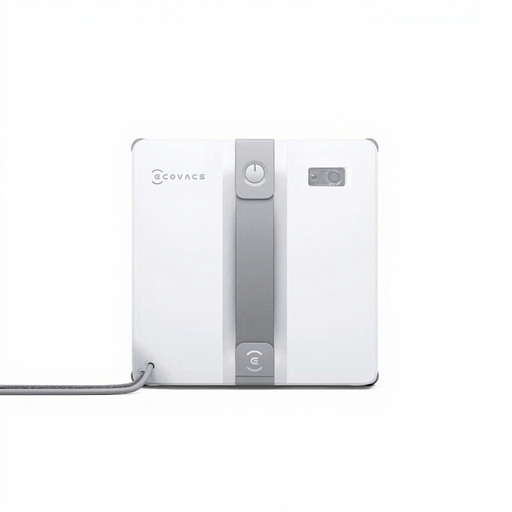
Why it's a match: For tech-savvy users seeking a smart, app-controlled solution that is also suitable for narrow or hard-to-reach windows. Its compact design is a key advantage in modern homes.
The intelligent WIN-SLAM 3.0 navigation ensures systematic cleaning without missed spots. Its compact, frameless design allows for excellent edge coverage, which is often a problem for larger devices.
The extremely compact design (only 55 mm high) allows it to be used on narrow windows. Control and adjustment of cleaning modes are conveniently handled via the ECOVACS HOME App.
We have compiled a complete, up-to-date list of products that fully meet these strict selection criteria and comply with stringent safety standards.
Safety is a core aspect in the design of modern window cleaning robots. Several mechanisms work together: Strong suction power holds the device to the pane, an emergency battery (UPS) prevents an immediate fall for 20-30 minutes during a power outage, and an additionally attached safety tether catches the robot in the unlikely event of adhesion loss. When used correctly according to the manufacturer's instructions, operation is very safe.
Yes, many modern devices are designed for this. They use advanced optical or laser sensors to reliably detect the edges of frameless glass (e.g., on shower enclosures or glass railings) and adjust the cleaning path accordingly. For sloped windows, such as those in attics, the manufacturer's specification for the maximum tilt angle is crucial. Most models are designed for vertical or only slightly inclined surfaces.
The effort is minimal. After the cleaning cycle, the microfibre pads must be removed and washed (most are machine-washable). For models with a water tank, it needs to be refilled as necessary. In rare cases, especially with very heavy initial soiling, a minor manual touch-up on a stubborn spot might be needed, but for regular use, manual cleaning is completely eliminated.