
Lieferung heute & morgen

Qualitätsgarantie

Willkommens-Angebote freischalten: KOSTENLOSE Lieferung | Bis zu 80 % RABATT | Kostenlose 30-Tage-JoyPlus-Testphase
App herunterladen
Large window panes, conservatories, or hard-to-reach skylights are architecturally appealing, but cleaning them is often tedious and time-consuming. A window cleaning robot promises a solution: an automated, safe, and efficient way to achieve a streak-free shine. However, the market is flooded with a variety of models whose performance claims don't always hold up to reality. Before you make a purchase, it's crucial to understand the common pitfalls that can lead to disappointment and unnecessary expense.
This guide highlights the critical features of a reliable window cleaning robot and helps you find a device that truly meets your needs.
Many budget-friendly models entice with attractive prices but often have design weaknesses that severely limit their usefulness. Pay special attention to these three problem areas:
To avoid a bad purchase, you should base your selection on objective technical features. The following three parameters are crucial for the performance and reliability of a window cleaning robot.
A decisive factor for efficiency is the navigation system. Basic models often move in a random pattern, missing spots. In contrast, an intelligent glass cleaner uses systematic path planning, such as WIN-SLAM technology. Such systems map the window surface and plan a logical route to ensure complete coverage without redundant passes. This is particularly important for window cleaning robots for large windows to save time and secure a flawless result.
Suction power, often measured in Pascals (Pa), is directly responsible for safety and cleaning performance. High suction power ensures the robot adheres firmly to the glass and moves the cleaning pad across the surface with enough pressure to remove even stubborn dirt.
A high-quality window robot with a spray function ideally uses ultrasonic nozzles. These atomise the cleaning fluid into a fine mist that evenly wets the surface without forming drips. The result is streak-free cleaning with minimal fluid consumption.
Operation should be as simple as possible. A window cleaner with app control offers the greatest convenience here. You can start, pause, monitor the status, or manually navigate the robot to a specific spot using your smartphone. This is especially practical for windows that are out of reach, such as in high-ceilinged rooms or on facades.
Not everyone needs the same device. The choice depends heavily on the individual use case. Here are three recommendations tailored to different user profiles.

Why This Fits Their Persona: Ideal for users with modern apartments, conservatories, or multi-story buildings who need a fully automated and intelligent solution for hard-to-reach glass surfaces. The app control and systematic cleaning perfectly match a tech-oriented lifestyle.
The strong suction power of 7500 Pa (according to the manufacturer) ensures a secure hold. The WIN-SLAM 5.0 navigation system guarantees complete cleaning right to the corners. The ultrasonic dual-nozzle spray function prevents dripping and the need for manual pre-spraying.
Fully automatic cleaning with intelligent path planning and an integrated spray system. Convenient control and monitoring via app.
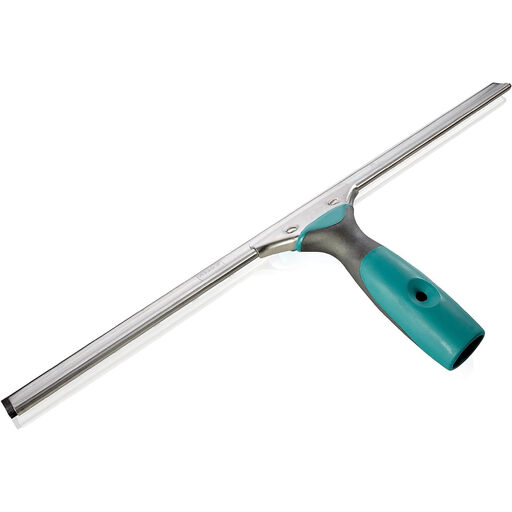
Why This Fits Their Persona: For users with easily accessible windows who value a quick, perfect manual finish. For individual windows, using this professional tool is often faster than setting up a robot.
This tool bypasses the pitfalls of unreliable automation through full manual control. There is no risk of electronic failures or poor navigation. The high-quality rubber blade ensures a streak-free result that is often not achieved with cheap squeegees.
Professional, streak-free results with full control. No power source required and ready for immediate use. The 45 cm width is efficient for larger surfaces.
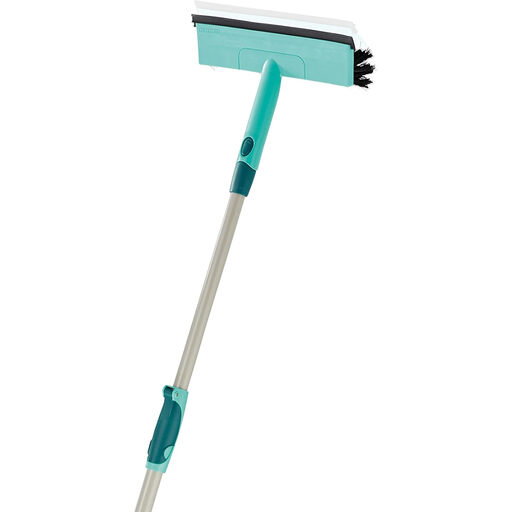
Why This Fits Their Persona: Perfect for users looking for a flexible solution for high windows, conservatory roofs, or other hard-to-reach areas, who prefer a versatile manual tool over a specialised robot.
This tool solves the problem of reach without the cost and complexity of a robot. The telescopic handle avoids the dangerous use of ladders—a key pain point in window cleaning. It is a simple and reliable mechanical solution.
The telescopic handle extends from 120 cm to 200 cm, allowing for safe cleaning at height. The combination of a brush and squeegee blade makes it highly versatile.
Whether it's an automated helper or a professional manual tool, the right equipment makes all the difference. Discover more solutions for a crystal-clear view.
High-quality models are equipped with multiple safety features. These include strong suction power that holds the device firmly to the glass, a safety tether with a suction cup to prevent falls, and often a backup battery that keeps the robot on the window for several minutes in case of a power outage. It is crucial to look for high suction power when buying and to always attach the safety tether correctly.
The duration depends on the window size and the robot's navigation system. As a rule of thumb, you can expect a cleaning time of about 5 to 10 minutes for a standard window (approx. 1.5m x 1.5m). Models with systematic path planning are generally faster and more thorough than devices that move randomly.
Many modern robots, like the Ecovacs Winbot Mini 2, have edge detection sensors and are therefore also suitable for frameless glass surfaces such as shower doors or glass railings. For angled windows, such as skylights, the manufacturer's specifications must be carefully observed. The angle of inclination and the adhesion force are critical factors for safe operation.