
Lieferung heute & morgen

Qualitätsgarantie

Willkommens-Angebote freischalten: KOSTENLOSE Lieferung | Bis zu 80 % RABATT | Kostenlose 30-Tage-JoyPlus-Testphase
App herunterladen
A robotic lawn mower without boundary wires can make set-up much easier. Instead of laying wires in the ground, the lawn area is mapped using an app, sensors or automatic mapping, depending on the model. This sounds convenient, but it does not automatically mean that every device will be suitable. Particularly for areas of up to 1,500 m², sloping gardens and uneven terrain, you should check the technical specifications carefully.
The advertised coverage usually applies to suitable conditions and a specific daily operating time. Flower beds, narrow passages, several separate lawn areas and frequent interruptions reduce the effectively usable area. A robotic lawn mower for 1500 m² should therefore not be selected based on the maximum coverage alone.
Measure the actual lawn area to be mown and take the following into account:
A specification such as up to 45% incline does not mean 45 degrees. Percentages describe the ratio of the change in height to the distance travelled. 45% is approximately 24 degrees. It is also important to consider whether the mower can handle the incline across the entire area, on wet grass and when changing direction.
Several factors are therefore important for a robotic lawn mower for sloping gardens: tyre tread, motor power, electronic stability control and the condition of the ground. On embankments, loose stones or very damp grass, practical performance may differ from the manufacturer’s specification.
A robotic lawn mower with obstacle detection can identify objects, but it cannot reliably assess every situation. Small toys, garden hoses, loose cables and flat objects should be removed before operation. Ponds, steps and steep drop-offs also require a suitable boundary or no-go zone.
A LiDAR robotic lawn mower measures distances using pulses of light and can use this information to create a spatial map. Camera systems complement this by optically distinguishing between objects and lawn areas. A combination of LiDAR and Vision can offer advantages in changing light conditions, but it should not be treated as a guarantee of error-free operation.
Consider the following questions:
A robotic lawn mower for inclines of up to 45% should have all-terrain tyres and a controlled drive system. Deeper tread can help on uneven ground. You should also check whether the manufacturer’s maximum incline applies to dry, level grass or to the specific terrain in question.
A smart robotic lawn mower with app control should offer, at a minimum, map management, schedules, no-go zones and mowing zones. Status notifications and an indication of the mower’s current location are also useful. With voice control, check whether Alexa or Google Home are actually supported and whether a stable Wi-Fi connection is required.
Safety features such as lift detection, a geo-fence, a GPS alarm and PIN protection can reduce the risk of unauthorised use. However, they do not replace safe placement of the charging station or regular checks of the garden.
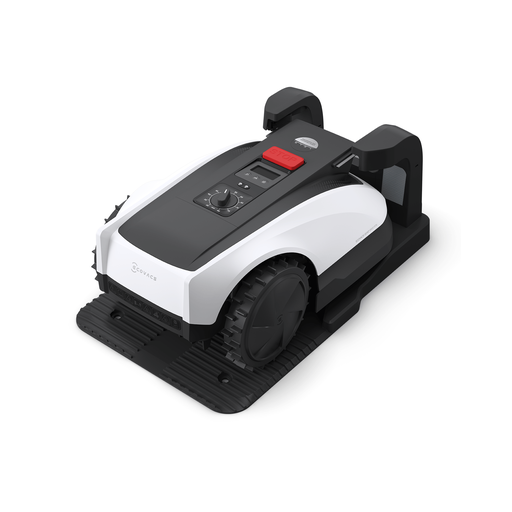
Why this product suits this profile: With a stated lawn coverage of up to 800 m², it is suitable for small to medium-sized gardens where cordless set-up and app control are priorities.
The product name explicitly refers to cordless navigation with LiDAR-supported RTK and Vision, as well as automatic mapping. However, buyers should still check the requirements for RTK operation.
Designed for up to 800 m²; LiDAR and Vision navigation plus automatic mapping, according to the product description.
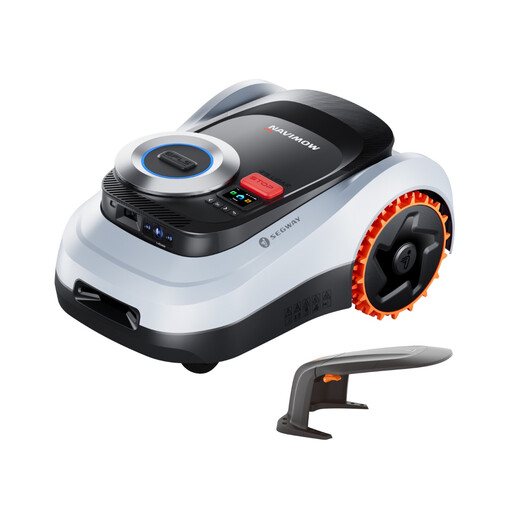
Why this product suits this profile: For lawn areas of up to 1,500 m² and users who want to combine map management, obstacle detection and voice control in one system.
According to the product description, Solid-State LiDAR and optical sensors enable navigation without boundary wires or antennas. The actual map should be checked after set-up.
Up to 1,500 m², a stated hill-climbing ability of up to 45%, up to 20 mowing zones, plus GPS, geo-fence and lift detection.
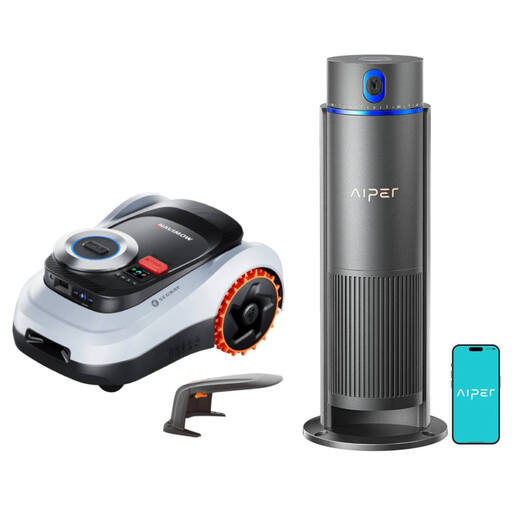
Why this product suits this profile: This set is aimed at garden owners planning a cordless mowing solution and app-controlled watering in one package.
The combination clearly separates the individual areas of use: the robotic lawn mower and watering system are separate components, each with its own coverage specification.
Navimow for up to 1,500 m² and IrriSense 2 with up to ten watering maps, according to the product description.
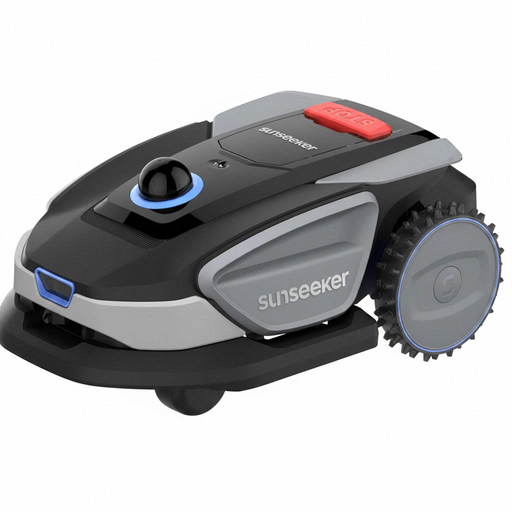
Why this product suits this profile: An option for areas of up to 1,000 m² if automatic mapping, LiDAR and Vision navigation are important to you.
The coverage specification is below 1,500 m², making the operating limit clear. Before buying, you should measure your own lawn area, including any additional sections.
360° LiDAR and AI Vision navigation, plus automatic mapping, according to the product name.
We have put together a complete, regularly updated list of products that fully meet these strict selection criteria and the safety regulations applicable in the EU.
Before its first run, the charging station should be placed on a level, stable surface with sufficient clearance from obstacles. Check whether Wi-Fi is available at the installation site and whether the model supports only the 2.4 GHz band. A test run is recommended after automatic mapping. This allows you to correct mowing zones, no-go areas and edge sections.
Ongoing costs include electricity, cleaning, blade replacements and, where applicable, replacement tyres. A garage for the robotic lawn mower can protect the station from sun and rain. It is important that it does not obstruct the sensors or the mower’s return to the charging station. In severe storms, the device should be protected or returned to the station in accordance with the manufacturer’s instructions.
Depending on the model, the device uses LiDAR, cameras, GPS, RTK or a combination of these systems for navigation. After mapping, lawn areas, no-go zones and travel routes are defined in the app. Manually checking the map is still advisable.
This depends on the stated hill-climbing ability, tyre tread and ground conditions. A model specified for inclines of up to 45% may be designed for corresponding slopes. However, wet grass, loose soil and uneven edges can affect traction.
Its service life depends on operating hours, weather conditions, maintenance and the availability of replacement parts. Blades should be checked regularly, while sensors and wheels should be cleared of grass clippings. Before buying, it is worth checking the warranty terms, battery replacement options and available wear parts.