
Lieferung heute & morgen

Qualitätsgarantie

Willkommens-Angebote freischalten: KOSTENLOSE Lieferung | Bis zu 80 % RABATT | Kostenlose 30-Tage-JoyPlus-Testphase
App herunterladen
A robotic lawnmower without boundary wires can make setting up your garden considerably easier. Instead of laying wires in the ground, wire-free robotic lawnmowers use RTK navigation, cameras, LiDAR, VSLAM or a combination of different systems, depending on the model. This technology is particularly useful for gardens with several lawn areas, flower beds, ponds and slopes.
However, product names and marketing claims are not always directly comparable. For example, a high stated coverage area says little if the garden contains lots of trees or the maximum gradient can only be achieved under certain conditions. You should therefore check several technical details carefully before buying.
The stated maximum lawn area usually refers to ideal conditions. Angled sections, narrow passages, shaded areas and several separate zones can affect actual mowing performance. A robotic lawnmower for large lawns should therefore not be chosen solely on the basis of its stated square-metre coverage.
You should also consider:
For sloping ground, you need to distinguish between a percentage gradient and an angle. A 45% gradient is approximately 24°, while 60% is around 31°. Claims such as ‘up to 65°’ should therefore be checked against the technical data in the section covering working or driving gradients.
Actual climbing ability also depends on lawn moisture, tyre tread, ground conditions and direction of travel. For a robotic lawnmower for sloping gardens, drive power, stability control and the precise definition of the gradient figure are crucial.
A robotic lawnmower with AI obstacle detection can identify objects using cameras, ToF sensors or LiDAR. Even so, small toys, garden hoses and loose branches should be removed before mowing. Detection systems are also not designed to identify the same types of obstacles on every model.
You should therefore check whether the device:
A robotic lawnmower with virtual boundaries creates a digital map that can be edited through the app. RTK can provide precise satellite positioning, but usually requires a suitable signal connection. Beneath trees, next to tall walls or in narrow garden areas, additional systems such as Vision, VSLAM or LiDAR can be helpful.
Pay attention to the specific equipment included:
Coverage should match the size and layout of your garden. A smaller automatic lawnmower may be suitable for a compact lawn, but large or divided areas may require more charging cycles.
Key points include:
For example, according to the product details, the AIRSEEKERS TRON SE has a cutting width of 200 mm, an operating time of up to 120 minutes and a recommended coverage area of 1,800 m². Its stated mowing performance is 240 m² per hour. Figures like these should always be considered together.
For devices intended for permanent outdoor use, the IP rating is an important indicator. IPX6 means that the housing is protected against powerful jets of water. However, this does not automatically mean that every operating condition is suitable in heavy rain. The user manual and manufacturer’s guidance remain the deciding factors.
A smart robotic lawnmower also requires maintenance:
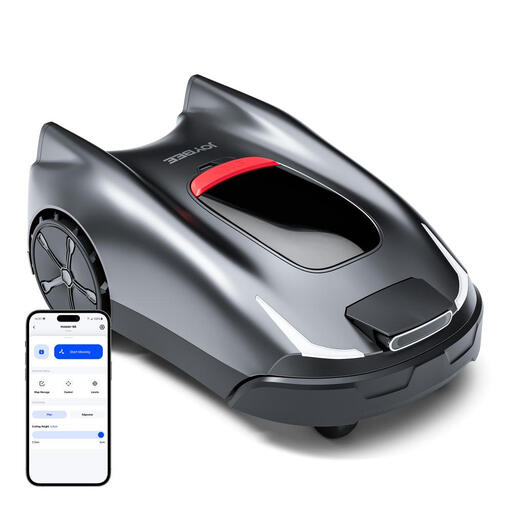
Why this product suits this profile: The K2 combines RTK and Vision navigation with virtual zones and app control. It is designed for lawns of up to 3,000 m² and can manage up to 50 no-go zones.
Lawn areas are divided digitally rather than with permanently installed wires. RTK, the camera and VSLAM support mapping in more challenging garden areas.
Up to 3,000 m², a cutting height of 25–60 mm, 90 minutes of operating time and IPX6 water protection according to the product details.
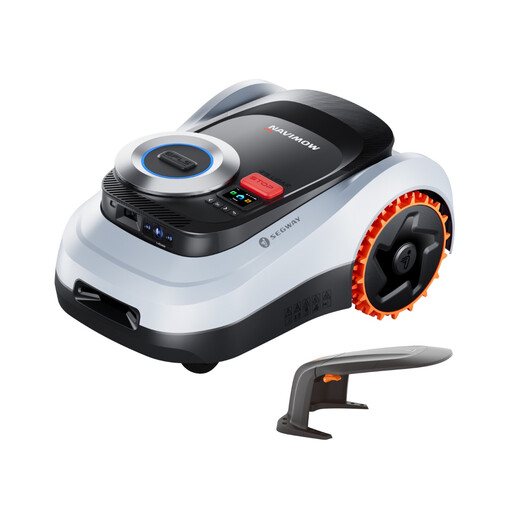
Why this product suits this profile: This model uses a solid-state LiDAR and Vision system, automatic mapping and management of up to 20 mowing zones via an interactive app map.
Navigation does not rely solely on a satellite signal. LiDAR and Vision work together to provide orientation in different lighting conditions.
Designed for up to 1,500 m², with an edge mode, GPS alarm, lift detection and all-terrain tyres for gradients of up to 45%, according to the product description.
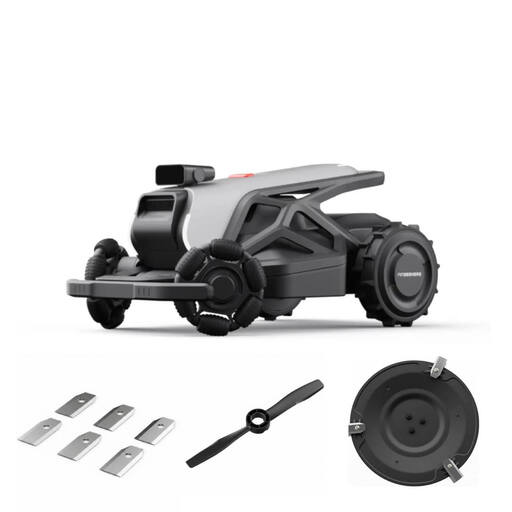
Why this product suits this profile: For larger, more demanding gardens, this device offers nRTK, VSLAM, Vision obstacle detection, app control and a recommended coverage area of 1,800 m².
The technical data lists working and driving gradients separately: up to 60% and 65% respectively. This makes it easier to assess its suitability for sloping gardens realistically.
200 mm cutting width, 30–90 mm cutting height, 120 minutes of runtime, IPX6 and connectivity options via Bluetooth, Wi-Fi and 4G according to the specifications.
We have put together a complete, regularly updated list of products that fully meet these strict selection criteria and the safety regulations applicable in the EU.
Depending on the model, the garden is mapped via the app. The boundary is then created digitally using RTK, a camera, LiDAR or a combination of these systems. Before the first run, you should check the charging station, wireless or satellite reception and passageways. Areas containing ponds, play equipment or delicate plants can often be marked as no-go zones.
Its lifespan depends on battery cycles, weather conditions, maintenance and the availability of spare parts. Blades are wear parts and must be checked regularly. For batteries, follow the manufacturer’s guidance on operating and storage temperatures, as well as charging. A sheltered parking area can reduce exposure to moisture and direct sunlight.
In addition to electricity consumption, you may have to pay for replacement blades, batteries where necessary, software or mobile network services and maintenance. If you choose a model with a 4G connection, check before buying whether a tariff is included or will need to be paid for separately later. The availability of compatible blades and batteries is also important for long-term use.