
Lieferung heute & morgen

Qualitätsgarantie

Willkommens-Angebote freischalten: KOSTENLOSE Lieferung | Bis zu 80 % RABATT | Kostenlose 30-Tage-JoyPlus-Testphase
App herunterladen
Automating lawn care is the goal for many garden owners. Traditional robotic mowers have long required the often tedious installation of a boundary wire. This task is eliminated with the new generation of robotic mowers that rely on wireless navigation technologies. A robotic lawn mower without a boundary wire offers greater flexibility and significantly less installation effort.
This article serves as your guide. It explains how modern navigation systems work and presents a selection of models for various garden sizes and requirements. Our goal is to provide you with an objective basis for your purchasing decision.
Choosing the right model depends on several factors. The following three aspects are particularly relevant for making an informed decision.
A wire-free robotic mower navigates using sensors and satellite signals. The most common technologies are:
The manufacturer's specifications for maximum area capacity (in m?) are a key benchmark. Choose a model whose recommended capacity is slightly larger than the actual size of your lawn to ensure efficient coverage.
For properties with inclines, the specification for maximum slope (in percent or degrees) is crucial. A robotic mower for slopes typically features high-traction wheels and an adapted motor to work safely and reliably even on inclines.
A modern smart robotic mower can be fully configured and controlled via a smartphone application. A robotic mower with app control offers features such as:
Based on the criteria mentioned, we have compiled a selection of models that cover different requirements.
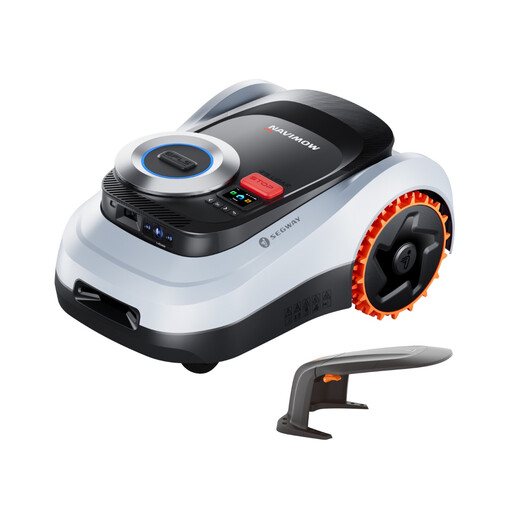
Why This Model Stands Out: The Navimow i215 combines a solid-state LiDAR system with a camera, enabling stable navigation without an external antenna or satellite signals. The automatic mapping and obstacle detection make setup straightforward.
Advantages:
Who is this model for? This model is an excellent choice for owners of medium to large gardens (up to 1,500 m?) who prefer a simple installation without an external reference station and value advanced obstacle detection.
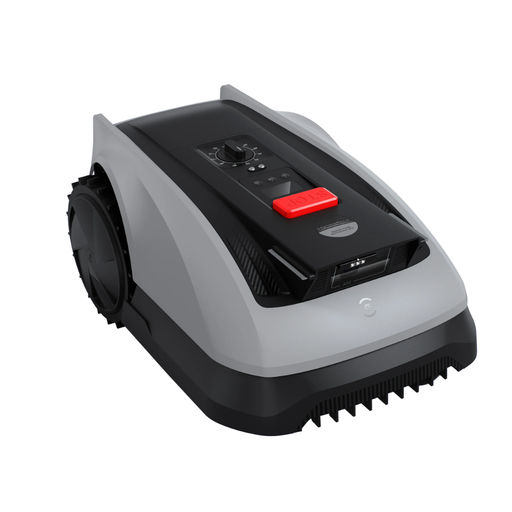
Why This Model Stands Out: The GOAT O600 relies on an AI-powered RTK navigation system that enables highly precise pathing. Combined with its quiet operation, it is well-suited for use in densely populated residential areas.
Advantages:
Who is this model for? Ideal for owners of small to medium-sized gardens (up to 600 m?) who value high-precision mowing performance and exceptionally quiet operation.
View the ECOVACS GOAT O600 RTK
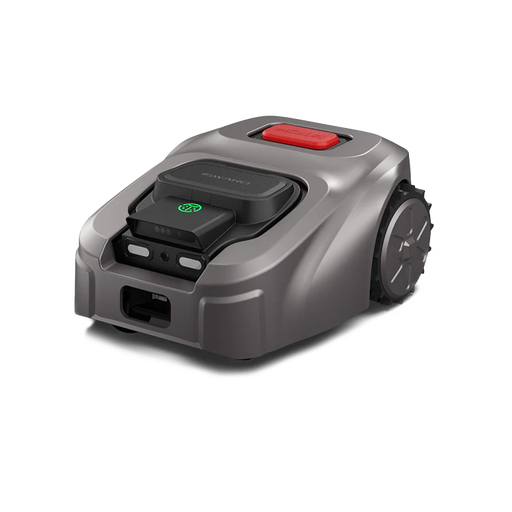
Why This Model Stands Out: The ISWARD GX AI is designed for very large and demanding lawns. Its high area capacity and exceptional slope-climbing ability make it a solution for expansive properties.
Advantages:
Who is this model for? This device is aimed at owners of very large properties (up to 2,500 m?) with challenging terrain, including steep slopes, who need a powerful and robust solution.
Haven't found the right model for your garden in our selection? The technology is constantly evolving, and there is a growing number of devices for different needs. Discover more models in our comprehensive category.
A robotic lawn mower without a boundary wire uses advanced technologies to virtually define the mowing area. Instead of a physical wire, it navigates using satellite signals (GPS, RTK), laser scanners (LiDAR), or camera systems (Vision). The garden's boundaries are set on a digital map via an app during the initial setup.
The precision depends on the technology used. RTK robotic mowers achieve centimetre-level accuracy through correction signals from a local base station. This allows for very clean edges and systematic mowing patterns. Models that combine GPS with other sensors like cameras or IMUs (Inertial Measurement Units) also achieve high accuracy, which is more than sufficient for most gardens to reliably adhere to virtual boundaries.