
Lieferung heute & morgen

Qualitätsgarantie

Willkommens-Angebote freischalten: KOSTENLOSE Lieferung | Bis zu 80 % RABATT | Kostenlose 30-Tage-JoyPlus-Testphase
App herunterladen
Manually cleaning a pool is time-consuming and requires discipline. However, a clean pool is essential for pristine swimming enjoyment. A modern robotic pool cleaner can handle this task largely autonomously. Cordless, battery-powered models, in particular, offer the ultimate in convenience. This guide serves to orient you and introduces the technical features relevant for choosing a device for the 2026 season. Our goal is to provide you with a solid basis for an informed decision, based on objective product characteristics.
The selection of the right model depends on the pool size, the shape of the basin, and individual requirements for cleaning coverage. Three central criteria help in narrowing down the options.
A cordless pool robot eliminates the risk of tangled cables and significantly simplifies handling. The battery capacity, specified in ampere-hours (Ah) or as maximum runtime, is crucial for determining whether the robot can complete a full cleaning cycle without interruption. For larger pools, models with longer runtimes are preferable. Also, pay attention to the charging method. Some devices feature an inductive charging station, which avoids corrosion-prone charging contacts and increases longevity. A cordless pool vacuum should also have a feature that makes it easier to lift out of the water, for example, by automatically returning to the pool's edge or reducing its weight through rapid water drainage.
A basic robotic pool cleaner only cleans the floor. Advanced models offer more comprehensive cleaning that also includes walls and the particularly susceptible waterline. A robotic pool cleaner for walls and waterline requires powerful motors and intelligent climbing capabilities to do this.
The efficiency of the cleaning is largely determined by the navigation system. Simple devices operate on a random pattern. High-quality models use intelligent pool cleaning via gyroscope sensors, infrared, or AI-supported mapping to follow systematic paths and avoid obstacles. This ensures that no areas are missed and the cleaning cycle is optimised.
A robotic pool cleaner with app control offers a significant boost in convenience. A smartphone app can be used to select cleaning modes (e.g., floor only, waterline only, full clean), create schedules, and track cleaning progress in real time. Some models even allow for manual control to target specific dirty spots. Connectivity is usually established via Wi-Fi or Bluetooth, although some devices also use alternative remote control methods like LiFi, which work directly at the poolside.
Based on the criteria mentioned, we have compiled a selection of models that are interesting for discerning pool owners due to their technical specifications and range of functions.
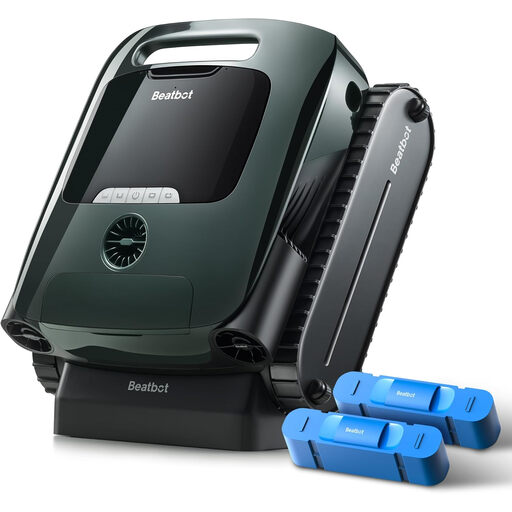
Why It Stands Out: The Beatbot AquaSense 2 Pro positions itself as a comprehensive cleaning solution. In addition to the usual 3-in-1 cleaning (floor, walls, waterline), this model integrates surface skimming and a water clarification function. This allows it to cover the entire pool from the water's surface to the floor.
Advantages:
Who is this model for? For owners of large in-ground pools (up to 360 m?) who are looking for an all-in-one solution that not only cleans the pool but also keeps the water surface clear and contributes to water quality.
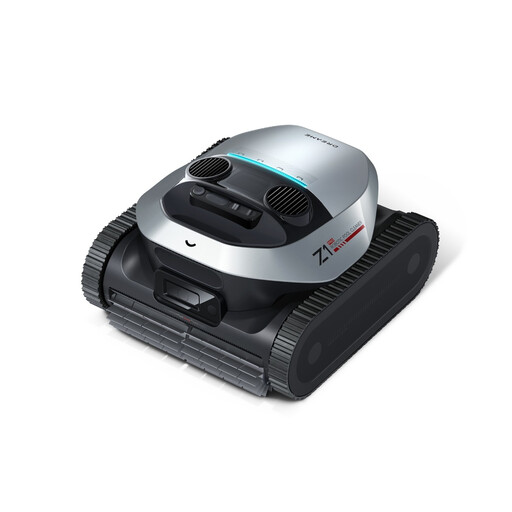
Why It Stands Out: The Dreame Z1 Pro is distinguished by its very high suction power. According to the manufacturer's specifications, the brushless dual-pump motors achieve a flow rate of 30 m?/h, enabling effective collection of coarse debris like leaves as well as fine particles. A special feature is the LiFi remote control, which also works in the water.
Advantages:
Who is this model for? Ideal for pool owners who value maximum suction power to handle larger amounts of dirt and leaves. The LiFi remote is a practical feature for users who like to maintain direct control.
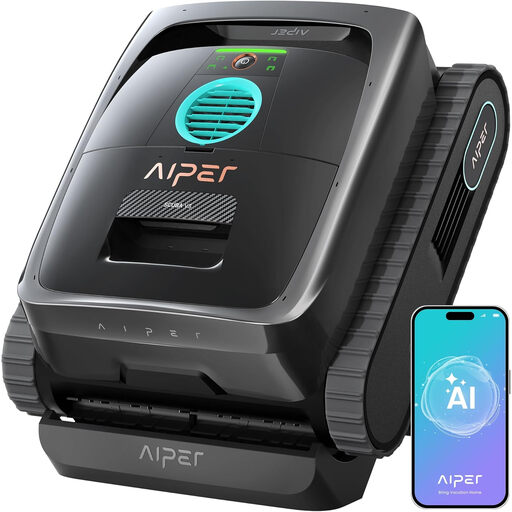
Why It Stands Out: The Aiper Scuba V3 relies on AI-powered navigation and a powerful drive system. According to Aiper, the "AI Vision" technology detects obstacles in real time and calculates the most efficient cleaning path. The 6-motor system ensures strong propulsion and high suction power, while the ultra-fine filter can capture particles as small as 3 ?m.
Advantages:
Who is this model for? For tech-savvy owners of pools up to 200 m? who desire particularly thorough filtration and advanced, AI-based navigation for highly efficient cleaning.
The models presented here represent only a fraction of the available technologies and functions. Depending on your pool size, budget, and personal preferences, other devices may also be a suitable choice. If you wish to compare more options, you can find a broader selection in our main category.
Discover our entire range of cordless pool cleaners and find the right device for your needs.
Modern cordless robotic pool cleaners use a combination of sensors for navigation. These include gyroscopes for orientation detection, accelerometers for motion tracking, and infrared sensors for detecting walls. Advanced models like the Aiper Scuba V3 also use AI-powered image recognition to create a detailed map of the pool and intelligently plan the cleaning paths.
The recommended frequency of use depends on pool usage and the amount of debris. For regular pool use during the season, running it two to three times a week is a good benchmark to maintain consistently high water quality and cleanliness. An additional cleaning cycle may be useful after heavy leaf fall or a storm.
Many modern robotic pool cleaners are designed for use in saltwater pools. The materials used are more resistant to corrosion. However, it is essential to check the manufacturer's specifications, as not every model is suitable for saltwater. The Dreame Z1 Pro, for example, is explicitly designated as suitable for both freshwater and saltwater pools. It is recommended to rinse the robot with clear freshwater after each use in saltwater.