
Lieferung heute & morgen

Qualitätsgarantie

Willkommens-Angebote freischalten: KOSTENLOSE Lieferung | Bis zu 80 % RABATT | Kostenlose 30-Tage-JoyPlus-Testphase
App herunterladen
For many, manually cleaning windows is a tedious and often risky task. The job quickly becomes a challenge, especially with high windows, conservatories, or large glass facades. A window cleaning robot promises a solution: a streak-free shine at the push of a button. However, the market is flooded with devices making grandiose advertising claims. Not every automatic window cleaner delivers on its promise.
As your Joybuy Product Recommendation Officer, I'm here to help you separate the wheat from the chaff. Instead of falling for marketing hype, you should focus on the technical details. There are three common weaknesses that can quickly turn a supposed labour-saver into a costly mistake.
To avoid these pitfalls, you should check three core parameters before buying. These define the true performance and safety of a window cleaning robot.
Suction power, measured in Pascal (Pa), ensures the robot adheres securely to the vertical glass surface. Values between 2,800 Pa and 8,000 Pa are common. High suction power is particularly advantageous on rougher or slightly uneven surfaces.
However, suction power is only part of the equation. A reliable device absolutely requires a multi-stage safety system:
A smart window cleaner is distinguished by its systematic route planning. Technologies like WIN-SLAM (as found in some Ecovacs Winbot models) enable the device to map the window surface and plan an efficient, gap-free cleaning route. This is far superior to the random back-and-forth movement of simpler models.
You should also look for special edge cleaning modes or technologies like TruEdge. These features instruct the robot to move specifically along window frames and seals to minimise the typical dirty borders.
A window cleaning robot with a spray function offers a decisive advantage: it applies the cleaning fluid automatically and evenly. Models with ultrasonic atomisation create a fine mist that effectively dissolves dirt without applying too much liquid to the glass, which could in turn cause streaks. This ensures a more consistent result than manually spraying the window before the cleaning process. The integrated water tank makes the process completely autonomous.
Based on these objective criteria, we have identified several models that represent a considered choice for different user profiles and requirements.
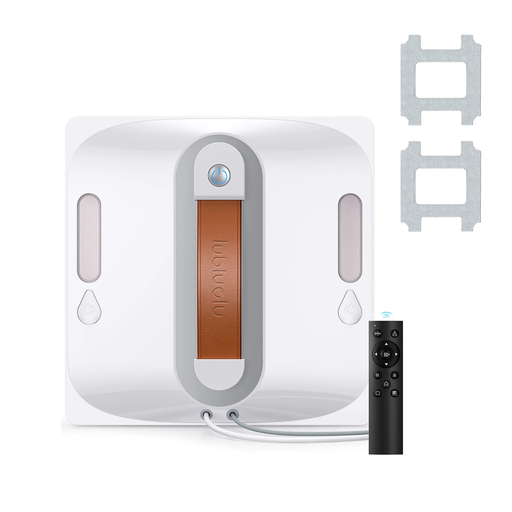
Why This Fits Their Persona: Ideal for users who want to try the technology without a major investment. It reliably handles the basic cleaning of standard windows and is easy to control via remote. A pragmatic solution for getting started with automated glass cleaning.
Features a dedicated edge cleaning mode to minimise the typical dirty borders. The 8-stage safety system, including a backup battery and safety tether, also addresses the safety risk.
Excellent value for money; intelligent route planning with N- and Z-patterns for systematic coverage; multiple cleaning modes selectable via remote control.
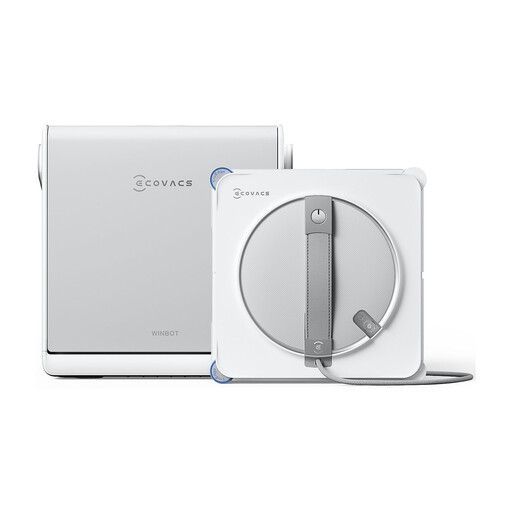
Why This Fits Their Persona: Perfect for owners of conservatories, multi-story homes, or large glass facades who expect maximum automation and a thorough clean right to the edges. The multi-functional station simplifies storage and handling.
The TruEdge technology is specifically designed for precise edge cleaning. The intelligent WIN-SLAM 4.0 navigation ensures complete and efficient coverage without missed spots. The 12-stage safety system provides comprehensive protection.
Multi-functional station for storage, charging, and control; high suction power of 8,000 Pa for a secure hold; multiple cleaning modes for different levels of dirt.
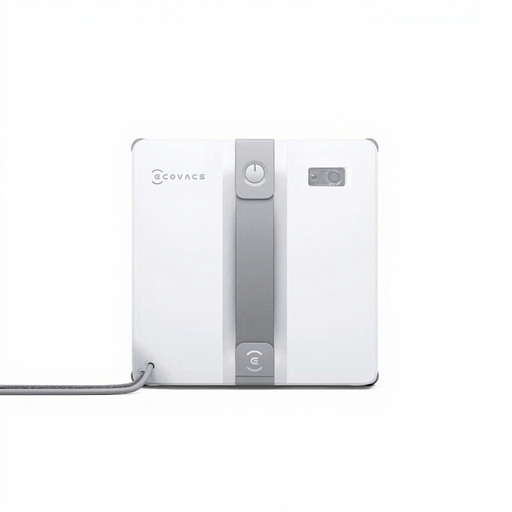
Why This Fits Their Persona: Its extremely compact and slim design (only 55 mm high, according to the manufacturer) allows it to clean narrow windows, mullioned windows, or windows with handles and security bars where standard robots won't fit. Ideal for older buildings or special architecture.
Despite its size, it uses intelligent navigation and achieves high surface coverage thanks to its bumper-less design. This addresses the problem of incomplete cleaning on complex windows.
Very compact design for maximum flexibility; ultrasonic spray technology for efficient dirt removal; comprehensive 9-stage safety system.
We've compiled a complete, up-to-date list of products that fully meet these strict selection criteria and German safety regulations.
Yes, most modern window robots are suitable for use on frameless glass surfaces such as shower screens, glass railings, or mirrored cabinets. They use a combination of optical and physical sensors to accurately detect the edge of the glass surface and prevent a fall. However, it is important to check the manufacturer's specifications for the specific model.
The noise level of a window cleaning robot is comparable to that of a conventional vacuum cleaner. Most models operate in a range of 65 to 75 decibels (dB). The noise is mainly generated by the suction motor, which ensures adhesion to the window. Since cleaning a window typically only takes a few minutes, the noise disturbance is temporary.
The lifespan depends on the frequency of use and the quality of the device. Key components include the motor (brushless motors are considered more durable), the battery, and the cleaning pads. The cleaning pads are consumables and should be washed or replaced regularly to ensure optimal cleaning results. The backup battery, like any battery, has a limited number of charge cycles but can be replaced on many models. With proper care, a high-quality glass cleaning robot can operate reliably for many years.