
Lieferung heute & morgen

Qualitätsgarantie

Willkommens-Angebote freischalten: KOSTENLOSE Lieferung | Bis zu 80 % RABATT | Kostenlose 30-Tage-JoyPlus-Testphase
App herunterladen
A floor that practically cleans itself—that's the promise of modern robot vacuums and mops. Models with a fully automatic docking station are designed to reduce maintenance to a bare minimum. However, the market is flooded with devices whose advertised "intelligence" and "autonomy" often fail to meet expectations in practice. Before you invest, it's crucial to understand the common pitfalls that can quickly turn a supposed helper into a source of constant frustration.
This guide focuses on the critical features that distinguish a truly autonomous robot from a high-maintenance one, helping you make an informed decision.
Many devices look impressive on paper but only reveal their weaknesses during daily use. Pay close attention to these two points to avoid disappointment.
To avoid the problems mentioned above, you should examine three core technical areas before buying. These define the actual performance and convenience of a device.
A high-quality station is the centrepiece of an autonomous cleaning system. Look for the following functions that go beyond simply emptying the dust bag:
The robot's ability to move intelligently and seamlessly through your home depends on its sensor technology.
High Pascal (Pa) values are a good indicator of suction power, but not the only one.
Based on the criteria above, we have identified a few models that represent a considered choice for specific user profiles.
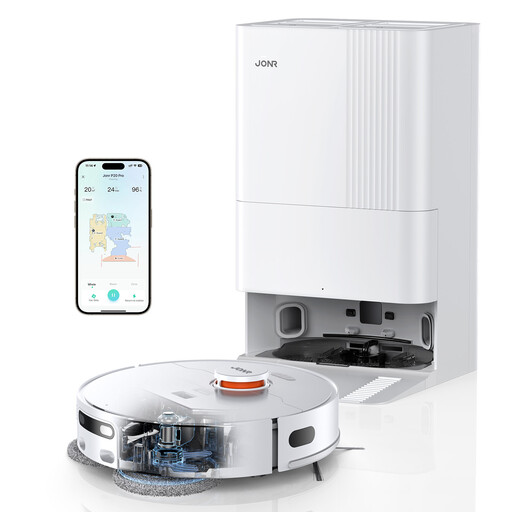
Why This Fits Their Persona: Ideal for professionals and tech-savvy users looking for a true "set it and forget it" solution. The focus is on maximum automation and minimal daily maintenance.
The all-in-one station not only washes the mops but also dries them with hot air. This consistently prevents the "smelly mop trap". The precise laser navigation with obstacle avoidance prevents it from getting stuck.
The complete package of strong suction power (8150 Pa), a low-tangle brush, and a fully automatic station that handles washing and drying offers a high level of convenience.
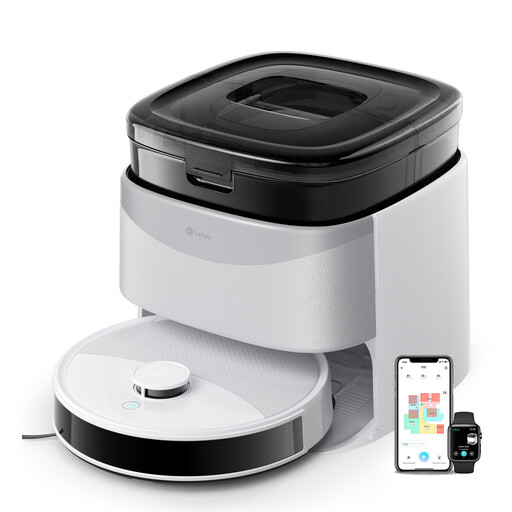
Why This Fits Their Persona: Suitable for owners of large homes, families with children, or pet owners. The primary focus here is on raw cleaning performance to tackle even demanding messes like pet hair.
With a suction power of 12,000 Pa (according to the manufacturer), it addresses the problem of insufficient suction, especially on carpets and with pet hair. The dTOF laser navigation ensures structured and complete cleaning.
The combination of extremely high suction power and a long battery life of up to 220 minutes makes this model an option for large and demanding households.
A fully automatic robot vacuum and mop is a complex purchase. If the models presented here don't exactly meet your requirements, you can find other devices in our main category that focus on different priorities.
1. How often does the docking station of a robot vacuum and mop need to be maintained? The maintenance effort is low, but not zero. The dust bag in the station needs to be replaced approximately every 30 to 60 days, depending on usage and household size. The fresh and dirty water tanks should be emptied or refilled after each major cleaning cycle or when prompted by the app to prevent odours. Occasional cleaning of the station itself and the robot's sensors is also recommended.
2. Does a robot vacuum with laser navigation work in the dark? Yes, without any limitations. The LiDAR (Light Detection and Ranging) technology used in laser navigation is an active system that uses its own light source. It is therefore completely independent of ambient light and functions precisely even in absolute darkness, unlike purely camera-based navigation systems that rely on visible light.
3. Are robot vacuums suitable for households with pet hair? Yes, modern devices are very well-suited for pet hair. The crucial factors are high suction power (values over 4,000 Pa are recommended), a main brush that doesn't easily tangle with hair (e.g., an all-rubber brush), and a good filtration system. Models with a self-cleaning robot vacuum station that automatically empties the dustbin are particularly practical here, as the bin can fill up quickly with a lot of hair.