
Lieferung heute & morgen

Qualitätsgarantie

Willkommens-Angebote freischalten: KOSTENLOSE Lieferung | Bis zu 80 % RABATT | Kostenlose 30-Tage-JoyPlus-Testphase
App herunterladen
The idea is appealing: a single device that vacuums and mops on its own, while you use your time for more important things. Modern robot vacuums and mops promise exactly that. But the market is filled with marketing buzzwords and technical specs that confuse more than they clarify. Many buyers soon find that their expensive device fails to meet their expectations. As your Joybuy Product Recommendation Officer, I'll help you identify the common pitfalls and make an informed decision.
The most common disappointments stem from three widespread problems:
To avoid a bad purchase, you should focus on the technical fundamentals that ensure consistently good cleaning performance. When researching a robot vacuum, the following three aspects are of central importance.
Navigation is the robot's brain. It determines how efficiently and completely your floors are cleaned.
A robot vacuum with a self-empty station offers convenience, but the differences in detail are enormous. A modern, fully functional station should handle several tasks:
Suction power, measured in Pascals (Pa), is an important indicator, but not the only one. For demanding tasks like picking up pet hair or deep-cleaning carpets, the entire system is critical.
Based on these objective criteria, we have identified a few models that represent a well-thought-out solution for specific user profiles.
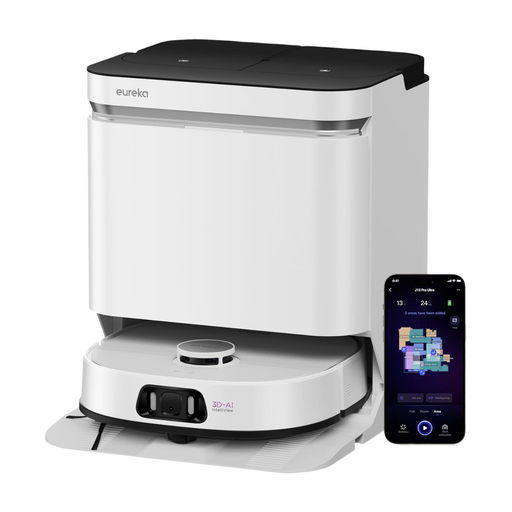
Why This Fits Their Persona: This model is built for performance. The high suction power of 16,200 Pa and the special anti-hair technology (FlexiRazor) are ideal for removing pet hair from hard floors and carpets. The fully automatic station with 75°C hot water mop washing ensures a high level of hygiene, which is especially important in homes with pets.
The hot water mop washing and drying actively combats the formation of odours and bacteria (Pitfall 3). The FlexiRazor technology prevents hair tangles, a common problem that suction power figures alone don't solve.
Powerful Suction: 16,200 Pa for deep cleaning.
Hygienic Station: 75°C hot water mop washing and hot air drying.
FlexiRazor Anti-Hair Technology.

Why This Fits Their Persona: For users who want the latest and greatest in technology. With 25,000 Pa suction power, rotating mopping pads (OZMO Turbo 2.0), and advanced edge cleaning (TruEdge 2.0), this device offers comprehensive cleaning performance. The OMNI station automates nearly every maintenance step, from dust emptying to the metered dispensing of cleaning solution.
The OZMO Turbo 2.0 mopping system with rotating pads provides true mopping power instead of just dragging a damp cloth (Pitfall 1). The comprehensive OMNI station with hot water washing and drying minimises manual maintenance (Pitfall 3).
Very High Suction Power: 25,000 Pa.
Advanced Mopping: OZMO Turbo 2.0 rotating mops.
Comprehensive OMNI Station: Includes hot water washing and automatic detergent dispensing.
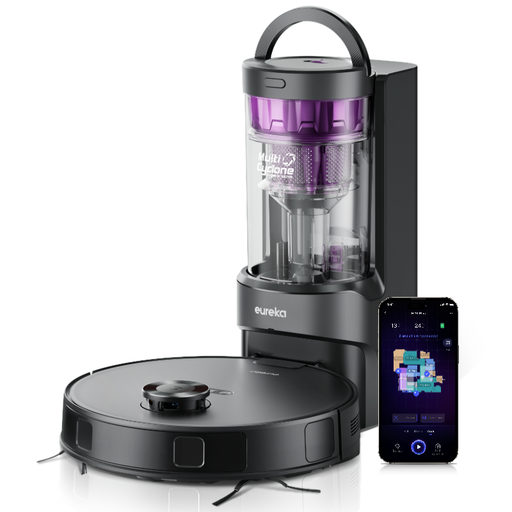
Why This Fits Their Persona: The biggest challenge in homes with both carpets and hard floors is the seamless transition between them. This model solves the problem by automatically lifting its mopping pad by 10 mm as soon as a carpet is detected. The 8,000 Pa suction power is sufficient for most types of carpet, and the bagless self-empty station reduces running costs.
The automatic mop lift prevents wet carpets—a critical design flaw in many basic combo units (Pitfall 1). Its LiDAR navigation ensures structured cleaning, avoiding the inefficient navigation trap (Pitfall 2).
Smart Mop-Lift: Lifts the mop 10 mm on carpets.
Good Suction Power: 8,000 Pa.
Bagless Self-Empty Station: Up to 45 days without emptying, no follow-up costs for bags.
We have compiled a complete, up-to-date list of products that fully meet these strict selection criteria and all relevant safety regulations.
Maintenance intervals depend on the model and usage. For stations with dust bags, the bag needs to be changed every 30 to 75 days, depending on its size and the amount of dirt collected. Bagless dustbins should be emptied on a similar schedule. The fresh and dirty water tanks need to be refilled or emptied depending on the cleaning area and frequency, typically after every few cleaning cycles. A basic cleaning of the station itself, especially the washing basin and sensors, is recommended every few weeks to ensure optimal performance.
Yes, modern and high-quality robot vacuum and mop combos are designed for this. The crucial feature is the automatic lifting of the mopping pads. As soon as the robot detects a carpet, it retracts its mops to prevent the carpet from getting wet. At the same time, the suction power is often increased to remove dirt and dust from deep within the fibres. For models without this feature, carpets must be manually defined as no-go zones in the app.
High suction power is beneficial, but it is not the sole measure of quality. A rating of 10,000 Pa is useless if the brush design just tangles hair or the navigation can't find the dirt. Effective cleaning performance is the result of the interplay between suction power, an efficient brush system (e.g., anti-tangle technology), intelligent navigation (e.g., LiDAR), and, for combo units, a well-designed mopping function. Always consider the complete package in the context of your specific needs.