
Lieferung heute & morgen

Qualitätsgarantie

Willkommens-Angebote freischalten: KOSTENLOSE Lieferung | Bis zu 80 % RABATT | Kostenlose 30-Tage-JoyPlus-Testphase
App herunterladen
The idea is tempting: a single device that vacuums and mops, then cleans and dries itself. A vacuum mop with a cleaning station promises just that—a significant time-saver and enhanced household hygiene. But the market is flooded with models whose marketing claims often shine brighter than the floors they clean. Many devices turn out to be a poor investment because crucial details were overlooked.
As your Joybuy Product Recommendation Officer, I'm here to help you separate the wheat from the chaff. We'll highlight the most common pitfalls and show you which technical features truly matter, so you can make an informed decision for your home.
Before you invest, you should be aware of the typical weaknesses that only become apparent with everyday use.
To avoid these problems, you should focus on three core features when making your selection. These define the true performance and convenience of a modern wet-dry vacuum.
A modern cleaning station is far more than just a charging dock. Look for a fully automated process that includes the following steps:
For gap-free cleanliness, an edge-to-edge or asymmetrical brush design is essential. Models that clean within a few millimetres of the edge save you from manual follow-up work. Look for manufacturer claims like "edge-to-edge cleaning" or specific design features that enable cleaning right up against the wall. This is especially important in kitchens and hallways.
A good cordless vacuum mop adjusts its performance to the level of dirt. Infrared sensors that detect debris and automatically regulate suction power and water flow save energy and water. For homes up to 300 m?, common for many families, a battery life of at least 40 minutes is recommended to complete the cleaning without interruption.
Based on the criteria above, we have identified a few models that are particularly well-suited for specific household profiles.
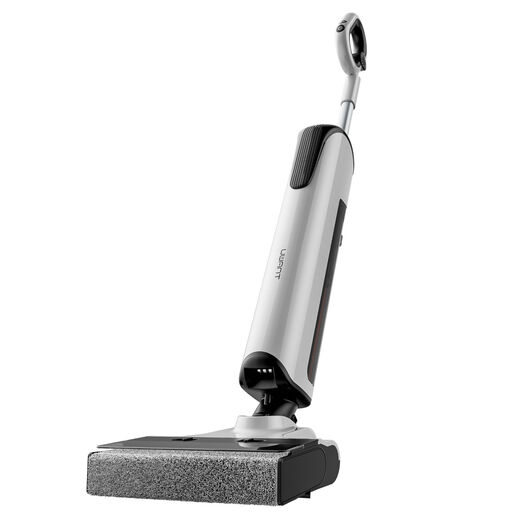
Why This Fits Their Persona: Ideal for households with children and pets where hygiene is a top priority. The chemical-free cleaning and thorough brush drying offer a high degree of safety and cleanliness, especially when dealing with spills and pet hair.
The cleaning station with 100°C hot air drying actively prevents the formation of odours and bacteria (the "damp trap"). The D-shaped brush enables edge cleaning down to 2 mm, solving the problem of uncleaned edge strips.
Electrolytic Water Sterilisation: Cleans with 99.9% efficiency without chemical additives, according to the manufacturer. 180° Flat-Lying Design: Allows for cleaning under low-profile furniture.
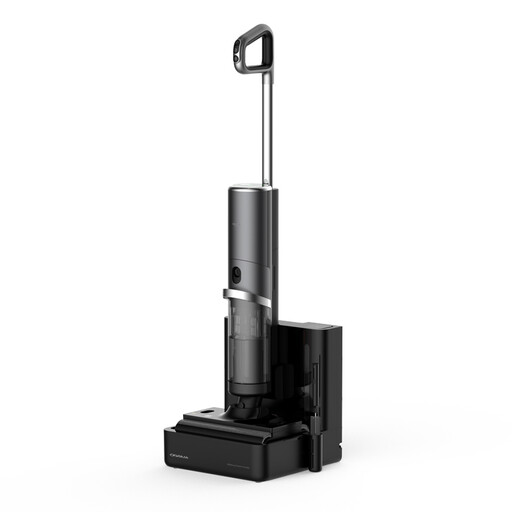
Why This Fits Their Persona: Designed for large homes with predominantly hard floors. The long runtime, assisted drive, and the station's large water capacity minimise interruptions and the physical effort of cleaning large areas.
The "Edge-to-Edge" design ensures clean edge-to-edge cleaning. The all-in-one station with hot air drying reliably prevents a damp, smelly brush, making the device low-maintenance.
Dual-Drive Traction System: The device propels itself forwards and backwards, making it easier to handle. Automatic Water Refill: The station automatically refills the device's fresh water tank.
We have compiled a complete, up-to-date list of products that fully meet these strict selection criteria and comply with German safety standards.
1. How often does the cleaning station of a vacuum mop need to be maintained? Maintenance is minimal but important. The dirty water tank should be emptied and rinsed after each use to prevent odour build-up. Depending on the model and frequency of use, the filters and the station itself should be checked for stuck-on debris and cleaned about once a month. For stations with hot air drying, manual brush drying is not necessary.
2. Can the mopping function be used on delicate wooden floors like parquet? Yes, modern hard floor cleaners feature adjustable water flow. For sealed parquet or laminate, a low water setting should be chosen to only damp-mop the floor and prevent swelling. It is advisable to follow the flooring manufacturer's instructions and not use the device on unsealed or oiled wood floors.
3. What does suction power in Pascals (Pa) really mean for cleaning performance? The specification in Pascals (Pa) measures the negative pressure generated by the motor. High suction power (e.g., 20,000 Pa) is advantageous for effectively picking up heavier debris and water. However, it is only one part of the overall system. Good cleaning performance is achieved through the interplay of high suction power, a rotating brush that mechanically loosens dirt, and an efficient airflow that reliably transports debris into the container.