
Lieferung heute & morgen

Qualitätsgarantie

Willkommens-Angebote freischalten: KOSTENLOSE Lieferung | Bis zu 80 % RABATT | Kostenlose 30-Tage-JoyPlus-Testphase
App herunterladen
Moving house can quickly involve more belongings than you first expect: winter clothes, bedding, blankets, towels and pillows can make boxes difficult to organise. A robust XXL moving bag can be a practical addition or, depending on what you’re packing, an alternative to a moving box. To avoid making the wrong choice, don’t focus solely on terms such as ‘extra large’ or ‘heavy-duty’.
A bag may have a generous capacity but still be awkward to carry. Short handles alone can be impractical, particularly on stairs, in narrow hallways or over longer distances. Look for a combination of sturdy carry handles and a moving bag with backpack straps. This lets you carry the weight by hand or on your back, depending on the situation.
A spacious interior is of little use if the zip sticks or the seams come under too much strain when the bag is full. A storage bag with a zip also helps keep the contents from falling out and makes the bag easier to stack. Even so, avoid overfilling it. Sharp-edged items should go in suitable protective packaging, rather than directly into a flexible carry bag.
A single bag may be enough for a student move or a small amount of clothing. Families and households with more to store will usually need several. A moving bag set of 4, 6 or 8 bags can make it easier to sort items by room or category. The right quantity depends not only on the size of your home, but also on how many bulky textiles you have.
The stated product dimensions of 73 x 34 x 37 cm describe the outside of a particularly spacious bag. This works out to an external volume of around 92 litres. The actual usable capacity may be smaller due to the zip, seams, carrying structure and shape of the bag.
Before you buy, check:
A foldable packing bag is particularly practical for textiles, as it can be stored away without taking up much space when not in use. For books, crockery or tools, sturdy boxes or purpose-made containers are often more suitable.
Backpack straps can make a bag easier to carry by distributing the weight across both shoulders. Make sure the straps are adjustable and that the bag isn’t loaded unevenly. Short handles are still useful when you need to move the bag inside a vehicle or carry it over a short distance.
The product descriptions for the models below list backpack shoulder straps, sturdy handles and zips. The information provided doesn’t specify a maximum load capacity. So pack heavy items carefully in smaller portions, and check the seams and handles before each longer journey.
For a moving bag, the material, care instructions and closure should be clearly specified. Don’t assume that moisture protection means the bag is waterproof. If you’re storing it in a cellar, loft or garage, choose a dry, well-protected place as well.
A robust XXL moving bag is designed primarily for clothes, blankets, bedding, pillows and other light, bulky items. Heavy or sharp contents can put greater strain on the base, seams and zip.
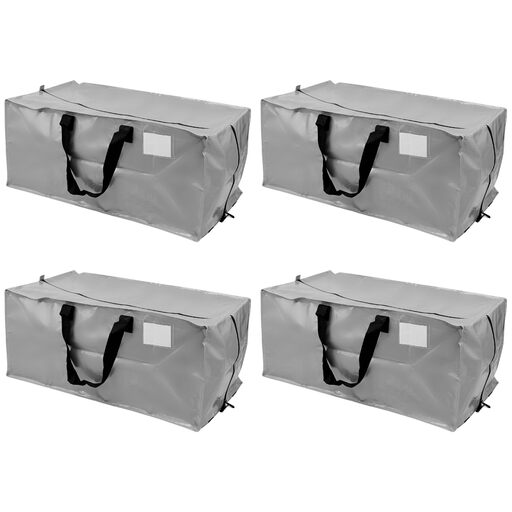
Why this product suits this buyer: The set of 4 is a good fit for smaller households, students or moves where you’ll mainly be transporting clothes and textiles.
The stated size, backpack shoulder straps, handles and zips address common problems such as limited carrying options and unprotected contents.
Four bags measuring 73 x 34 x 37 cm, with several carrying options listed in the product name.
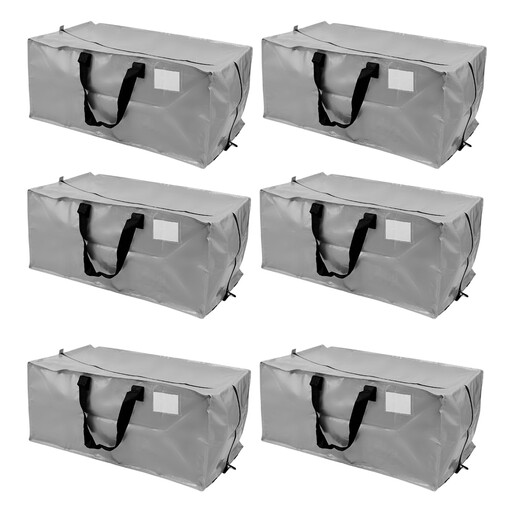
Why this product suits this buyer: Six bags give you more options for sorting by room, type of textile or stage of the move in a larger household.
The matching dimensions make it easier to plan how you’ll pack. Zips help keep the contents enclosed during transport and storage.
A set of 6 with backpack straps, sturdy handles and a stated size of 73 x 34 x 37 cm per bag.
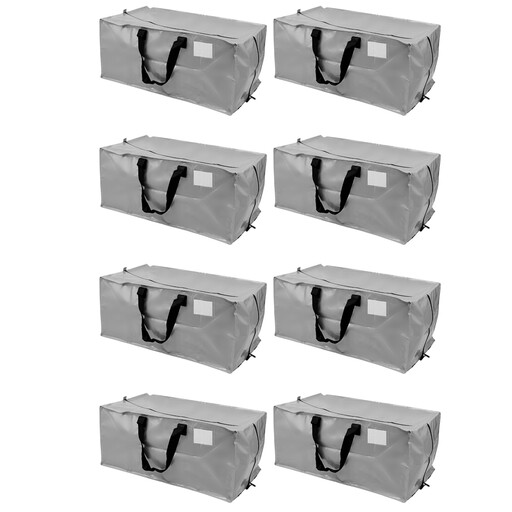
Why this product suits this buyer: The set of 8 is aimed at families, frequent users and households looking to reuse their moving bags for seasonal storage.
The larger set means you’re less likely to need a mix of different containers, and makes it easier to sort items by type. Zips and several handle options make the bags suitable for repeated use.
Eight bags in a matching size, with backpack shoulder straps, handles and zips listed in the product details.
We’ve put together a complete, regularly updated list of products that meet these strict selection criteria and fully comply with the safety regulations in force in the EU.
Before using the bags for the first time, check the handles, seams and zip for any visible damage. Pack heavier items near the bottom where possible and distribute the weight evenly. You can sort clothes and bedding into smaller groups, such as by bedroom, season or person.
After your move, empty the bags completely, wipe them dry and store them open. If you’re keeping them in a cellar or loft for an extended period, it’s a good idea to protect them from moisture as well. There’s no single estimate for how long they’ll last, as this depends on the load, frequency of use, storage conditions and how carefully the seams are treated.
For clothes, bedding, blankets and pillows, a bag can replace some boxes. For books, glassware, crockery and heavy tools, rigid boxes with suitable padding are usually a better choice. Your decision should depend on the weight and fragility of the contents.
It depends on your household and how many bulky textiles you have. A set of 4 may be enough for a smaller move, while families often benefit from a set of 6 or 8. Remember to plan separate containers for heavy or fragile items, too.
Yes, as long as you don’t overload the bag and adjust the straps properly. They can make it easier to carry the bag up stairs or over longer distances. For maximum safety, distribute the load evenly and check that the straps, handles and seams are intact before you set off.