Without a suitable amplifier, a compact pair of active stereo speakers with the right inputs for your album source is a sensible place to start. If you already have an amplifier, or plan to get one, passive bookshelf speakers are another option. Above all, check that two speakers will fit with the required clearance from the wall and that you have any additional equipment or cables you need – wattage alone won’t answer those questions.
Which option is right for you?
Rock fans with a dedicated listening spot
If you like to sit on the sofa and listen to albums properly, check whether you can place two speakers apart and angle them towards your listening position. KEF’s placement advice recommends planning the speakers and listening position together.
Listeners short on space
If you’re using a shelf or sideboard, check the dimensions of both speakers and how much space you actually have behind them. KEF points out that models with rear bass-reflex ports can be more sensitive to being placed close to a wall.
Listeners with several music sources
If you switch between wireless playback and wired sources, check that their outputs match the inputs on the specific system. A turntable only matters if you actually listen to records.
What should you look for when buying?
Active stereo pair
A good fit if: you want to listen without a separate hi-fi amplifier and connect your music source directly to the pair’s inputs.
Bear in mind: You’ll need to plan for a power supply and the connection between the speakers. Bluetooth doesn’t mean the system supports Wi-Fi streaming or has a phono input.
Passive stereo pair
A good fit if: you already have a suitable amplifier or want to choose your amplifier and speakers separately.
Bear in mind: The amplifier, source connection and speaker cables all need to be compatible. A front bass-reflex port doesn’t automatically make speaker placement independent of the room.
| What to consider |
What to look for when buying |
Who should consider this? |
| Stereo image and listening position |
Check that you have room for two separate speakers and can arrange the listening distance and position sensibly. |
If you like to listen to rock albums from a dedicated listening spot, you’ll want to be able to place one speaker on either side. Around 25% of consumers prioritise the stereo image. |
| Space and proximity to the wall |
Compare the width, height and depth of both speakers with the space available, and follow the placement advice for the model. |
If you have a small shelf or sideboard, the space behind the speakers matters as well as the depth of their cabinets. Around 25% of consumers put available space first. |
| Connections for your album source |
Check that your source’s output matches an input that’s explicitly listed. If you’re using a turntable, you’ll also need to check the phono signal path. |
If you want to connect a CD player, streaming device or an actual turntable, the signal path needs to work with your equipment. Around 20% of consumers prioritise the right source connections. |
| Listening without disturbing the neighbours |
Check how the speakers sound from your intended listening position, and follow local rules and your building’s house rules. |
If you live somewhere with thin walls, you’ll want to enjoy your music without unnecessarily disturbing the neighbours. Around 15% of consumers say this is their main requirement. |
| Cost of the complete system |
Check whether the offer is for a pair or a single speaker, and whether you still need an amplifier, cables or other accessories. |
If keeping costs down matters to you, make sure you account for all the components needed for a working stereo system. Around 15% of consumers put the cost of the complete system first. |
Common buying mistakes
-
Comparing a single passive speaker with an active pair
An offer may include a single speaker rather than a pair. Passive speakers also need a suitable amplifier.
Check how many speakers are included, and factor in any additional components and connection cables you’ll need.
You may need a second speaker for a complete stereo system. With passive models, you may also need an amplifier and cables.
-
Assuming “compact” means “fits anywhere”
The distance from the wall and the position of a bass-reflex port can affect how the speakers sound from your listening position. Pay particular attention to wall clearance if the ports are at the back.
Measure the space where you plan to put the speakers and follow the placement advice for the specific model.
-
Assuming an analogue input means a turntable will work
Whether you can connect a turntable directly depends on the signal path and whether a preamp is required. Klipsch’s help pages give conflicting advice about the switch settings on the R-50PM and R-40PM.
Check whether your turntable has a preamp and consult the instructions for the exact version of the equipment you’ve bought before connecting it.
If your turntable doesn’t have a suitable preamp, you may need an additional phono preamp.
Key brands at a glance
Edifier
The R1280DBs is an active stereo pair for buyers who want to connect several analogue and digital sources without a separate amplifier.
- For the R1280DBs, Edifier lists Bluetooth, two analogue inputs, optical and coaxial inputs, and a subwoofer output.
- The manufacturer’s stated power output of 42 W RMS isn’t a comparative test. No phono input is listed.
ELAC
The Debut 3.0 DB53 is a passive compact speaker for use with an existing or planned amplifier system.
- For the DB53, ELAC lists a nominal impedance of 6 Ω, cabinet dimensions of 172 × 311 × 267 mm and a front bass-reflex port.
- An amplifier is required. Sound benefits claimed by the manufacturer aren’t independently verified comparisons.
Nubert
The nuBoxx A-125 pro is an active pair for digital sources, while the nuBoxx B-30 is a separate passive option.
- For the A-125 pro, Nubert lists USB-C, two digital inputs and Bluetooth.
- The B-30 is sold as a single compact speaker. Check how many speakers you’ll need for stereo. The manufacturer’s sound ratings aren’t independent test results.
KEF
The Q1 Meta is a passive compact speaker for buyers with a suitable amplifier.
- KEF specifies an amplifier requirement of 10–150 W for the Q1 Meta.
- Placement still matters, even with a compact design. Manufacturer claims about Uni-Q technology don’t prove it’s better for rock music.
Klipsch
The R-50PM is an active pair with a range of inputs, including a phono/line input.
- The Klipsch data sheet lists an integrated phono preamp, as well as digital and other inputs.
- The bass-reflex port is at the rear. Klipsch’s help pages give conflicting advice about the switch setting, so check the instructions for the specific version.
Speakers for different set-ups
This selection of Joybuy products includes active stereo pairs for connecting sources directly, as well as passive bookshelf speakers for use with a suitable amplifier.
 No image available
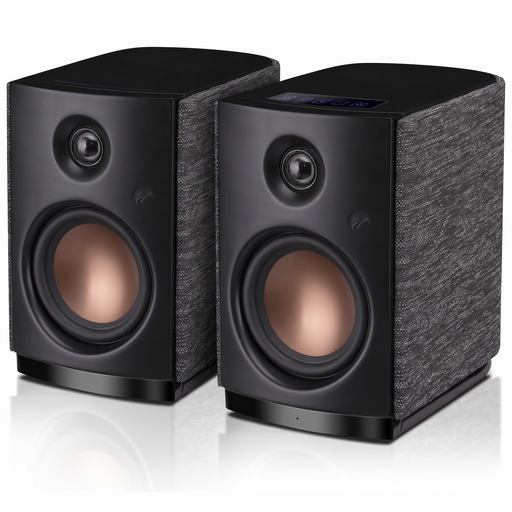
Lemega Bookshelf Speakers, Active 40W Pair
This active pair is an option if you want to connect several sources without a separate amplifier.
Listed connections include Bluetooth, HDMI ARC, optical, USB, AUX and RCA inputs, plus bass and treble controls.
View at Joybuy
 No image available
HiVi-Swans OS-10 Active Stereo Bookshelf Speakers
This active stereo model could suit you if you want to use Bluetooth or an AUX input for your source.
The title lists Bluetooth 5.0, a 4-inch woofer and 62 W RMS; the description also mentions an AUX input.
View at Joybuy
 No image available
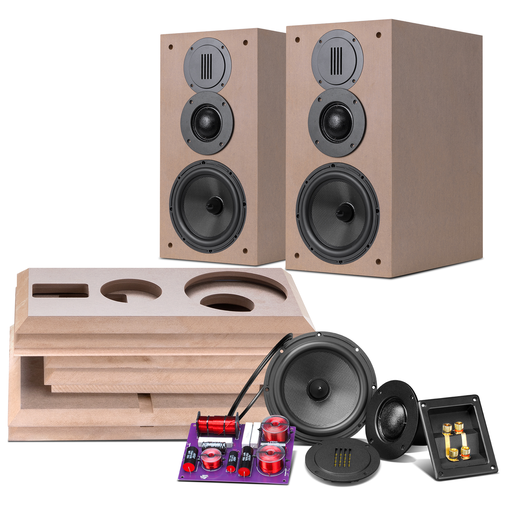
HiVi-Swans DIY3.1 Passive Bookshelf Speakers, Pair
This passive pair is suited to a set-up with a suitable amplifier. Check the clearance from the wall, as the bass-reflex port is at the rear.
Listed specifications include a 6.5-inch driver and 8 Ω impedance.
View at Joybuy
 No image available
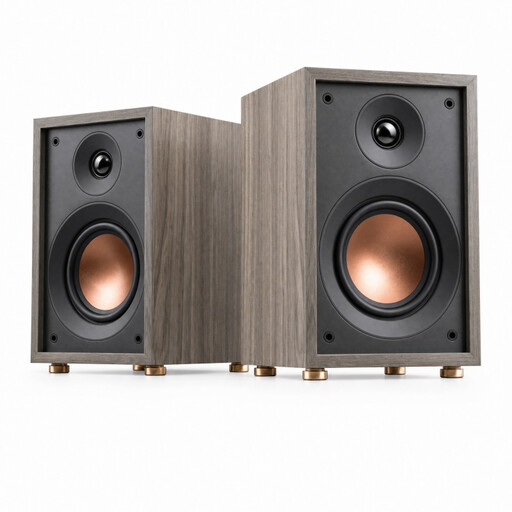
HiVi-Swans Oasis Passive 2-Way Bookshelf Speaker
This passive speaker is described as suitable for a set-up with a compatible amplifier. Check how many are included if you’re planning a stereo pair.
The title lists a 4-inch woofer, a 20 mm dome tweeter, 60 Hz–20 kHz, 4 Ω and 10–50 W. The bass-reflex port is at the rear.
View at Joybuy
 No image available
HiVi D3.1MKII Passive Bookshelf Speakers
This passive model is an option for a hi-fi set-up with a suitable amplifier. Check how many speakers are included for your planned stereo set-up, and bear the rear bass-reflex port in mind when positioning them.
Listed specifications include a 6.5-inch driver, 8 Ω impedance and a recommended amplifier output of 10–120 W.
View at Joybuy
Frequently asked questions
Do I need an amplifier for passive bookshelf speakers?
Yes. A passive speaker needs a suitable external amplifier. Teufel explains the difference between active and passive speakers; check that the amplifier, speakers and music source are compatible.
How should I position two speakers in a small room?
Start by placing the two speakers apart and angling them towards your listening position. KEF’s placement tips recommend forming a stereo triangle and experimenting with the distance from the rear wall; always follow the instructions for your specific model.
Can I connect a turntable directly?
Only if the signal path is right. Klipsch lists a phono/line input with an integrated phono preamp for the R-50PM. Check whether your turntable has its own preamp and follow the instructions for the version supplied; the conflicting Klipsch help pages don’t provide a reliable answer about the switch setting.
What should I do if my music disturbs the neighbours?
There’s no single volume or time allowance that applies to every home. The German Environment Agency points to state law, local regulations and house rules in relation to noise caused by people’s behaviour. Check the rules that apply where you live.
What should I know about faults or buying online?
Your statutory rights against the seller are separate from any voluntary guarantee. The Verbraucherzentrale says that goods ordered online can generally be returned within 14 days of receipt under the right to cancel; check the terms of your specific purchase.
How should I dispose of an old electric speaker?
Electrical waste must not go in household rubbish. The German Federal Ministry for the Environment advises disposing of it separately. Check current return options and retailer terms, as its detailed FAQ from 2022 predates the amendment that came into force on 1 January 2026.


