
Lieferung heute & morgen

Qualitätsgarantie

Willkommens-Angebote freischalten: KOSTENLOSE Lieferung | Bis zu 80 % RABATT | Kostenlose 30-Tage-JoyPlus-Testphase
App herunterladen
Rocket toys appeal to children interested in space, technology and imaginative missions. The choice ranges from simple rocket models for children aged 3 and over to detailed construction sets for older children and collectors. However, many products look similar at first glance. It’s not just the colours and packaging that matter: age recommendations, number of pieces, materials and play features are important too.
A space toy for children aged 4 and over may contain small parts that are unsuitable for younger children. Even if a product is marketed as a family or educational toy, parents should check the manufacturer’s specific age guidance and safety information. Construction sets for children aged 9 and over also involve more building steps and delicate features.
Rotating elements, light-up parts or a detachable rocket can be appealing. But they’re only worthwhile if they suit the intended play and don’t end up loose or unused after a short time. A working grabber arm, modular design or movable rocket launcher offers clear added value by enabling different play scenarios.
A large model may work well as a display piece, but it needs plenty of space. For example, the LEGO Technic 42221 NASA Artemis Space Launch System Rocket is listed as 70 cm tall. A more compact SIKU model may be more practical in a child’s bedroom with limited space. Before buying, check the product dimensions, detachable components and storage options.
Age guidance is a key factor when choosing a toy:
Age recommendations don’t replace supervision. With younger children, adults should supervise assembly and the handling of small parts, and regularly check for damaged components.
Clear safety information is important for toys sold on the German market. Look for the CE marking and, where stated, compliance with relevant European toy safety requirements such as EN 71. The PLAYMOBIL set is also described as using BPA-free plastic and meeting the EN 71, REACH and RoHS standards. These details describe product compliance; they do not indicate any medical or therapeutic effect.
For everyday use, also look for:
A rocket toy can suit different needs. A vehicle with a rocket is ideal for short role-play sessions and collecting. A modular space exploration construction set supports longer building projects and mission scenarios. A large model with a crank mechanism is better suited to children interested in how things work.
So if you’re looking for a gift for a space enthusiast, don’t choose based on brand alone. LEGO, PLAYMOBIL and SIKU each offer a different kind of play: building and mechanics, role-play and accessories, or compact vehicle and collector play.
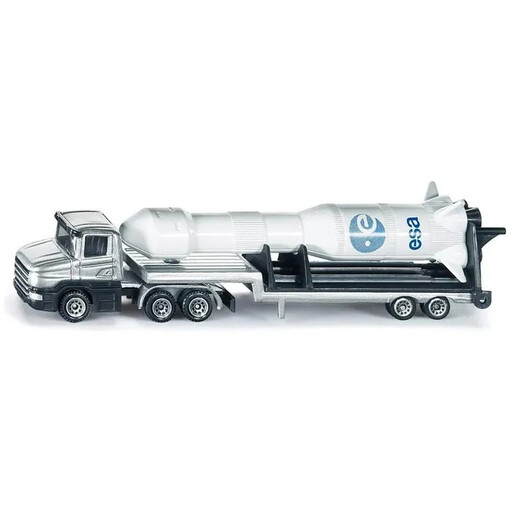
Why this product suits this profile: This compact SIKU model combines a vehicle with a detachable rocket, making it suitable for short play scenarios, small bedrooms and collectors.
The product details give the dimensions as 17,5 × 3,6 × 4,4 cm and specify an age recommendation of 3 and over. This makes it easier to assess the space needed and suitability before you buy.
Metal body, plastic tyres, foldable rocket mount and detachable rocket.
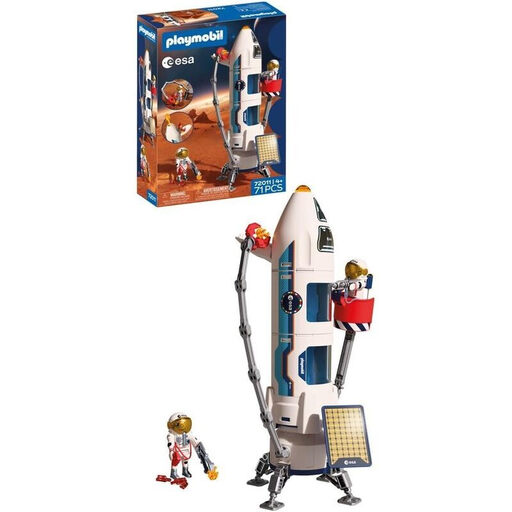
Why this product suits this profile: Designed for children aged 4 and over, this set is ideal for those who enjoy role-play with figures, accessories and changing mission set-ups.
The modular rocket has four components that can be reconfigured. This makes the contents and features easier to understand than those of a purely decorative rocket.
71 pieces, two astronauts, a movable grabber arm, a launch platform with a solar panel and five illuminated rock samples.
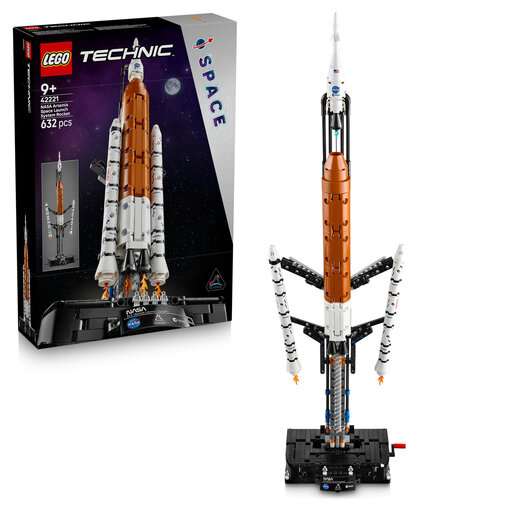
Why this product suits this profile: This construction set is designed for children aged 9 and over, as well as older LEGO and space enthusiasts looking for a longer building project with a mechanical feature.
The 632 bricks and stated height of 70 cm give you a clear idea of the project’s scale. Before buying, check that you have enough space to build and display it.
Crank mechanism for step-by-step stage separation, four astronaut figures and digital building instructions in the LEGO Builder app.
We’ve put together a complete, regularly updated list of products that meet these strict selection criteria and the applicable EU safety regulations.
For children aged 3 and over, compact models with a manageable number of pieces are worth considering, such as a SIKU rocket vehicle. From age 4, sets with figures and accessories, such as the PLAYMOBIL ESA Mars Research Rocket, are an option. Always follow the manufacturer’s guidance. Small parts can pose a choking risk even when the toy feels sturdy overall.
How long a toy stays interesting depends more on its play features than its size. Detachable rockets, modular components and moving features allow for different scenarios. A construction set such as the LEGO NASA Artemis model can be displayed after it’s built, while role-play with a PLAYMOBIL set can be extended with existing space sets.
According to the product information, the SIKU, PLAYMOBIL and LEGO models mentioned do not require batteries. So they don’t normally involve ongoing costs for electricity or battery replacements. The main costs to consider are the initial purchase price, any additional compatible accessories and, where needed, replacement parts.