
Lieferung heute & morgen

Qualitätsgarantie

Willkommens-Angebote freischalten: KOSTENLOSE Lieferung | Bis zu 80 % RABATT | Kostenlose 30-Tage-JoyPlus-Testphase
App herunterladen
A rocking chair can be a practical addition to a reading nook, living room or bedroom. But there are clear differences between a classic wooden model, an upholstered rocking chair and a large recliner with a footrest. So the most important question isn’t just how it looks: it’s whether the design, dimensions and features suit the way you plan to use it.
A velvet or Scandinavian-style rocking chair can complement your décor. But an attractive fabric tells you little about seat height, cushion density or stability. Check whether the manufacturer provides details about the frame material, maximum load and dimensions.
The space you’ll need is often underestimated, too. A rocking chair needs more than just enough room for its seat width: it also needs space to rock freely. A model with a folding footrest will need extra depth as well.
If you’re looking at a rocking chair with a footrest, check whether it’s fixed, extends manually or can be adjusted to several positions. An adjustable footrest gives you more options for reading, watching TV and taking a short break. It’s also worth checking whether it folds away completely and whether there’s enough clearance from the floor when the chair rocks.
An XXL recliner can look spacious, thanks to its wide armrests and generous padding. But it may take up too much room in a smaller space. The seat should also suit your height. If it’s too deep, getting up can be difficult; if the backrest is too short, it may not provide much support for your head and shoulders during longer periods of use.
Before you buy, compare at least the following details:
The JOYFURNOS models, measuring 121.5 × 65 × 84 cm with a stated weight capacity of up to 150 kg, are an example of a compact design. The HONEYOU chair measures 105 × 94 × 103 cm when upright and needs up to 164 cm of depth when extended. These differences matter in living rooms, bedrooms and home offices.
Birch or beech wood combined with a metal frame can make for a sturdy design. Even so, it’s important to assemble the chair carefully. For many models, start by tightening the screws loosely, align all the parts, then tighten everything fully.
When it comes to upholstery, look for details about the foam type, seat construction and cover. An upholstered rocking chair with a removable cover is usually easier to care for day to day than one with a fixed cover. Check the care instructions: some cotton covers can be machine-washed at up to 30 °C, while tumble drying, bleaching or ironing may not be recommended.
A classic rocking chair moves gently forwards and backwards on runners. A swivel recliner adds rotation to that movement. A manual TV recliner with a footrest is usually adjusted to your preferred position using a handle on the side.
More features don’t automatically make a chair more practical. Check whether it works without electricity, how much space it takes up when reclined and whether felt pads or a suitable mat will protect your floor.
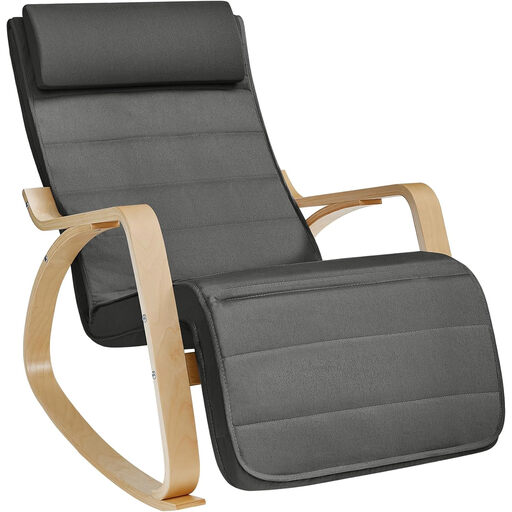
Why this product suits this profile: This model combines a compact design with a rocking function and a footrest that adjusts to five positions. It’s a good fit for smaller living rooms, reading nooks or bedrooms.
The five footrest positions are clearly specified. The product details also state that it has removable covers, a maximum weight capacity of 150 kg and felt floor protectors.
Birch wood, an internal metal frame, washable cover and removable headrest; dimensions: 115 × 67 × 91 cm.
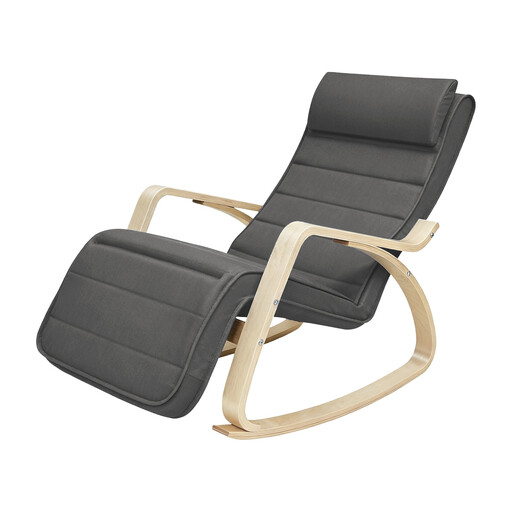
Why this product suits this profile: The combination of birch wood, a metal frame, high-density foam cushioning and a cotton cover will appeal to buyers who like to compare materials and care options in detail.
Rather than relying on a vaguely described comfort feature, the product details specify five footrest positions, a removable headrest cover and a weight capacity of up to 150 kg.
Scandinavian-inspired design, 121.5 × 65 × 84 cm, removable cotton cover and manually adjustable footrest.
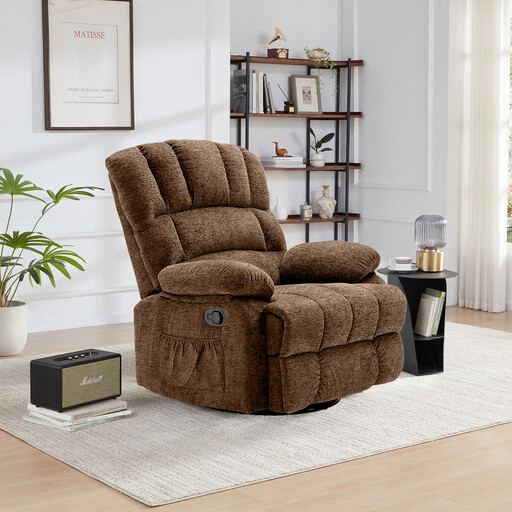
Why this product suits this profile: This wide recliner combines 360-degree swivel, manual reclining to a maximum of 160 degrees and a 30-degree rocking motion. It’s designed for spending long periods in the living room or home cinema.
The depth is stated for both the upright and extended positions. This lets you check in advance whether there’s enough room to recline comfortably.
Wide seat, padded armrests, manual handle and stated weight of 38.5 kg; assembled using the designated push-fit connections.
We’ve put together a complete, regularly updated list of products that meet these strict selection criteria and fully comply with the safety regulations in force in the EU.
Before using your rocking chair for the first time, assemble it fully and place it on a level surface. Check that all the screws are secure and that the rocking motion is unobstructed. Children should be supervised, as the runners and moving footrests can create pinch points.
Clean covers only according to their care instructions. Velvet covers often need spot-cleaning with a soft cloth, while some removable cotton or blended-fabric covers can be washed at 30 °C. A rocking chair shouldn’t be left outdoors permanently unless the manufacturer says it’s suitable for outdoor use.
As well as allowing for the chair’s width, leave extra space at the front and back so it can rock freely. For a recliner with a footrest, you’ll also need to account for its extended depth. Measure the available space with the chair both upright and fully extended.
Its lifespan depends on the frame, fittings, upholstery, load and care. Regularly checking the screw connections, keeping within the weight limit and protecting the chair from moisture can help keep it in good condition. Without specific test and usage data, it isn’t possible to give a general lifespan.
No. A manual TV recliner or living-room recliner is operated using a handle, your body weight or a mechanical adjustment. It won’t add to your electricity bill. A swivel recliner with a reclining function also doesn’t need electricity, unless it has a built-in electric motor.