
Lieferung heute & morgen

Qualitätsgarantie

Willkommens-Angebote freischalten: KOSTENLOSE Lieferung | Bis zu 80 % RABATT | Kostenlose 30-Tage-JoyPlus-Testphase
App herunterladen
A rocking chair with a reclining function combines two types of movement: gentle rocking and a backrest that reclines. It can therefore serve as a TV recliner, reading chair or extra place to sleep when you fancy a short nap. To make sure it remains a practical choice for your living room, bedroom or children’s room, don’t focus solely on soft padding or attractive design.
The term ‘reclining function’ alone tells you little about how far the chair can actually recline. Some models only lean back slightly, while others offer a much flatter position. So look for a clearly stated maximum recline angle. For a manual recliner, the product details should also explain how to adjust it – for example, using a lever on the side.
A large recliner needs enough space not only where it stands, but also in front of it for the extended footrest and reclined backrest. Compare the dimensions in the upright position with those when extended. A chair that measures more than 160 cm deep when reclined can quickly block walkways in a small room.
A generous seat is comfortable, but takes up more room and needs to be sturdy enough to support the user. Check the maximum weight capacity and seat width. Claims such as ‘oversized’ or ‘extra wide’ should always be backed up with exact measurements. With an upholstered chair, it’s also important to check that the back, armrests and seat are all well supported.
Before buying, note down the available floor space. Take the following into account:
A swivel recliner gives you more flexibility when positioning the chair. However, you should only use the 360-degree swivel if there is enough clear space around it.
When choosing a rocking recliner, consider each function separately. The rocking motion describes the frame moving forwards and backwards. The reclining function, on the other hand, changes the angle of the backrest and footrest. A model with both functions can be suitable for watching TV, reading and taking a break, as long as the controls are easy to reach.
A lever on the side is typical of a manual recliner. It doesn’t need a power supply, but may require some effort to operate. Also check whether the footrest is linked to the backrest or can be adjusted separately.
Thick padding can make a chair more comfortable, but don’t judge it by its soft feel alone. Look for:
For a living room chair, hard-wearing upholstery is often more practical. In a bedroom or children’s room, removable covers can make regular care easier. Check care instructions, including washing temperature, drying and whether bleach should be avoided, before you buy.
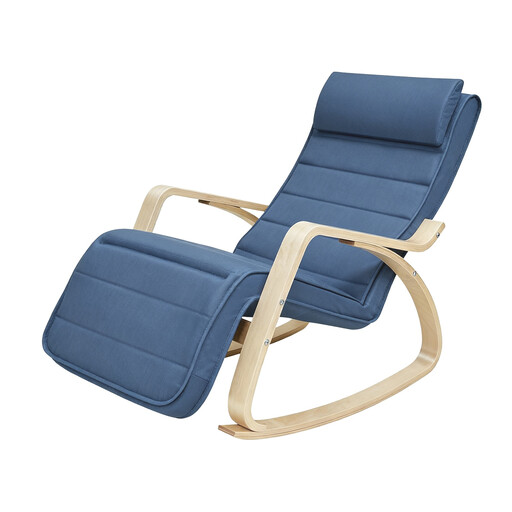
Why this product suits this profile: This rocking recliner with a footrest is designed for shoppers looking for a classic rocking motion and an adjustable leg rest. Its five footrest positions let you tailor it to different ways of sitting.
The product details give exact dimensions of 121.5 x 65 x 84 cm, a maximum weight capacity of 150 kg and five footrest positions, rather than making vague claims about comfort.
Birchwood, a metal frame, foam padding and a removable cotton cover; assembly instructions are included in the product description.
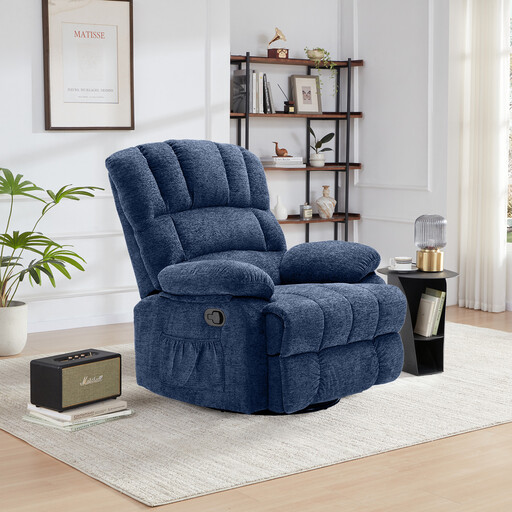
Why this product suits this profile: This generously sized rocking recliner combines a swivel function with manual reclining, making it a good choice for the living room or bedroom.
The reclined position is specified as up to 160 degrees; the description also gives a 30-degree rocking motion and a weight capacity of 350 lb.
Measures 105 x 94 x 103 cm, extending to 105 x 164 x 81 cm; padded armrests, a spring pack and tool-free assembly using connecting fittings, according to the product description.
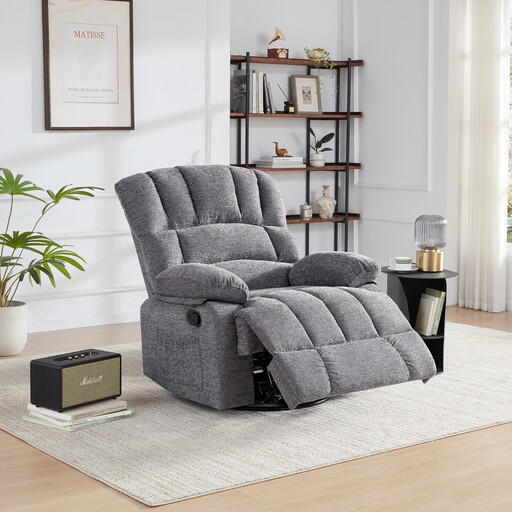
Why this product suits this profile: For regular TV watching, reading or longer periods of rest, this model offers a wide seat, a rocking function and a deep recline.
The product description gives exact dimensions for the upright and extended positions, a 360-degree swivel and a maximum recline angle of 160 degrees.
Net weight of 38.5 kg, extra-wide seat, padded backrest and a side lever; the upholstery is described as breathable fabric.
Before assembling the chair, check the contents against the product description. For wooden models that need to be screwed together, it’s best to fit all the screws loosely first, then tighten them gradually. This makes it easier to correct any misaligned parts. For push-fit connections, make sure the backrest and base click fully into place.
Place the chair on a level surface. Once assembled, check that it can rock, swivel and recline without touching other furniture. If you have a heavy recliner, ask someone to help you assemble and move it.
We’ve put together a complete, regularly updated list of products that meet these strict selection criteria and fully comply with the safety regulations in force in the EU.
As well as the space needed for the chair’s width, allow for its extended depth. With models that reach around 164 cm when reclined, you’ll need to leave enough space in front of the chair and between it and the wall. Measure the chair’s range of movement with a tape measure before ordering.
A manual recliner doesn’t need a power supply. Check any visible screw connections from time to time, and make sure the mechanism isn’t blocked by objects or the edge of a rug. Its actual lifespan depends on factors including how often it’s used, the weight it supports and how well it’s cared for.
A manual rocking recliner doesn’t use electricity while you’re using it. Instead, consider the purchase price, delivery, any assembly help you might need and upholstery care. For powered models, you’ll also need to factor in the power supply and energy consumption.