
Lieferung heute & morgen

Qualitätsgarantie

Willkommens-Angebote freischalten: KOSTENLOSE Lieferung | Bis zu 80 % RABATT | Kostenlose 30-Tage-JoyPlus-Testphase
App herunterladen
A rocking horse for children can keep little ones entertained for several years, provided its age suitability, construction and intended use are right for your child. But there are significant differences between a classic wooden rocking horse, a 2-in-1 rocking toy and a bouncy horse. Good looks alone tell you little about how practical or safe a toy will be in everyday use.
A 2-in-1 rocking horse or 3-in-1 model offers several ways to play. That’s practical, but it doesn’t automatically extend the toy’s useful life. The key factors are the recommended age, maximum weight limit and whether your child can use each function safely.
A seat or walking mode may suit a younger child, while rocking or balancing requires greater body control. Check the manufacturer’s guidance for each use separately.
Terms such as “stable”, “ergonomic” or “supports development” mean little without technical details. Instead, look for:
For a baby rocking horse or a rocking horse for children aged 12 months and over, it’s particularly important that your child can sit securely and hold on to the handle. A model for older children isn’t automatically suitable for toddlers.
Wood looks durable, but it shouldn’t be stored in damp conditions for long periods or cleaned with harsh products. For plastic models, check for rounded surfaces, a well-finished handle and a secure connection between the body and base.
FSC-certified wooden toys may appeal to buyers who care about where the wood comes from. The FSC mark relates to certified forestry; it doesn’t replace checks on the toy’s construction, finish or suitability for your child’s age.
“From 12 months” isn’t a blanket indication that every child is ready to use a toy. Read the safety information in full and consider whether your child can already sit securely, hold on and climb on and off in a controlled way.
A rocking horse for children aged 18 months and over often has handles and footrests, but still requires adult supervision. A bouncy horse also involves jumping. According to the product information, the Rody bouncy horse in our selection is intended for children aged 36 months to 5 years and weighing up to 45 kg.
Check whether parts can be converted without tools or only after being assembled securely. For a rocking horse with a seat, the seat mode should stand firmly, with no loose screws, wheels or legs.
A wider rocker, textured underside and well-positioned handle can affect how easy the toy is to use. These features don’t remove the need to use it on a level surface and under supervision.
Measure the space where you plan to use the toy before buying. Dimensions such as 82 × 32.5 × 55 cm or 70 × 34 × 47 cm can make a noticeable difference in a small child’s bedroom. Indoors, place the toy on a dry, level surface that isn’t slippery.
Wooden models can usually be cleaned with a soft, slightly damp cloth. Plastic can often be cleaned with water and mild soap. Check the screws, handles, wheels, rocker and visible surfaces regularly. Stop using the product if you find cracks, warping, loose parts or splinters sticking out of the wood.
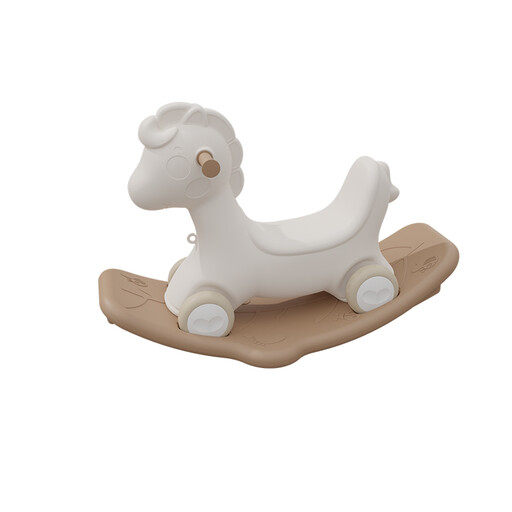
Why it suits this profile: According to the product information, this plastic model is suitable from 12 months and can be used as a rocking horse, walking aid and balance board. It gives families several ways to play with one product.
The three intended modes are clearly listed. Check the connections, wheels, handle and rocker before each use.
Rounded plastic surfaces, a textured underside and several play modes for indoor use.
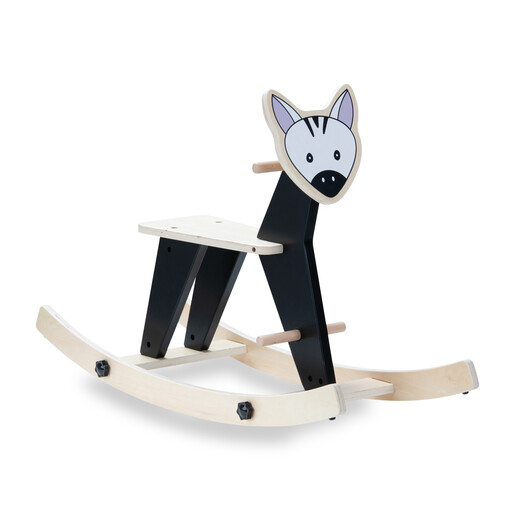
Why it suits this profile: According to the product information, this wooden rocking horse is made from FSC-certified wood, is suitable for ages 18 months to 10 years and converts into a seat.
The recommended age, dimensions of 82 × 32.5 × 55 cm and conversion mechanism are specified. Check the screws regularly.
FSC-certified wood, handles, footrests and a seat function in one model.

Why it suits this profile: According to the product information, this model is designed for children aged 12 to 36 months and weighing up to 20 kg. Its seat and rocking options make it a good choice for families looking for a model specifically designed for toddlers.
The maximum weight limit of 20 kg and age range are specified. A level surface and adult supervision are still essential.
FSC-certified wood, an integrated handle, a footrest and a convertible seat.
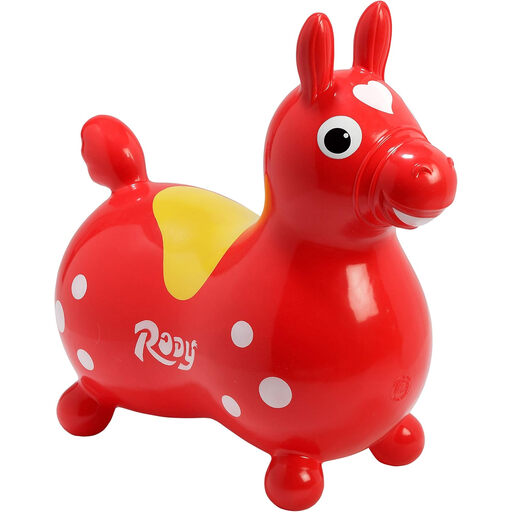
Why it suits this profile: According to the product information, this bouncy horse is designed for children aged 36 months to 5 years and supports a weight of up to 45 kg. It’s made for active indoor play and is inflated through a valve.
Use is clearly limited to children aged 36 months and over. Before bouncing, check the inflation, closures and available space.
Flexible plastic, a stated weight limit of up to 45 kg, and easy cleaning with water and mild soap.
Whether you’re buying a balance toy, a motor skills toy for children or a classic rocking animal, before the first use you should:
A CE mark should be present if the product is one for which the relevant EU conformity marking is required. It’s also worth checking the manufacturer’s information, warnings and product traceability.
We’ve put together a complete, regularly updated list of products that meet these strict selection criteria and the safety regulations in force in the EU.
It depends on the model. Our selection includes products for children aged 12 months and over, models from 18 months, and a bouncy horse for children aged 36 months and over. Always follow the manufacturer’s age guidance rather than relying on the general product category.
How long your child can use it depends on the age range, weight limit, their size and their interest. A convertible model may stay in your home for longer if its seat and rocking modes suit your child’s different stages of development. Regular checks don’t extend the approved age range, but they can help you spot damage early.
A model with a seat, handle and footrests is often easier to assess for younger children. A bouncy horse requires controlled jumping and should only be used within the stated age range. Both types need to be used on a level surface and under supervision.