
Lieferung heute & morgen

Qualitätsgarantie

Willkommens-Angebote freischalten: KOSTENLOSE Lieferung | Bis zu 80 % RABATT | Kostenlose 30-Tage-JoyPlus-Testphase
App herunterladen
A rocking horse for children can be enjoyed through several stages of development, provided the age recommendation, design and weight limit are right for your child. But there are clear differences between a classic wooden model, a 2-in-1 rocking horse, a rocking animal with a seat and a bouncy horse.
Three common buying misconceptions are particularly likely to lead to the wrong choice:
A rocking horse from 12 months isn’t automatically suitable for every one-year-old. Check that your child can sit unaided, reach the handle and place their feet securely on the designated footrests. Younger children must be supervised at all times.
For toddlers, rocking toys for toddlers with a low seat and sides to help keep them in place are often worth considering. Models that allow greater freedom of movement or involve bouncing should only be used once your child has reached the stated minimum age.
A classic rocking horse should have a wide rocking base that sits firmly on the floor and is securely attached to the body. Rounded edges, an easy-to-reach handle and stable footrests are useful things to check.
A 2-in-1 rocking horse or a model that converts into a seat has another point to consider: after every change of configuration, check that screws, wheels, legs or rockers are correctly secured or locked into place. A product used as a rocking horse with a seat should only be used in the configuration intended by the manufacturer.
A wooden rocking horse can last a long time if it’s stored in a dry place. Check the surface regularly for splinters, cracks and loose screws. Clean wood with a slightly damp cloth and don’t leave it soaking wet.
Plastic models can usually be cleaned with water and a mild detergent. Look out for any warping, sharp edges or damaged joints. Whatever the model, never exceed the maximum weight limit. For example, the Ledraplastic Rody Bouncy Horse has a stated maximum weight of 45 kg and is recommended for children aged 36 months to 5 years.
Many toys are required to carry a CE marking, but this doesn’t replace your own checks of the assembly, instructions and condition. Always follow the manufacturer’s specific guidance and use the toy on a flat, dry surface.
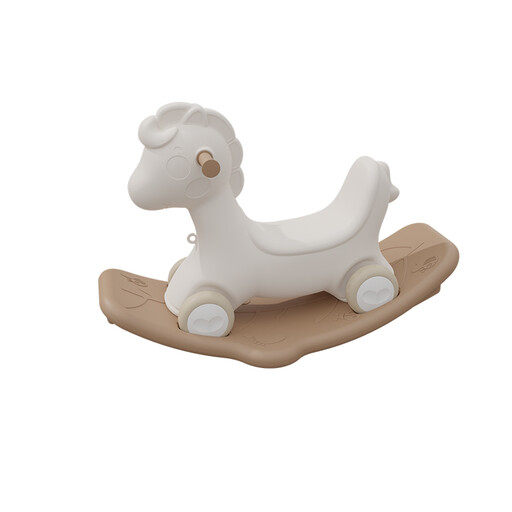
Why it suits this profile: According to the product information, this plastic model is suitable from 12 months and can be used as a rocking horse, a walking aid and a balance board. That makes it easy to adapt to different play preferences indoors.
With three intended ways to play, there’s less risk of the toy only being used for a short time. Before use, check the body, handle, wheels and rocking board.
Plastic construction, a textured underside and a stated rocking angle of 40 degrees; suitable for indoor use at home.
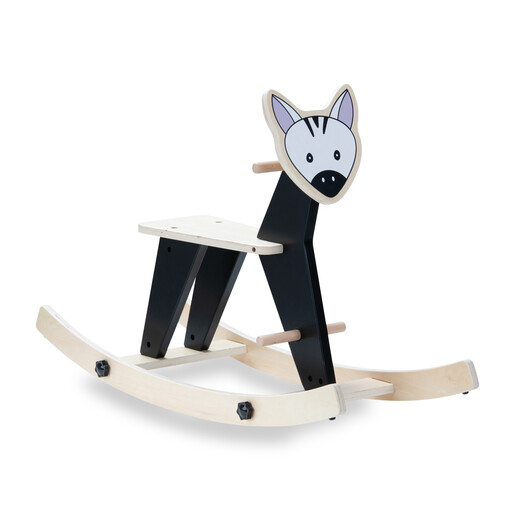
Why it suits this profile: According to the seller, this model is made from FSC-certified wood, has handles and footrests, and converts into a seat. The stated age recommendation is from 18 months to 10 years.
Converting it into a seat can help extend its useful life. Even so, check the screws regularly and inspect the wooden surfaces for damage.
FSC-certified wood, a seat function and product dimensions of 82 × 32,5 × 55 cm, according to the seller.
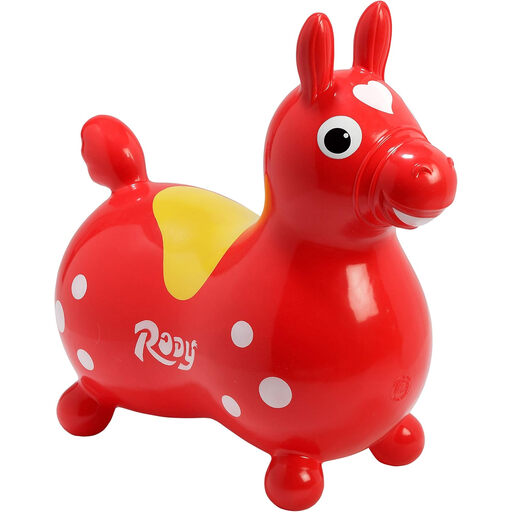
Why it suits this profile: According to the product information, this bouncy horse is designed for children aged 36 months to 5 years and for active play. You can adjust its size by inflating or deflating it.
The clear age limit helps prevent the bouncy toy from being used too early. Before each play session, check the inflation, valve and material for any visible damage.
Elastic plastic, easy to clean with water and neutral soap, and a stated maximum weight of 45 kg.

Why it suits this profile: The product information states that it’s suitable from 12 to 36 months, has a seat function and supports a maximum weight of 20 kg. This model is designed for use on flat indoor surfaces.
The stated age and weight limits make it easier to choose for younger children. Check the screws, wooden surfaces and seat function before use.
FSC-certified wood according to the seller, a 2-in-1 design and a stated weight limit of 20 kg.
We’ve put together a complete, regularly updated list of products that meet these strict selection criteria and fully comply with the safety regulations in force in the EU.
It depends on the model. According to the manufacturer, some products are suitable from 12 months, while others are intended for children from 18 or 36 months. As well as the minimum age, consider your child’s sitting position, reach to the handle and foot placement. Children should be supervised while playing.
How long it lasts depends on the age recommendation, weight limit, material and condition. A model with a seat function or several ways to play may hold your child’s interest for longer. Even so, check the joints, surface and base regularly.
The price depends mainly on the material, brand, features and accessories. Don’t compare the purchase price alone: also consider the expected length of use, availability of replacement parts, care requirements and maximum weight limit.