
Lieferung heute & morgen

Qualitätsgarantie

Willkommens-Angebote freischalten: KOSTENLOSE Lieferung | Bis zu 80 % RABATT | Kostenlose 30-Tage-JoyPlus-Testphase
App herunterladen
Finding the right role-play toys can be a challenge. Parents, grandparents, and friends want to find a gift for children that not only brings joy but is also safe and supports development. However, the market is flooded with products whose quality and play value are difficult to assess. Disappointment often sets in quickly when an expensive toy breaks after a short time or the child loses interest.
This guide will help you avoid common purchasing pitfalls. We'll show you the key features to look for to make an informed decision—ensuring long-lasting fun and a worthwhile investment.
Before making a purchase, it's helpful to know the most common problems that lead to frustration and wasted money.
To avoid these pitfalls, focus your attention on a few fundamental, objective criteria. These will help you separate the wheat from the chaff.
A child's safety is the top priority. An essential feature for toys sold in the EU is the CE marking. This symbol confirms that the product meets the basic safety and health requirements of the European Union. Also, look for:
The manufacturer's age recommendation is an important starting point. A good educational toy for ages 3+ should be intuitive to use and neither underwhelm nor overwhelm the child.
To help you with your selection, we have put together some products that are suitable for different interests and play styles.
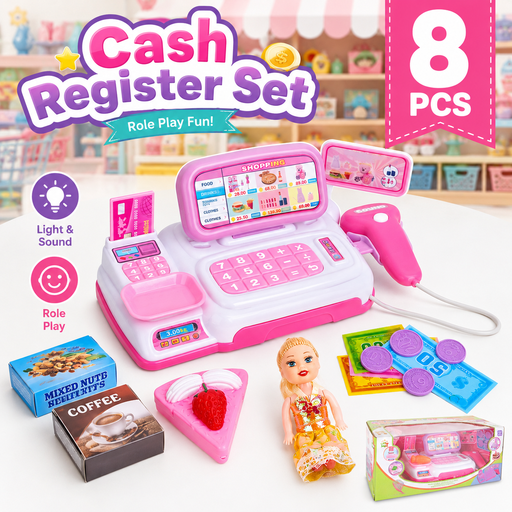
Why This Fits Their Persona: Ideal for children who love to reenact grocery shopping. It promotes an understanding of numbers and social interaction in a simple, accessible way.
The set focuses on the tactile play experience. The light and sound effects are a supplement, not the sole attraction, which ensures the toy's long-term play value.
Playfully encourages role-play centered around shopping and handling money. The sturdy construction is designed for use by children's hands.
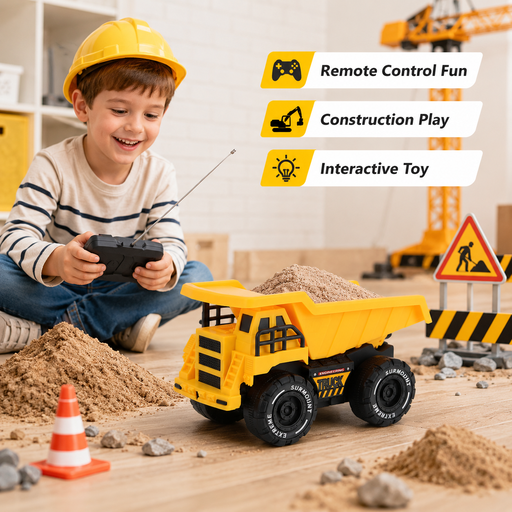
Why This Fits Their Persona: Perfect for children fascinated by construction sites and large vehicles. The simple controls allow for quick success and promote hand-eye coordination.
The remote control is limited to essential driving functions. This reduces its vulnerability to technical defects compared to overloaded, multi-function models.
Combines the appeal of a remote-controlled vehicle with the creative potential of classic construction vehicle toys. Its robust design is suitable for indoor play.
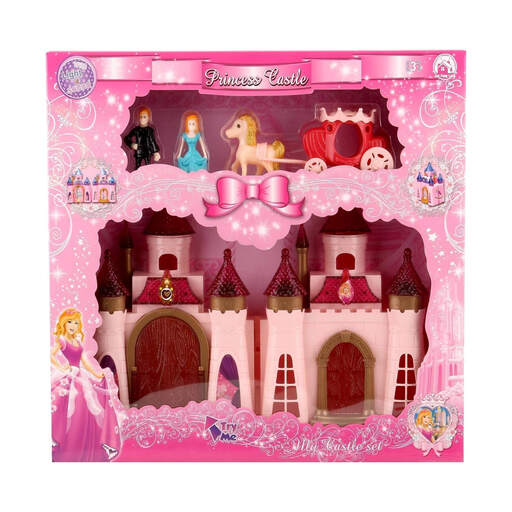
Why This Fits Their Persona: For children who love to dive into the world of princes and princesses and create their own stories. The set provides a complete backdrop for imaginative play.
The play value doesn't depend solely on light and sound effects. The castle, figures, and carriage form a solid foundation for creative play that works even without batteries.
As a complete set with a princess, prince, and carriage, it allows for immediate fun without needing additional purchases. It stimulates imagination and language development.
We have compiled a complete, up-to-date list of products that fully meet these strict selection criteria and relevant safety regulations.
The most important feature is the CE marking, which indicates conformity with EU safety standards. Additionally, check the toy for sturdy construction, rounded edges, and the absence of small parts that could be swallowed by children under three. The manufacturer's age recommendation is a crucial guideline here.
Simple imitation games often begin around the age of two. From age three, children can understand and act out more complex scenarios, which is why more detailed toys like a play kitchen or toy shop accessories are particularly suitable from this age. Observe your child's interests and abilities to find the right time and the right toy.
Proper storage, such as in boxes or on shelves, protects the toy from damage. Clean it according to the manufacturer's instructions—plastic can usually be wiped with a damp cloth. By demonstrating and explaining how to handle toys with care, you also contribute significantly to their longevity.