
Lieferung heute & morgen

Qualitätsgarantie

Willkommens-Angebote freischalten: KOSTENLOSE Lieferung | Bis zu 80 % RABATT | Kostenlose 30-Tage-JoyPlus-Testphase
App herunterladen
The selection of role-play toys is vast, and manufacturers often make big promises. However, not every colourful set delivers on its word. Many products turn out to be short-lived purchases that cause more frustration than joy. Before you choose a gift for a child, it's helpful to know the typical pitfalls to make an informed decision.
This guide will show you what to look for when selecting toys to find durable and stimulating options that truly foster creativity.
Well-intentioned purchases often lead to disappointment. Three problems are particularly common:
To avoid these pitfalls, it is advisable to check three key aspects before buying. These will help you objectively assess a product's quality.
The quality of the material is crucial for durability and safety. Look for robust materials like solid wood or high-quality, shatterproof plastic. The workmanship should be child-friendly, meaning rounded edges and a stable construction with no loose parts. An essential feature within the EU is the CE mark. It signals that the product meets the applicable European safety requirements.
A good role-play toy is tailored to the child's developmental stage. For toddlers, simple educational toys for toddlers that support basic actions like putting things in and taking them out or matching shapes are often suitable. Older children, from around four years old, benefit from more complex sets like a play kitchen with detailed accessories or a play shop, which encourage more sophisticated role-playing and promote social interaction. A good design leaves room for imaginative play instead of rigidly dictating the course of the game.
Role-play worlds grow with the child. A simple shopping basket can later be supplemented with a toy cash register and a variety of play shop accessories. Sets that are modular or compatible with other products offer long-term play value. In this way, a simple starter set can evolve over the years into an entire play world that is constantly being rediscovered.
Based on the criteria mentioned, we have put together some products that are suitable for different interests and age groups.
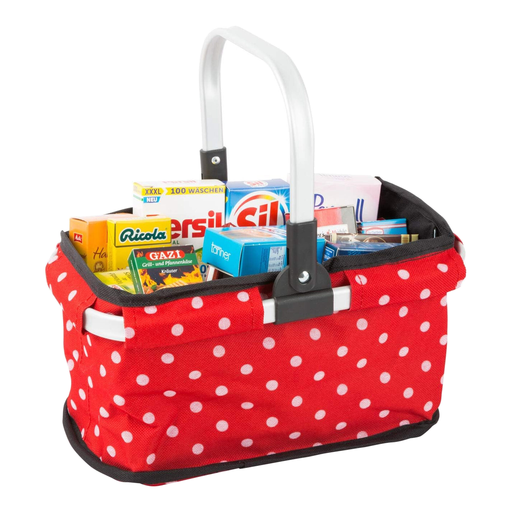
Why This Fits Their Persona: Ideal for toddlers who are beginning to imitate everyday situations. The basket is lightweight, sturdy, and encourages classic shopping play without the distraction of electronic effects.
The sturdy plastic construction is designed for durability and withstands even boisterous play. The open design encourages imagination rather than restricting it with pre-set functions.
Lightweight and easy for toddlers to carry. Encourages imaginative play and social interaction. The perfect accessory for a play shop.
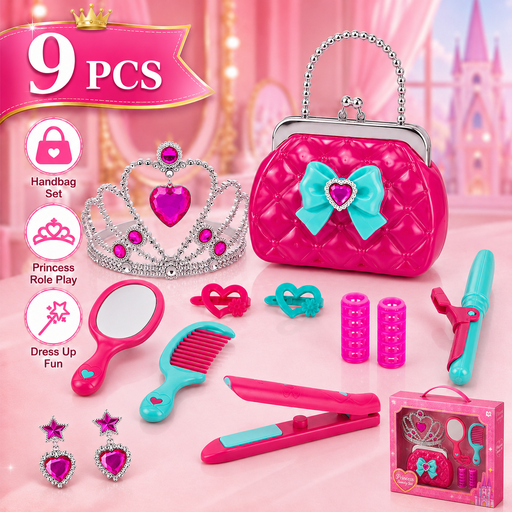
Why This Fits Their Persona: This set caters to the desire of many children to dress up and step into the role of a princess. It's compact and portable, ideal for play at home or on the go.
Instead of a rigid play sequence, this set offers various accessories for creative princess toys. The pieces are designed for children's hands and encourage free play.
Combines a handbag and beauty accessories for comprehensive role-play. The set is portable and fosters creativity.
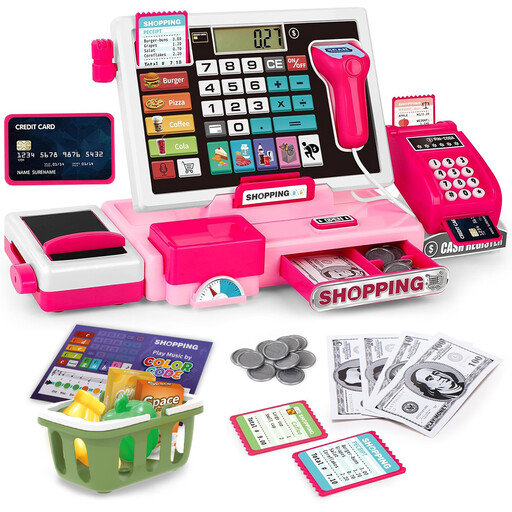
Why This Fits Their Persona: This set is ideal for children who enjoy counting and playing shop. It combines role-play with initial maths exercises, playfully promoting numeracy skills.
Instead of relying solely on light and sound effects, this toy cash register offers real value with its working calculator. This adds a realistic and educational component to the play.
Promotes basic maths skills, money handling, and communication. Includes extensive accessories like a scanner, play money, and food items.
We've curated a complete, up-to-date list of products that fully meet these strict selection criteria and European safety regulations.
Look for the CE mark, which confirms that the product complies with EU safety standards. Check the toy for sturdy, high-quality materials, rounded edges, and solid construction. For toys intended for children under three, it is especially important that there are no small parts that can be swallowed. Always follow the manufacturer's age recommendation.
Simple role-playing often begins around the age of two, when children start to imitate everyday actions. Simple toys like a telephone or cookware are ideal at this stage. More complex scenarios and group play usually develop from the age of three or four. For this, more extensive sets like a play kitchen, a doctor's kit, or a play shop are suitable.
The correct cleaning method depends on the material. Toys made of untreated wood should only be wiped with a slightly damp cloth, as they can otherwise swell. Painted wood and plastic parts can usually be cleaned with mild soapy water. Avoid aggressive cleaning agents. Always follow the manufacturer's care instructions to ensure the toy's longevity.