
Lieferung heute & morgen

Qualitätsgarantie

Willkommens-Angebote freischalten: KOSTENLOSE Lieferung | Bis zu 80 % RABATT | Kostenlose 30-Tage-JoyPlus-Testphase
App herunterladen
A rollator for seniors should provide support in everyday life without becoming a burden itself. Many products are advertised as “lightweight”, “sturdy” or “suitable for every situation”. However, such claims only become meaningful when they are backed up by specific figures. When buying, it is therefore important to look for clear information on weight, load capacity, width, height adjustment and folded dimensions.
Three points in particular frequently lead to unsuitable purchases:
A lightweight rollator made from aluminium is often easier to lift and transport. The Yuwell YU730 is described as an aluminium walking aid and is designed to keep transport weight low. Rollators with seats, on the other hand, often use carbon steel frames. These may offer different stability and weight characteristics.
Pay attention to the difference between:
A bag with a load capacity of 5 kg must not be equated with an overall load capacity of 158 kg. When choosing a rollator for older people, consider the individual usage situation, including clothing, bags and any additional load.
A height-adjustable rollator should be set up so that the handles can be reached while maintaining an upright posture. Handles that are too low can encourage you to lean forwards, while handles that are too high make the rollator harder to control.
The models listed offer different adjustment ranges:
The correct height should not be judged solely by your height. After an operation or if your walking pattern has changed, it may be advisable to adjust the rollator in consultation with a healthcare professional or physiotherapist. A walking aid does not replace individual mobility advice.
A foldable rollator is practical if it needs to be stored in the boot of a car, in a cupboard or in a small flat. Before buying, check both the dimensions when unfolded and when folded.
Other relevant points include:
A compact rollator for travelling should not only save space but also be easy to operate without much effort. For cobblestones, kerbs or uneven paths, information about wheel size and the intended area of use is more important than general advertising claims.
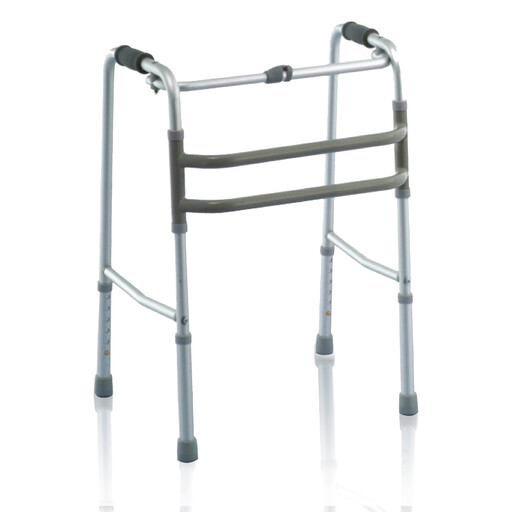
Why this product suits the profile: This foldable aluminium walking aid is designed to be lightweight, easy to store and simple to adjust in height. It is suitable for people who mainly want a mobile walking aid for seniors without a seat.
The product specifies features such as an aluminium frame, one-handed folding and multi-level height adjustment instead of making only general claims about mobility.
Aluminium construction, one-handed folding mechanism and non-slip handles according to the product description.
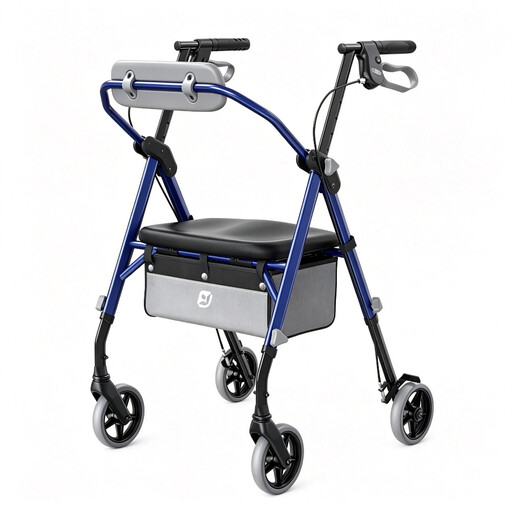
Why this product suits the profile: The technical details are comprehensive: a load capacity of 158 kg, a net weight of 8.5 kg, five handle heights and a seat measuring 41 × 31.5 cm.
Seat width, handle heights, wheel size and bag load capacity are listed separately. This makes it easier to compare the rollator with your own requirements.
PU seat, five-step height adjustment, 15.2-cm wheels and a separately specified bag load capacity of 5 kg.
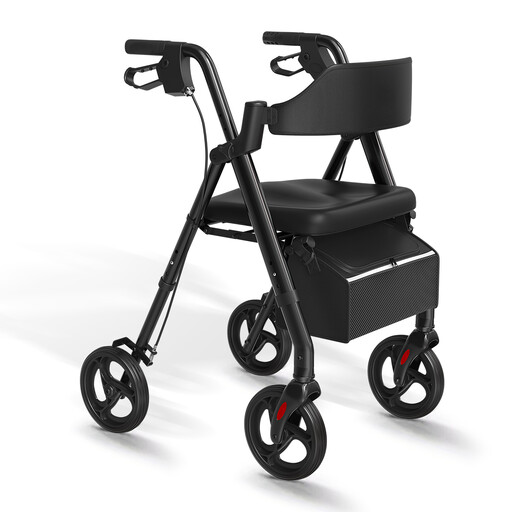
Why this product suits the profile: This rollator with a seat and shopping basket is aimed at people who want to combine a place to sit with storage space in everyday life.
The specifications distinguish between an overall load capacity of 150 kg and a basket capacity of 10 kg. The folded dimensions are also listed, along with the note that the model does not stand upright independently when folded.
Carbon steel frame, seat, front and rear folding, plus a shopping basket with a specified load capacity of 10 kg.
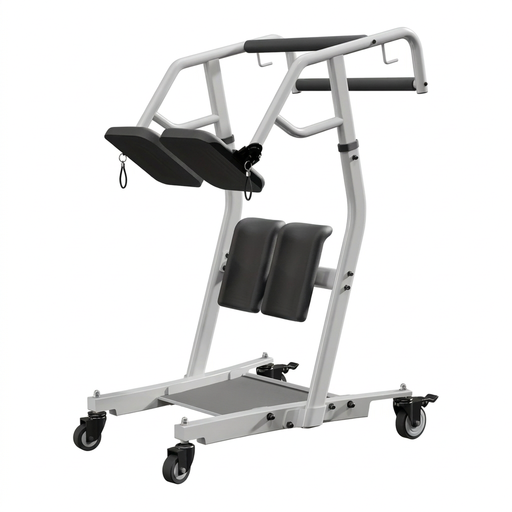
Why this product suits the profile: This transfer device is not a conventional rollator but is intended for specific repositioning and transfer tasks. It should only be considered if its dimensions and planned use are a precise match.
This clear classification prevents a transfer chair from being confused with a mobile walking aid. Before buying, its operation and suitability should be assessed by a qualified professional.
Steel frame, specified load capacity of 180 kg, lockable rear castors and foldable seat base.
We have put together a complete, regularly updated list of products that fully meet these strict selection criteria and the safety regulations applicable in the EU.
Before using the rollator for the first time, unfold it fully and check that all joints have engaged correctly. Adjust the handles evenly and test the brakes and parking function on a level surface. The operating instructions are the authoritative source.
For a rollator for use after an operation, load capacity, walking pattern and any movement restrictions should be discussed with the relevant healthcare professional. The seat should only be used when the brakes are locked and on a suitable surface. Bags should remain within the specified capacity and should not be hung from the handles if this could affect control.
Stand upright between the rear wheels and let your arms hang loosely. The handles should be approximately level with your wrists. After adjusting them, check that your elbows remain slightly bent when gripping the handles. If you are unsure, a physiotherapy practice can check the adjustment.
Its service life depends on the load, surface, care and storage conditions. Regularly check the screws, folding joints, brake cables, wheels and handles. Worn parts should be replaced according to the manufacturer’s instructions. A damaged frame or a brake that does not work reliably is a reason to stop using the rollator.
In addition to the purchase price, you may incur costs for replacement wheels, brake components, bags or other wear parts. For a model that is used frequently, the availability of spare parts and clear operating instructions are therefore important selection criteria. Also ensure that the rollator is stored in a dry place and clean it after contact with moisture.