
Lieferung heute & morgen

Qualitätsgarantie

Willkommens-Angebote freischalten: KOSTENLOSE Lieferung | Bis zu 80 % RABATT | Kostenlose 30-Tage-JoyPlus-Testphase
App herunterladen
A rollator with a seat combines a walking aid with somewhere to take a short break. It can be useful in everyday life for older people, their relatives and carers – for example, when shopping, walking longer distances or waiting at a bus stop. However, you shouldn’t base your decision on words such as “lightweight”, “sturdy” or “foldable” alone.
A load capacity of, for example, 150 or 158 kg doesn’t automatically cover every type of use. It’s important to check whether the figure applies to the entire walking aid, the seat or also the shopping basket. Clothing, bags and personal belongings can also add to the total weight.
Before buying, check:
Depending on its design, a foldable rollator may fold forwards and backwards or sideways. Its folded dimensions determine whether it will fit in your car boot, a storage room or beside your front door. You should also check whether it can stand up on its own when folded.
The first product in our selection measures 40 × 58 × 78,5–93,5 cm when folded. The manufacturer states that it cannot stand upright on its own when folded. This isn’t a fault, but it’s worth bearing in mind when deciding where to store it.
A seat is only practical if the rollator can be reliably secured against rolling away while you take a break. So check the details of the parking brake, seat height and maximum seat load. You should also be able to understand and operate the brakes, even if your hand strength is limited.
Read the instructions before using the rollator for the first time. The products in the reference data include safety advice stating that each walking aid must be used correctly and in accordance with its instructions.
A lightweight rollator is easier to carry over short distances or lift into a vehicle. However, its own weight shouldn’t be considered in isolation. Frame material, maximum load capacity, wheel size and folding mechanism all affect how practical it is for everyday use.
The product details we checked show a range of options:
These figures come from the manufacturers and should always be considered alongside your body weight, how often you’ll use the rollator and how far it needs to be transported.
A height-adjustable rollator should be set so that you can comfortably reach the handles while standing upright. Handles set too low may encourage you to lean forwards, while handles set too high can make the rollator harder to control.
On the two carbon steel models in our selection, the handle height can be adjusted to five positions. Depending on the setting, the first model covers a range of around 78,5 to 93,5 cm, while the second model is listed at 80 to 93 cm. Whether a model is right for you depends on your height, arm length and seat height. If you’re unsure, it may be helpful to seek advice from a physiotherapist or doctor.
Overall width and turning circle are important indoors. Measure doorways, lifts and narrow passages before buying. Larger wheels can roll more easily over some surfaces, but they often take up more space.
When choosing a rollator with a shopping basket, also check the basket size and load capacity. The first model has a basket load capacity of 10 kg, while the second is rated at 5 kg. These figures don’t apply to the seat and must not be exceeded.
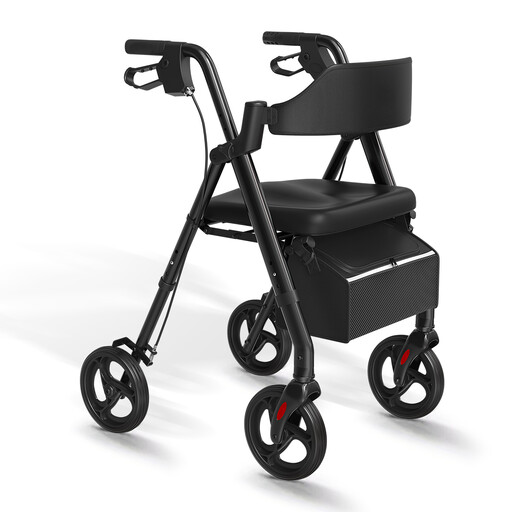
Why this product suits this profile: This walking aid has a seat, a shopping basket and five adjustable handle heights. Weighing 9,35 kg, it’s suitable for anyone looking for a mobile walker with storage space.
The product details specify its folded dimensions, a basket load capacity of 10 kg and a maximum total load of 150 kg. This makes it easier to understand the key limits before buying.
Carbon steel frame, seat, shopping basket and five-position handle height adjustment.
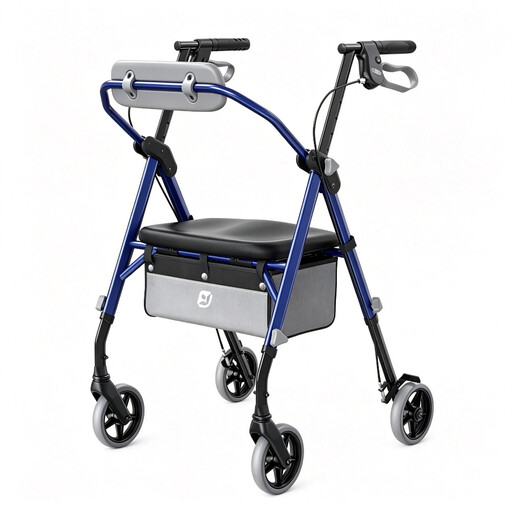
Why this product suits this profile: The seat measures 41 × 31,5 cm, the walking aid weighs 8,5 kg according to the product details, and the handle height can be adjusted to five positions between 80 and 93 cm.
The product details list the unladen weight, seat dimensions, basket load capacity and maximum load separately. So you’re not being asked to rely on a vague claim that it’s “lightweight”.
Unladen weight of 8,5 kg, stated load capacity of 158 kg, 6-inch wheels and ergonomically shaped seat.
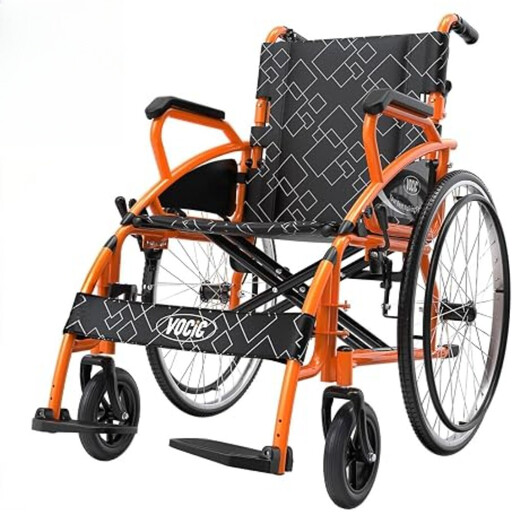
Why this product suits this profile: This alternative is intended for people who need a chair with good seating and transport features, rather than the typical functions of a rollator. It shouldn’t be confused with a traditional rollator.
Clearly identifying the product helps prevent a seat from being automatically marketed as a rollator. The product details list the seat width, seat depth, seat height and handbrake separately.
Seat width of 42 cm, seat height of 50,5 cm, handbrake and side-folding design with stated transport dimensions.
We’ve put together a complete, regularly updated list of products that meet these strict selection criteria and fully comply with the safety regulations in force in the EU.
Adjust the handles so that your arms are slightly bent when you’re standing upright. Then check that both sides are set to the same height and that the brake levers are within easy reach. Before sitting down, make sure the walking aid is on a level surface and secure it as instructed.
Its lifespan depends on how much it’s used, the surfaces it’s used on, how well it’s maintained and where it’s stored. Regularly check the screws, folding joints, wheels, brake cables, handles and seat. If you notice cracks, excessive movement or reduced braking performance, stop using the walking aid until it has been inspected or repaired by a qualified person.
As well as the purchase price, you may need to pay for replacement parts, brake cables, wheels or servicing. Transport and storage are also worth considering. A model with readily available spare parts and clear instructions may make it easier to plan for everyday use. If you have a medical prescription, check with the relevant organisation before buying to find out what support may be available towards the cost.