
Lieferung heute & morgen

Qualitätsgarantie

Willkommens-Angebote freischalten: KOSTENLOSE Lieferung | Bis zu 80 % RABATT | Kostenlose 30-Tage-JoyPlus-Testphase
App herunterladen
A rollator with seat combines a walking aid for adults with an integrated seat. This means it can provide a practical rest break in everyday life, while shopping or on longer journeys. However, models vary considerably in terms of weight, seat height, maximum load, folded dimensions and intended use.
Small design details can be particularly important when choosing a rollator for older people or a walking aid after an operation. The following criteria can help you assess marketing claims and choose a model that suits your personal needs.
A padded or ergonomically shaped seat may sound comfortable at first. However, the specific dimensions are what really matter. A seat measuring 41 × 31.5 cm offers different levels of space from a wider seat. The seat height must also be suitable for your height and allow you to stand up safely.
Before buying, check:
The seat is primarily intended for short rest breaks. Before sitting down, place the rollator on a surface that is as level as possible and activate the parking brake according to the operating instructions.
A lightweight rollator is easier to lift and store in a car. However, lower weight should not automatically be equated with greater practicality for everyday use. The stated maximum load is what matters. This includes not only body weight, but also shopping and items carried in the bag or basket.
Look out for:
Always compare these specifications with how you intend to use the product. A walking aid with a seat for short distances around the home has different requirements from a mobile walking frame for shopping and outdoor use.
A folding rollator can save space, but not every model is equally easy to transport. Check both the folding mechanism and the folded dimensions. A model that fits in the boot may still be too wide for narrow doorways or tight hallways.
The following points are also relevant when using the rollator in the UK:
Larger wheels may, due to their design, roll more easily over certain uneven surfaces outdoors. However, this does not mean that every model is suitable for rough terrain or wet surfaces.
A height-adjustable walking aid should be set so that the handles are roughly level with your wrists when you stand upright beside the rollator. Your elbows should remain slightly bent when holding the handles. The precise setting should take your height, posture and ease of operation into account.
Several locking positions make adjustment easier. For the selected models, the stated adjustment ranges include, for example, 80 to 93 cm and 78.5 to 93.5 cm. Check all safety locks after every adjustment.
The maximum load describes the permitted total load of the product. On its own, it says little about the padding, seat shape or suitability for sitting for longer periods. If you plan to use a rollator seat regularly, also consider the seat size, material and brake design.
A rollator for indoor and outdoor use should suit its surroundings. For use at home, a narrow width, smooth-rolling wheels and a small turning circle are helpful. For outdoor routes, larger wheels, a sturdy frame and an easily accessible brake may be more important.
When using a walking aid after an operation, follow the recommendations of your treating medical professionals. A walking aid is not a substitute for individual mobility advice.
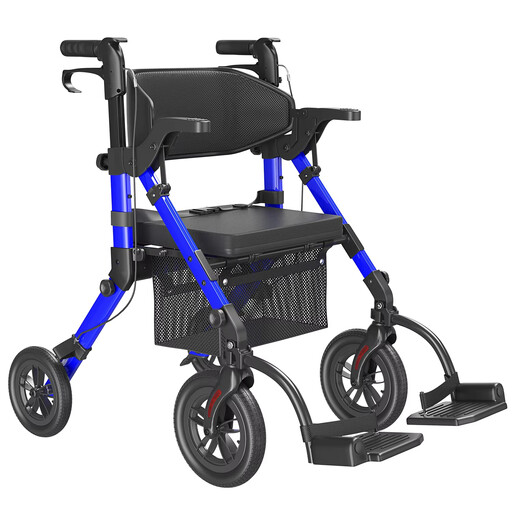
Why this product suits this profile: The 2-in-1 walker combines a walking aid with a seat and features 10-inch front wheels and 8-inch rear wheels. The stated maximum load is 136 kg.
The wheel sizes and maximum load are clearly specified. This makes it easier to compare the product with the intended surface and the user’s body weight.
2-in-1 design; folded dimensions of 365 × 605 × 990 mm according to the product specifications.
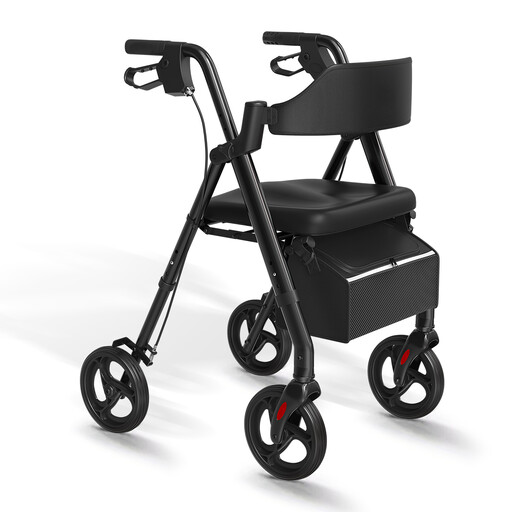
Why this product suits this profile: The carbon steel frame is designed to support a total load of up to 150 kg. The five-position handle height adjustment and integrated shopping bag make it well suited to organised everyday use.
The shopping bag’s load capacity is listed separately as 10 kg. This means it does not have to be inferred from the frame’s maximum load.
Folds forwards and backwards; folded size of 40 × 58 × 78.5–93.5 cm.
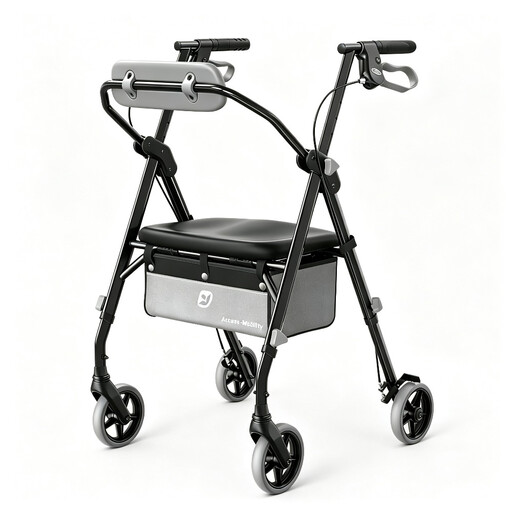
Why this product suits this profile: With a stated net weight of 8.5 kg, five handle height positions from 80 to 93 cm and a bag capacity of up to 5 kg, this model is designed for transport and everyday journeys.
The seat dimensions of 41 × 31.5 cm, bag capacity and product weight are listed separately. The product data also states a maximum load of 158 kg; this figure should be checked against the current product page before buying.
Compact width of 59 cm; TPR wheels with a diameter of 15.2 cm; seat made from moulded material.
We have put together a complete, regularly updated list of products that fully meet these strict selection criteria and the safety regulations applicable in the EU.
First, adjust the handles to approximately wrist height while standing upright beside the rollator. Your elbows should be slightly bent when holding the handles. Then test pushing, braking and sitting down on a level surface. The locking mechanisms must engage fully after every height adjustment.
Its service life depends on the load, surface, care and storage conditions. Regularly check the screws, folding mechanism, wheels, brake cables and rubber components. After exposure to rain or dirt, clean the rollator and allow it to dry completely. If there is visible damage, do not use it again until it has been inspected.
Normal use usually does not involve regular costs. However, wear parts such as wheels, brake components or bags may need to be replaced later. Prices and availability depend on the model. Before buying, check the supplier’s spare parts and servicing information.