
Lieferung heute & morgen

Qualitätsgarantie

Willkommens-Angebote freischalten: KOSTENLOSE Lieferung | Bis zu 80 % RABATT | Kostenlose 30-Tage-JoyPlus-Testphase
App herunterladen
A rollator for older people should make everyday life easier without becoming a burden in itself. Yet many purchasing decisions go wrong not because of the price, but because the dimensions are unsuitable, product information is hard to understand or the features don’t match how the rollator will actually be used. This applies to older people, their family members and anyone who needs a walking aid after an operation.
A lightweight rollator is easier to lift over steps, into a car boot or around the home. But its weight alone tells you little about how practical it will be day to day. You should also consider:
A particularly low weight may also mean fewer features. So if you’re looking for a rollator with a seat, shopping basket or higher load capacity, compare all the specifications.
A height-adjustable walking aid needs to suit the user’s height and posture. If the handles are too low, the user may end up leaning forwards. If they’re too high, the brakes and steering may be harder to control.
The description “multiple height settings” is only useful if it gives the actual adjustment range. Check the range in centimetres and compare it with the user’s height.
A foldable rollator can be useful for travelling, storing in a car boot or keeping in a small home. But it’s important to know how it folds and how much space it takes up when folded. Some models only fold in one direction, while others won’t stand upright on their own when folded.
Before buying, measure the space available and compare the folded dimensions with your car boot, cupboard or hallway.
The maximum load capacity needs to allow for the user’s weight, clothing, personal belongings and any shopping. A model with a stated maximum load of 150 kg offers more headroom on paper than one rated for 100 kg. However, this figure isn’t a substitute for professional advice if the user has specific physical needs.
Weight affects how easy the rollator is to handle. If you’ll be loading it into a car regularly, a lightweight rollator can be an advantage. For outdoor use, larger wheels, a sturdy frame and suitable brakes may matter more than keeping the weight as low as possible.
Measure doorways, lifts and narrow passages in your home. A rollator for indoor and outdoor use should fit through the areas you’ll use and have enough room to turn.
If you’re choosing a rollator with a seat, check the seat height, seat width and stated load capacity too. The seat is intended for taking a break while walking; it isn’t automatically suitable as a permanent seat or for carrying items. Engage the brakes before sitting down, following the instructions in the user manual.
A folding walking aid should be easy to use without requiring too much force. Check:
A rollator with a shopping basket is handy for smaller errands. But the basket’s load capacity isn’t the same as the rollator’s overall load capacity.
The models below are grouped by their specific features and typical everyday uses. Suitability also depends on the user’s height, walking style and where the rollator will be used.
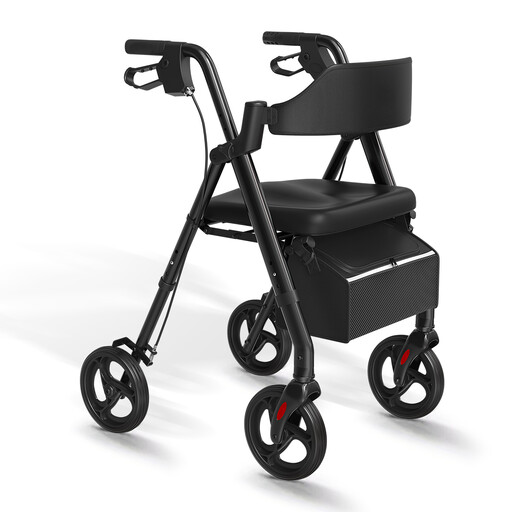
Why it suits this user profile: This model combines a seat with a shopping basket, making it a practical choice for anyone looking for a functional walking aid for errands and rest breaks during the day.
The product details list the folded dimensions, overall load capacity and five handle-height settings. This makes it easier to check the space required and weight limit before buying.
Carbon steel frame, stated overall load capacity of 150 kg, seat and shopping basket with a 10 kg load capacity; weighs 9.35 kg.
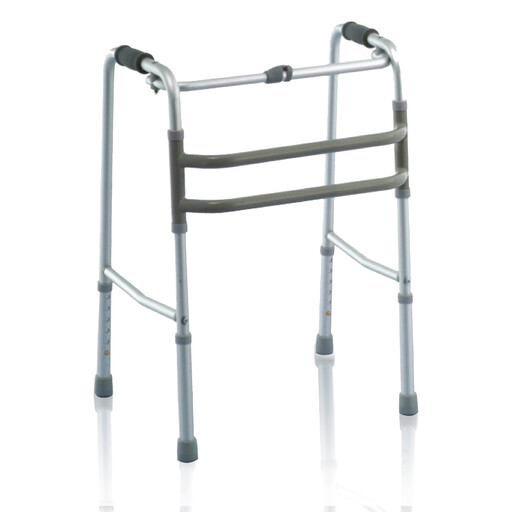
Why it suits this user profile: The aluminium frame, adjustable height and one-handed folding mechanism make this a good fit for anyone who regularly needs to manage transport and storage.
The description specifically highlights the adjustable height, compact folding design and non-slip handles. Buyers can compare these features with their transport and home storage needs.
Aluminium construction, one-handed folding mechanism and adjustable height, plus brakes and non-slip handles according to the product description.
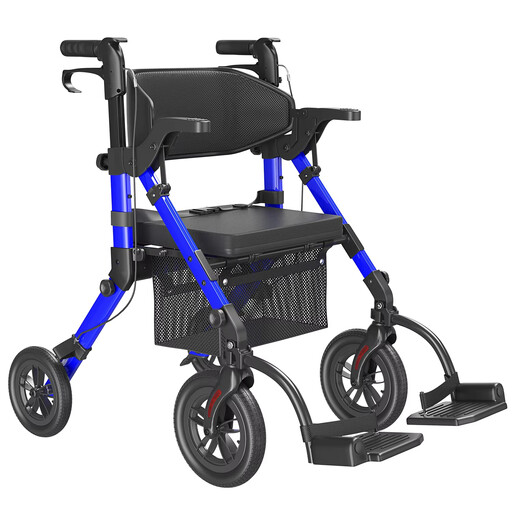
Why it suits this user profile: The different wheel sizes may appeal to anyone comparing a portable walking aid for regular use, with clearly stated wheel and load specifications.
The specifications list the wheel sizes, maximum load and folded dimensions. This makes it easier to choose a model that suits your routes, doorways and storage space.
10-inch front wheels, 8-inch rear wheels, stated maximum load of 136 kg and folded dimensions of 365 × 605 × 990 mm.
We’ve put together a complete, regularly updated list of products that meet these strict selection criteria and fully comply with the safety regulations applicable in the EU.
Before using the rollator for the first time, adjust the handles to a suitable height and check all screw connections according to the user manual. Make sure you check:
If you need a walking aid after an operation, discuss your choice and how much weight to put on it with your healthcare professional. A rollator isn’t a substitute for personalised mobility advice. When using it outdoors, follow the relevant traffic and usage guidance in the user manual.
Stand as upright as possible behind the rollator. With your arms hanging loosely by your sides, the handles should be roughly level with your wrists. When holding them, your elbows should remain slightly bent. The right setting depends on your height, posture and how you use the rollator.
Its lifespan depends on how often it’s used, the surfaces it’s used on, the load it carries, how it’s stored and how well it’s maintained. Check the brake cables, wheels, screws, handles and seat regularly. Replace worn parts in line with the manufacturer’s instructions. If you spot any cracks or the brakes aren’t working reliably, stop using the rollator until the problem has been investigated.
With normal use, the main costs are for wear-and-tear parts such as wheels, brake components or handle covers. A model with a shopping basket or seat doesn’t involve any regular consumable costs. Storing the rollator somewhere dry and cleaning it after outdoor use can help reduce wear and tear.