
Lieferung heute & morgen

Qualitätsgarantie

Willkommens-Angebote freischalten: KOSTENLOSE Lieferung | Bis zu 80 % RABATT | Kostenlose 30-Tage-JoyPlus-Testphase
App herunterladen
Roller blinds without drilling are a practical choice for rented homes, renovated rooms and delicate window frames. They’re usually fitted using clamp brackets or adhesive, so you can avoid drilling holes in walls and window frames. However, not every style will suit every window. The key things to consider are frame thickness, fabric width, how the blind is operated and the level of light control you want.
For many clip-on roller blinds, the measurement refers to the overall width, including the brackets. The fabric itself may be several centimetres narrower. For example, according to the product description, the fabric on the WOLTU Duo roller blind is around 4 cm narrower than the total width ordered.
So, measure:
For effective privacy, the fabric should cover as much of the glass as possible. However, with a roller blind with clamp brackets, make sure the fittings don’t clash with the window handle.
A transparent or semi-transparent double roller blind without drilling diffuses daylight and can reduce visibility from outside. For a bedroom where you want as little residual light as possible, you’ll need an opaque blackout roller blind or a pleated blind with a suitable coating.
Check the specific product description:
Side gaps can prevent a room from being completely dark. If that’s important, choose a blind that’s wide enough.
Clamp brackets only work within a specified range. According to the product description, one WOLTU Duo roller blind is designed for frame thicknesses of around 13 to 23 mm, while another model fits 1 to 10 mm. The WOLTU blackout roller blind with clip-on fittings is stated by the supplier to suit frames 16 to 22 mm thick.
So, measure the frame where the clamp bracket will sit before you buy. Clamp fittings may not be suitable for uneven or very narrow frames, or for windows that don’t open.
A clip-on roller blind is usually attached directly to an opening window or door. This makes it particularly suitable for rented homes. Check the following:
According to their product descriptions, some models aren’t suitable for roof windows, wooden windows, sliding windows or fixed-glazed windows. For doors, also check that there’s enough clearance between the fittings and the door frame when opening and closing.
A Duo roller blind, also known as a zebra blind, has alternating transparent and opaque fabric stripes. Sliding the layers changes the amount of light coming in. This makes it a good option for living rooms, kitchens and home offices where you want daylight while reducing direct views from outside.
A pleated blind with clamp brackets often offers flexible adjustment from both the top and bottom. This lets you cover a specific area, such as the middle of the window. It can be a practical option for bathrooms and ground-floor windows.
Polyester is commonly used in the models listed here. These blinds are usually cleaned with a soft cloth, a soft brush or a vacuum cleaner on a low setting. Many aren’t suitable for machine washing. Harsh cleaning products can damage coatings and colours.
For damp rooms, check the care instructions from the manufacturer. Even a blind described as suitable for humid conditions shouldn’t be in constant contact with splashing water.
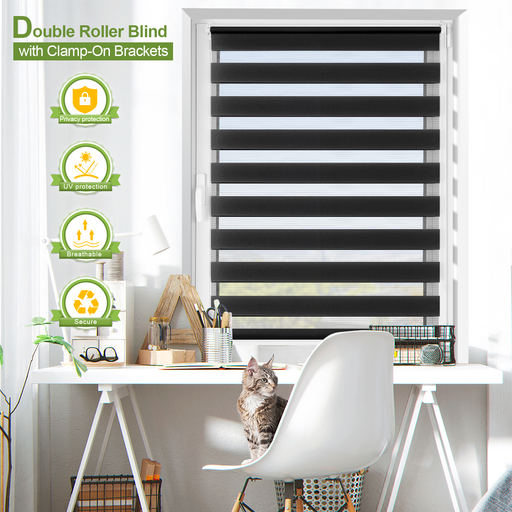
Why this product suits this need: This slim Duo roller blind is suitable for smaller windows and can be fitted with clamp brackets, without drilling.
The 45 cm overall width and clamp fittings are clearly stated. You’ll still need to check the frame thickness and window handle before buying.
Duo stripes for adjustable light control; clean with a soft, damp cloth.

Why this product suits this need: This model combines clip-on fittings, operation using the bottom rail and a coated backing, according to the product description.
The suitable frame thickness of 16 to 22 mm and the narrower fabric width are clearly specified.
Choose between clamp or screw fittings; operated using the bottom aluminium rail, with no pull chain.

Why this product suits this need: The honeycomb structure and adjustment using top and bottom handles make it a good choice for rooms where flexible coverage and a compact design are important.
The stated clip-on fitting range of 10 to 23 mm helps you choose the right fit. You’ll still need to check the position of the window handle.
Double honeycomb fabric; adjust to any position using the handles and clean with a damp cloth.
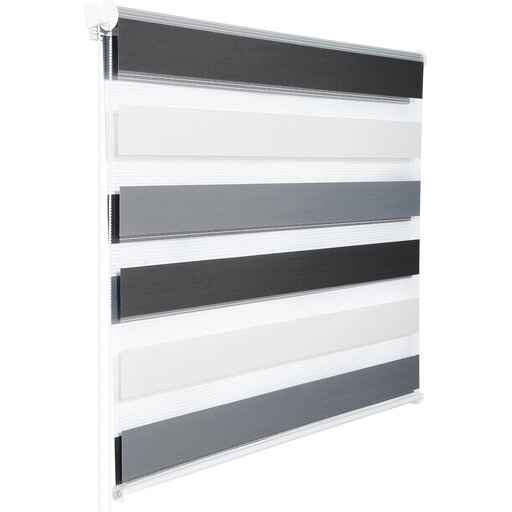
Why this product suits this need: This wider zebra blind could be a good fit for windows or doors if you want adjustable light filtering and a multi-coloured design.
The alternating transparent and opaque stripes make it easy to see how the blind controls light. According to the product description, it can be cleaned dry or with a small amount of moisture.
Side chain lets you adjust the position of the stripes; stated as suitable for windows and doors.
We’ve put together a complete, regularly updated list of products that meet these strict selection criteria and the safety regulations in force in the EU.
The most common option is to clamp the blind to the top of the window frame. The clamp brackets sit over the frame, and the blind hooks onto them. Depending on the model, adhesive pads or screw brackets may also be included. Before fitting, make sure the frame surface and clamp brackets are free from dust and grease.
How well they hold depends on the frame thickness and material, as well as how they’re fitted and used. Check the brackets regularly and operate chains or handles smoothly, without sudden movements. For blinds with pull chains, make sure the safety devices provided are fitted correctly. Keep children and pets away from pull chains and operating cords.
Some models are described as suitable for humid rooms. Even so, check the specific material and care information. A privacy roller blind made from moisture-resistant polyester may be suitable for a bathroom, but should be protected from direct splashes. In the kitchen, keep it away from the cooker, steam and naked flames.