
Lieferung heute & morgen

Qualitätsgarantie

Willkommens-Angebote freischalten: KOSTENLOSE Lieferung | Bis zu 80 % RABATT | Kostenlose 30-Tage-JoyPlus-Testphase
App herunterladen
Roller blinds without drilling are ideal for rented flats, frequently changing living situations, and windows where you don’t want permanent fixing points. Options include a clamp-on roller blind, a pleated blind without drilling, a double roller blind with clamp brackets, or a classic window roller blind without drilling.
However, fitting without a drill doesn’t mean every model will suit every window. The window type, glass width, frame thickness, and the level of light control you want are all crucial. If you don’t check these points before buying, you risk an unstable fit, incomplete privacy, or a blind that can’t move freely around the window handle.
With a roller blind that’s 55 cm wide, the usable fabric width isn’t automatically 55 cm too. Depending on the design, brackets and side parts can reduce the effective coverage. So before you buy, check whether the measurement refers to the overall size or the fabric width.
For a clamp-on roller blind in various sizes, we recommend the following approach:
A light-filtering roller blind lets daylight through and can reduce visibility, but it won’t make the room completely dark. An opaque fabric is better suited to bedrooms or rooms with direct sunlight. For the kitchen, office, or living room, a light-filtering pleated blind can be more pleasant if you still want some daylight.
Even a privacy roller blind doesn’t offer the same protection from every angle. With side light or in the evening with indoor lighting on, visibility can be different from during the day.
A double roller blind with clamp brackets is usually fitted to the top of the window frame. If the frame is too narrow, too wide, or an unusual shape, the bracket may not sit securely. On delicate surfaces, pressure marks can also appear. Before fitting, read the specifications for the particular product and the installation instructions.
With doors, you also need to make sure the blind doesn’t hit the wall, handle, or door rebate. A door roller blind therefore often needs a low-profile design and enough clearance for movement.
Clamp-fit systems are mounted directly onto the window or door frame. They’re particularly suitable for rented flats, provided the frame shape and the stated mounting width are compatible. Adhesive or suction cup solutions, on the other hand, need a clean, dry, and smooth surface. On textured walls or porous surfaces, adhesion can be limited.
The WOLTU pleated blind with suction cups is, according to the product details, intended for glass, tiles, and other smooth surfaces, but not for textured walls. This limitation is especially relevant for balcony doors, roof windows, or kitchen areas.
The height of 120, 130, 150, or 200 cm doesn’t always describe the area the blind covers in every position. With a pleated blind, you should also check whether it’s adjustable from top and bottom or only moves in one direction.
For choosing sun protection for windows, three measurements are important:
For a window with unusual dimensions, a narrower model can be more sensible than a blind that’s too wide and catches on the handle or the reveal.
Polyester is a common material in the models mentioned. It can usually be cleaned with a soft, slightly damp cloth. With pleated blinds, avoid harsh cleaning products and excessive mechanical stress.
The term “light-filtering” describes a function that reduces brightness and visibility, but it’s not the same as a standardised blackout level. Information like UV reduction should be understood as the manufacturer’s or retailer’s claim. With the WOLTU model, the product details from WOLTU mention up to 70% UV filtering; a general statement for all conditions can’t be derived from this.
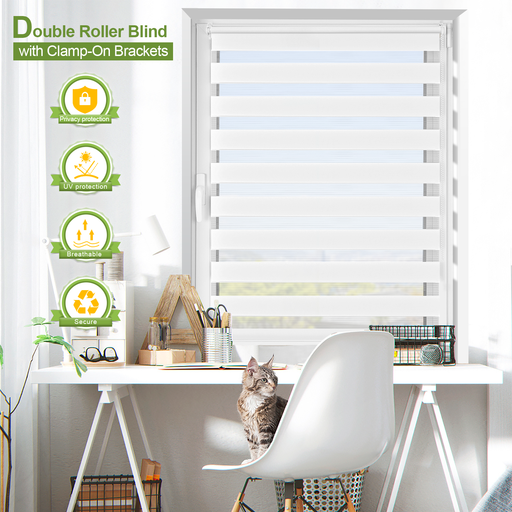
Why this product fits the profile: The 55 cm model is suitable for narrower standard windows and for users looking for a double roller blind without drilling that uses clamp brackets.
The width is clearly stated. However, you should still check before buying whether the overall size fits your window frame.
Clamp fitting without drilling; double roller blind design for adjusting light and privacy.
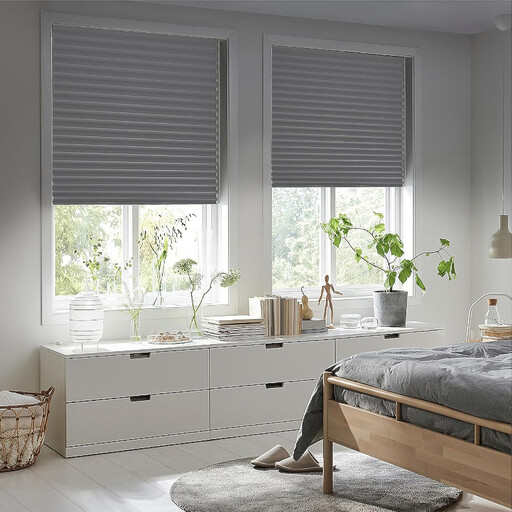
Why this product fits the profile: This light-filtering pleated blind is designed for windows and doors and offers clamp or adhesive fitting without permanent drill holes.
The description mentions light-filtering fabric rather than full blackout. This helps you set realistic expectations for light control.
75 x 200 cm; polyester fabric; height-adjustable design; suitable for living rooms, bedrooms, kitchens, and offices.
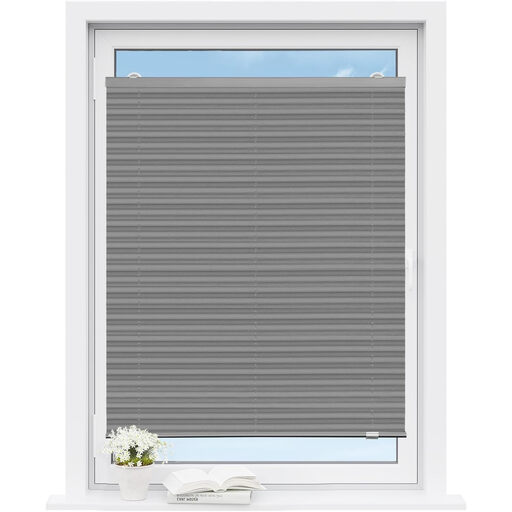
Why this product fits the profile: The suction cup fitting is designed for smooth surfaces like glass or tiles and could be interesting for changing locations.
The product details specify the surface type. Textured walls and unsuitable surfaces should not be planned as installation locations.
Suction cups for smooth surfaces; stated size 50 x 130 cm; wipe-clean polyester fabric.
We’ve put together a complete, regularly updated list of products that fully meet these strict selection criteria and the safety regulations in force in the EU.
Before fitting, clean the window frames or glass surfaces and let them dry completely. Clamp brackets must sit straight and shouldn’t only rest on one edge. After hanging the blind, we recommend a function test: open the window, move the blind, and check that the handle remains free.
With products that have a chain or bead chain, pay attention to the safety of children and pets. Chains should not hang near the neck and should be fixed out of reach. This is especially important in children’s rooms and with floor-to-ceiling windows.
For cleaning, a soft, slightly damp cloth is usually sufficient. Strong cleaning agents, scouring pads, and vigorous pulling can damage the fabric, guide, or bracket. With a roller blind for rented flats, you should check the fitting regularly, especially after frequent opening and closing of the window.
The durability depends on the fitting type, surface, frame shape, and usage. Clamp brackets rely on suitable frame sizes. Suction cups need smooth, clean surfaces. Regular checks of the fitting are a good idea, especially on doors and frequently used windows.
Yes, some models are specifically designed for windows and doors. However, before buying, you should check the door handle, door rebate, opening direction, and the available width. For balcony and patio doors, you also need enough clearance from the floor.
A mechanical clamp-on roller blind or pleated blind doesn’t need electricity. So there are usually no running costs. You only need to consider possible replacement parts, new brackets, or replacing the product when it wears out.