
Lieferung heute & morgen

Qualitätsgarantie

Willkommens-Angebote freischalten: KOSTENLOSE Lieferung | Bis zu 80 % RABATT | Kostenlose 30-Tage-JoyPlus-Testphase
App herunterladen
Roller blinds without drilling are a practical solution when windows or balcony doors need privacy, sun protection or blackout coverage without permanently altering the frame or wall. Especially in rented homes, a no-drill roller blind, pleated blind or day-and-night blind can make installation easier.
However, not every model is suitable for every window. Inaccurate measurements, unsuitable fittings or unrealistic expectations of blackout performance and heat protection often lead to disappointing purchases. The following criteria will help you narrow down your options objectively.
For many roller blinds, the stated measurement includes the brackets or the complete construction. The actual fabric width may therefore be several centimetres narrower. According to the product details, the fabric width of the WOLTU Blackout Roller Blind is approximately 4 cm less than the overall width.
For the best possible privacy coverage, the fabric should adequately cover the glass area. Before ordering, it is therefore worth checking the following measurements:
A blackout roller blind with a coated reverse side can significantly reduce the amount of light entering the room. Complete blackout also depends on side gaps, the mounting position and how accurately the blind fits. A light-filtering roller blind, on the other hand, filters daylight and reduces visibility from outside while still allowing brightness into the room.
A roller blind without drilling, also known as a day-and-night blind, combines transparent and opaque stripes. By moving the layers of fabric, you can adjust the amount of light. This makes it suitable for living rooms, kitchens or offices when you want to switch between daylight and privacy.
A clip-on roller blind is attached directly to the opening window sash. The frame thickness must therefore fall within the range specified by the manufacturer. Depending on the model, the permitted range may be 1–10 mm, 10–23 mm, 13–23 mm or 16–22 mm, for example.
The type of window is also important. Some models are not suitable for:
A pleated blind without drilling with clip-on brackets is often suitable for standard windows. Models with suction cups, however, require smooth, clean surfaces such as glass or tiles.
Clip-on systems are of interest to tenants because they can generally be installed without tools and leave no drill holes behind. Before installation, the frame and brackets should be clean and dry. The clip-on brackets must be secure without blocking the window sash when it is opened.
For doors and frequently used balcony doors, a roller blind for windows and doors with a sturdy guide or sufficiently robust bracket is a sensible choice. If the blind is chain-operated, the chain holder should be secured and the chain kept out of children’s reach. Cordless models with a handle reduce loose operating components, but they do not replace the supervision required in the home.
Polyester is commonly used for many interior roller blinds. Details such as 100% polyester, heat-sealed edges or a surface that can be wiped clean with a damp cloth can be checked objectively. According to the product description, a silver-coated reverse side can reflect light and help regulate the room temperature. This should not be taken as guaranteed thermal insulation for every room.
A thermal roller blind should therefore be assessed based on its construction and coating, rather than its name alone. For kitchens and bathrooms, fabrics that can be wiped clean with a damp cloth are practical. Harsh cleaning products, abrasive cleaners and excessive moisture can damage the material.
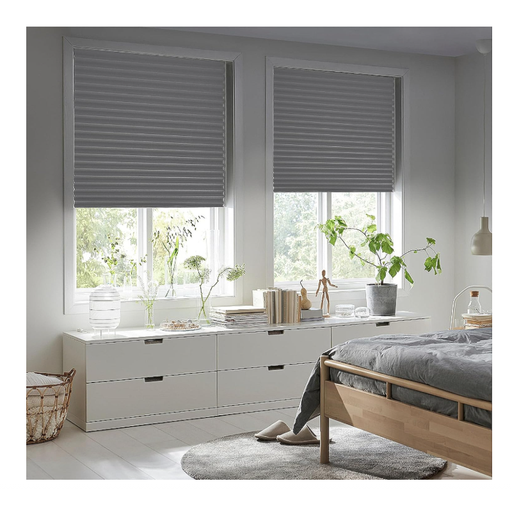
Why this product suits this profile: The semi-transparent pleated blind filters daylight and reduces glare without completely darkening the room. The clip-on brackets are designed for frame thicknesses of 10–23 mm.
The product details specify both the compatible frame range and the recommended additional width of approximately 2–4 cm beyond the glass area.
Light-filtering polyester fabric, adjustable clip-on brackets and cleaning with a damp cloth.

Why this product suits this profile: This roller blind combines clip-on and screw-fixing options, cordless operation using the lower profile and polyester-based fabric with a silver-coated reverse side.
The product details explicitly state the frame thickness of 16–22 mm and the narrower fabric width. This makes it easier to plan the installation in advance.
Cordless operation, fabric that can be wiped clean with a damp cloth and two fixing options according to the product description.
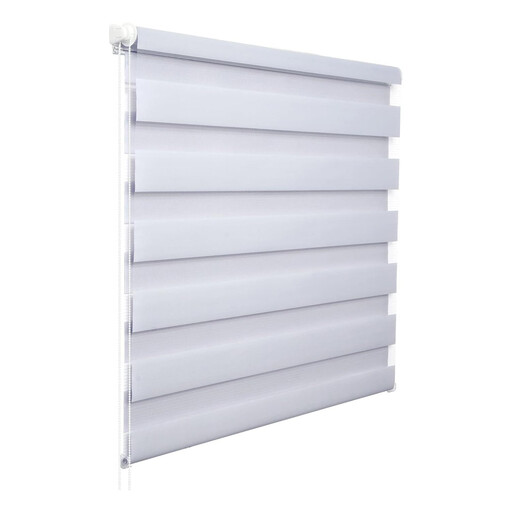
Why this product suits this profile: Alternating transparent and opaque stripes allow you to adjust light levels and privacy continuously. The chain can be fitted on either the left or right.
The product details specify the frame range of 13–23 mm, the recommended additional width and the advice not to block the window handle.
100% polyester according to the product description, heat-sealed edges and cleaning with a soft brush or damp cloth.
We have compiled a complete, regularly updated list of products that fully meet these strict selection criteria and the safety regulations applicable in the EU.
Before fitting the blind, hold it against the window sash to test the positioning. This allows you to check that the handle, seal and opening angle remain unobstructed. With clip-on models, the brackets are placed on the frame before the blind is hung. For pleated blinds with suction cups, the contact surfaces must be clean, smooth and dry.
For many polyester fabrics, a soft cloth or soft brush is all that is needed for care. The material should not be sharply creased, pulled or treated with a steam cleaner. Check the brackets and chains occasionally to ensure they remain securely fitted.
Durability depends on the frame thickness, fixing method, product weight and frequency of use. A correctly sized clip-on bracket can remain stable during normal operation. Before buying, check the manufacturer’s specifications for the frame, window type and maximum load. For frequently used doors, regular checks of the brackets are advisable.
A blackout roller blind with opaque fabric significantly reduces the amount of light entering the room. However, side gaps between the fabric and frame may still let in some brightness. For better blackout performance, the fabric should adequately cover the glass area and the mounting position must not obstruct the window handle.
A manual roller blind does not incur any electricity costs during use. Ongoing costs are essentially limited to care and, where necessary, replacement parts. Models with chains, lower profiles or suction cups do not require an electrical supply. Factors including the material, dimensions, coating and fixing system all affect the purchase price.