
Lieferung heute & morgen

Qualitätsgarantie

Willkommens-Angebote freischalten: KOSTENLOSE Lieferung | Bis zu 80 % RABATT | Kostenlose 30-Tage-JoyPlus-Testphase
App herunterladen
An uncluttered workspace is the foundation for focused, efficient work. But where do you put all the documents, office supplies, and personal items that quickly pile up on your desk? A rolling cabinet offers a flexible, space-saving solution. It not only creates order but, thanks to its casters, can be effortlessly moved wherever it's needed.
This guide is here to help. It highlights key features to look for when making your selection and presents a range of different models to make choosing the right desk pedestal easier for you.
To make the right choice, several functional aspects should be considered. These criteria will help you find a model that perfectly matches the requirements of your workspace.
The material determines not only the look but also the durability and stability of the cabinet. Models made of sheet steel, often found in professional office environments, are considered particularly robust and easy to clean. An office rolling cabinet made from engineered wood (e.g., MDF or particleboard) with a melamine resin coating offers a more residential aesthetic and is available in many different designs. Pay attention to the manufacturer's specified maximum load capacity, especially if you plan to store heavy files or place a device like a printer cabinet on top.
Measure the available space carefully. If the cabinet is intended to serve as an under-desk cabinet, its height, width, and depth are crucial to ensure it slides smoothly under the tabletop. Remember to account for the height of the casters. A lower-profile model can also be placed next to the desk as an office side cabinet, thereby extending your work surface. Slimmer versions are well-suited for workspaces with limited room.
The internal layout is key for organisation. Consider what you need to store:
Here is a selection of models that are suited for various purposes due to their different features.
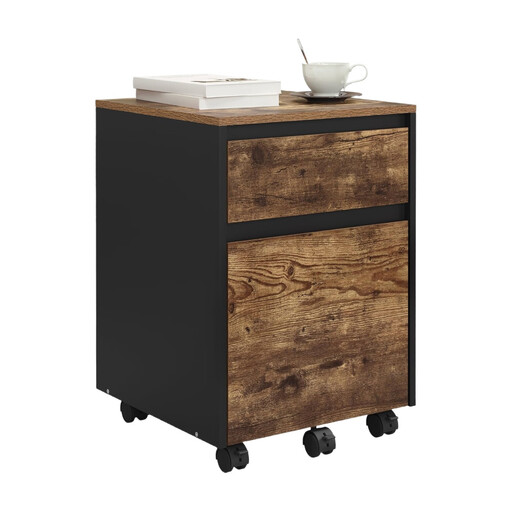
What sets it apart: This office rolling cabinet combines an attractive vintage wood look with thoughtful functionality. The large bottom drawer is equipped with rails for A4 or letter-sized hanging files, making it a practical small filing cabinet. An additional support caster under the drawer prevents it from tipping when fully loaded.
Advantages:
Who it's for: Home office or office users looking for a stylish solution to organise documents and hanging files, who prefer a warm, wood aesthetic.
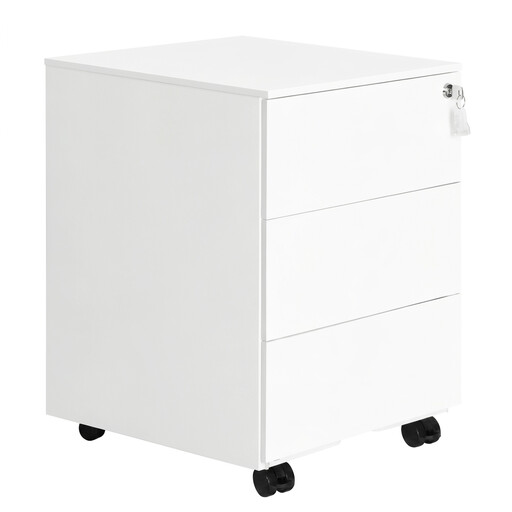
What sets it apart: This steel model impresses with its robust construction and security features. All three drawers can be centrally locked, ensuring the protection of confidential documents. The cabinet is delivered pre-assembled; only the casters need to be attached.
Advantages:
Who it's for: Users who value high stability, durability, and the secure storage of documents. Ideal for professional office environments and demanding home office setups.
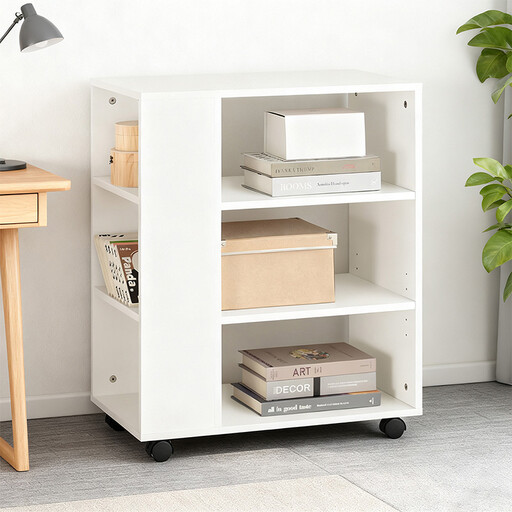
What sets it apart: The SoBuy rolling cabinet is designed as a multifunctional printer cabinet. With its open compartments and height-adjustable shelves, it offers flexible storage space for a printer, paper, and other accessories. Its high total load capacity makes it a sturdy piece of furniture.
Advantages:
Who it's for: Individuals who need a dedicated spot for their printer and accessories and prefer an open, easily accessible storage solution.
Haven't found the right model for your needs yet? There is a wide variety of other designs that differ in size, material, and style. Discover more solutions for your office.
? Discover more rolling cabinets for the home office here
Not necessarily. The standard desk height is typically around 72-75 cm. Most rolling cabinets are designed to fit underneath. However, it is essential to measure the exact height under your desktop before purchasing and compare it with the cabinet's product dimensions.
The main difference is mobility. A rolling cabinet is equipped with casters and can be moved flexibly around the room. A static cabinet has no casters and is intended for a fixed position, often as a supporting element of a desk.
The load capacity varies greatly depending on the model and material. Simple models made of engineered wood often support a total of 20 to 40 kg. Robust steel cabinets can handle a much higher load, sometimes up to 15 kg per drawer. Always refer to the manufacturer's specific information found in the product details.