
Lieferung heute & morgen

Qualitätsgarantie

Willkommens-Angebote freischalten: KOSTENLOSE Lieferung | Bis zu 80 % RABATT | Kostenlose 30-Tage-JoyPlus-Testphase
App herunterladen
A good rolling stool is an unsung hero, bringing mobility and flexibility to your workday—whether in a medical practice, salon, office, or home office. But the market is flooded with models whose flaws often only reveal themselves after a few weeks. A wobbly base, squeaky casters, or padding that quickly flattens are common annoyances. This guide will show you the crucial features to look for to find a durable and functional rolling stool that truly meets your needs.
Many buyers focus on price or design, overlooking the technical details that determine longevity. Pay special attention to these three typical flaws to avoid buyer's remorse:
To avoid the problems mentioned above, you should check three central product features before buying. These define the functionality and safety of your new stool.
The quality of a task stool with wheels depends entirely on its undercarriage. The foundation is a stable base, usually a five-star design made of metal or robust plastic, which ensures good weight distribution and tip-over resistance.
Casters are differentiated as follows:
Before purchasing, check which floor type the included casters are designed for. Many manufacturers also offer matching caster sets for retrofitting.
The seat determines comfort during prolonged sitting. In addition to the classic round shape, there are ergonomically designed saddle stools. These promote an upright posture and can reduce strain on the spine.
The upholstery material should match the intended use:
Some models, often referred to as a stool with a backrest, offer a small back support. This primarily stabilises the lumbar region and can provide additional comfort during seated activities.
A height-adjustable swivel stool must be adaptable to your body height and the height of your work surface. Before buying, measure the height of your desk or counter and compare it with the stool's seat height adjustment range. A high-quality gas lift allows for smooth, stepless adjustment.
Also, pay attention to the maximum weight capacity. A value of 120 kg is a good standard for most applications and indicates a robust frame and durable mechanics.
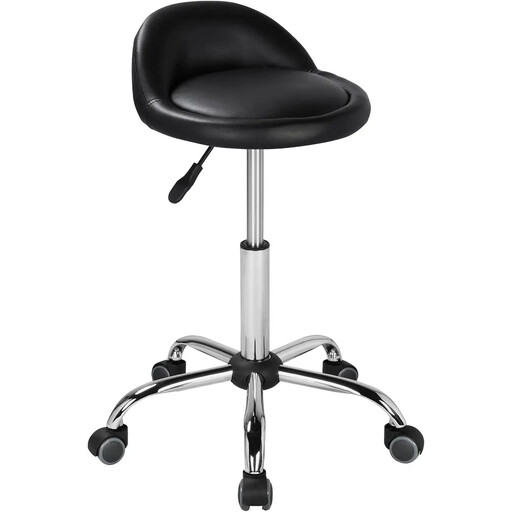
Why This Fits Their Persona: Ideal for the home office, hobby rooms, or as a basic setup for a studio. This model focuses on core functions without costly extras, offering a solid foundation for occasional to regular use.
The low-maintenance PU leather upholstery is durable and easy to clean with a damp cloth, sidestepping the pitfall of a fast-wearing fabric cover.
A good height adjustment range (seat height 44.5–59 cm) and a standard weight capacity of 120 kg signal a solid build quality for this price point.

Why This Fits Their Persona: Perfect for professionals who sit for many hours a day and prioritise healthy posture, such as dentists, tattoo artists, or hairdressers. The saddle shape promotes an active, upright sitting position.
Instead of a flat, uncomfortable seat, the ergonomic saddle shape provides better support and prevents fatigue. The gas lift is designed for frequent use and a load of up to 120 kg.
The unique seat shape prevents slipping during movement and supports a natural pelvic tilt. The waterproof faux leather cover is also very easy to maintain.
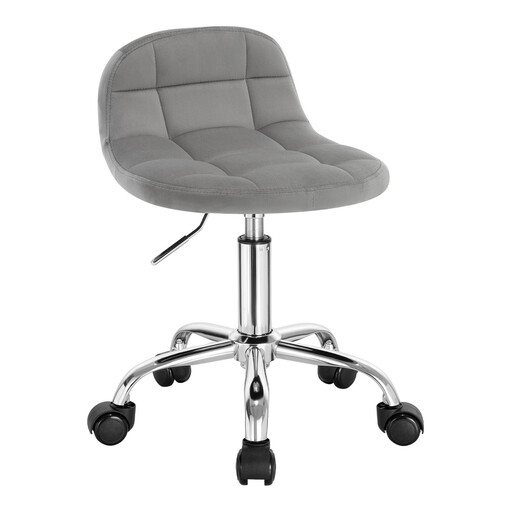
Why This Fits Their Persona: For anyone who wants to combine functionality with an appealing design. This stool is a perfect fit for a vanity table, a modern home office, or a boutique studio where aesthetics play a key role.
The PU casters are floor-friendly and quiet, minimising the risk of scratches on sensitive flooring. The low backrest also offers light lumbar support, a feature missing from more basic models.
The soft, skin-friendly velvet cover ensures high sitting comfort. The chrome-plated metal frame provides a stable base and an elegant look.
We've compiled a complete, up-to-date list of products that meet these strict selection criteria and relevant safety standards.
1. Which casters are suitable for parquet or laminate flooring? For hard and sensitive floors like parquet, laminate, tile, or vinyl, you should always use hard-floor casters. These have a softer, often grey-coloured tread made of rubber or polyurethane (PU) that protects the floor from scratches and ensures quiet, dampened rolling. Most standard stools come with hard plastic casters for carpet, so it's important to check this at the time of purchase or buy suitable casters separately.
2. How high should a rolling stool be? The ideal seat height depends on your body height and the height of your work surface. As a rule of thumb, your feet should be able to rest flat on the floor while your knees form an angle of about 90 degrees. Your forearms should also be able to rest comfortably on the desk or worktop at a 90-degree angle. Measure your work surface and choose a stool whose adjustment range comfortably covers this height.
3. How do I care for a rolling stool with faux leather upholstery? A cover made of faux leather (PU) is very easy to maintain. For regular cleaning, simply wipe the surface with a soft, slightly damp cloth. For heavier soiling, a mild soap solution can be used. Afterwards, wipe with clean water and dry the surface with a soft cloth. Avoid aggressive, solvent-based, or abrasive cleaning agents, as they can attack the material and make it porous.