Stocking up with freezer space
If you want to take out and prepare only the number of rolls you need, check the frozen format, pack size, available freezer space and preparation instructions.


Frozen part-baked rolls are a practical choice for a well-planned stock-up, provided you have enough freezer space and the right appliance. If you mainly want quick, savoury fillings, pre-sliced toasted rolls are worth considering; however, being pre-sliced does not guarantee a particular thickness or that they will hold up under heavy fillings. Fresh rolls from the in-store bakery can also be frozen, but that means taking an extra step.
If you want to take out and prepare only the number of rolls you need, check the frozen format, pack size, available freezer space and preparation instructions.
Pre-sliced toasted rolls can be split without having to cut them yourself. Whether the halves suit a particular cheese, vegetable or spread depends on the shape of the product and how much filling you add.
For packaged rolls, check the information on the specific pack. For loose rolls, look up or ask for the allergen information in store, rather than trying to work out the ingredients from descriptions such as ‘spelt’ or ‘multigrain’.
A good choice if: you want to store rolls in the freezer and prepare them as needed.
Bear in mind: the pack needs freezer space, and the appliance and preparation time depend on the product.
A good choice if: you want to toast individual halves quickly and add savoury fillings.
Bear in mind: being pre-sliced does not tell you how thick the halves are, how well they keep or whether they are suitable for freezing.
A good choice if: you want to buy fresh rolls and freeze any extras in portions yourself.
Bear in mind: fresh rolls are not a long-term store-cupboard option unless you freeze them.
First, decide how you want to store and prepare the rolls. If you plan to add savoury fillings, check the shape of the actual product too: ‘thick cut’ is not a confirmed, comparable product specification for the rolls covered here.
| What to consider | What to check when buying | Who it matters to |
|---|---|---|
| Portionable stock | Whether the rolls are frozen, the pack size and the space in your freezer. | I want to prepare only as many rolls as I need, rather than defrosting a large quantity at once. This stock-up need is the main consideration for around 33 % of consumers. |
| Savoury fillings | Shape and whether the rolls can be split; for pre-sliced products, check the intended halves. | I need a roll shape that suits my planned filling, without relying on the words ‘thick cut’. This suitability for fillings would be the main reason to buy for around 27 % of consumers. |
| Preparation | The appliance needed, and the time and temperature stated on the pack. | When I’m short on time, preparation needs to fit the appliance I have and my daily routine. Around 20 % of consumers would make this their priority. |
| Ingredients and allergens | The ingredients list, highlighted allergens and, where relevant, any wholemeal or wholegrain description. | Before buying, I need to know which grains and allergens are in the specific rolls. For around 20 % of consumers, checking this would take priority over the other criteria. |
The terms do not mean the same thing. You cannot reliably tell which allergens a product contains from ‘multigrain’ alone, either.
Check the ingredients list, any wholegrain description and the allergen information for the specific product. For loose rolls, ask in store for the allergen information.
The pack size may seem right, but that is little help if it will not fit in your freezer or takes too long to prepare as part of your daily routine.
Before buying, check the pack size against your available freezer space and read the instructions for that specific product.
Fresh rolls will not stay fresh indefinitely at room temperature. Verbraucherzentrale recommends freezing bread and rolls and defrosting them as needed.
Eat fresh rolls promptly or freeze any extras in portions. Throw away any rolls with visible mould in their entirety.
Being pre-sliced makes rolls easier to toast and fill, but it does not guarantee a particular thickness or that they are suitable for especially moist or heavy fillings.
If you are trying a new product, start by testing one roll with the amount of filling you plan to use.
The frozen range listed by REWE includes different types of rolls and pack sizes, including a pack of 20 wheat rolls weighing 1 kg.
REWE Bio’s frozen spelt rolls are described as a pack of 6, weighing 420 g.
The documented multigrain roll is a part-baked option made with linseed, sunflower seeds, oats and sesame.
Lidl describes ‘Unser Brot’ as an in-store bakery range, freshly baked several times a day.
This selection includes rolls and sandwich buns for stocking up, including part-baked rolls and a bun for savoury fillings. Check the shape of the product and the information on the pack to see if it suits your snack: a particular slice thickness or the ability to hold heavy fillings is not guaranteed.
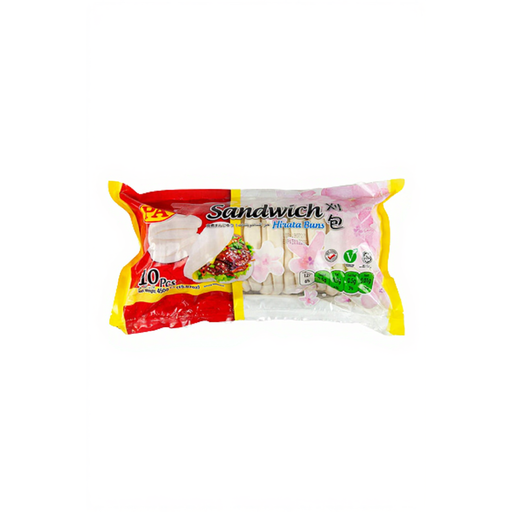 No image available
An option if you want to take buns out of the freezer in portions for savoury fillings. The pack contains 10 buns, weighing 450 g in total; check that their shape suits the filling you have in mind.
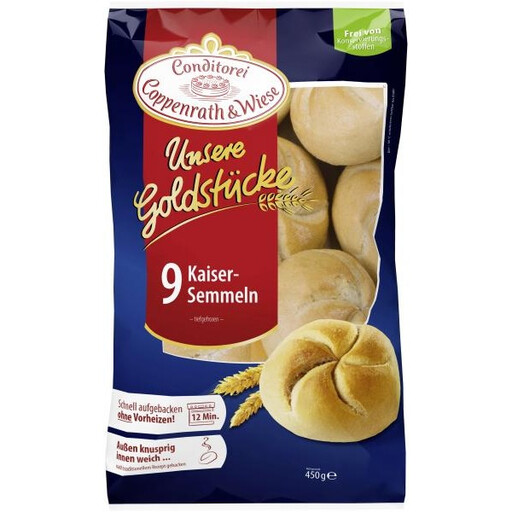 No image available
A handy option if you want to stock up on classic Kaiser rolls and take out as many as you need. The pack contains 9 rolls, weighing 450 g in total; check the shape of the product if you need a particular thickness or want to use a specific filling.
 No image available
For anyone who wants to stock up on multigrain rolls and prepare them as needed. The pack weighs 300 g; check the number of rolls on the pack too, to help you plan portions.
Frozen part-baked rolls are handy for a well-planned stock-up if you have freezer space and a suitable way to prepare them. Verbraucherzentrale also says fresh rolls can be frozen; otherwise, they should be eaten promptly.
No. Choose based on the actual shape of the roll and the filling you have in mind, rather than a slice-thickness claim that is not confirmed here. Pre-sliced toasted rolls can make it easier to split them; for heavy or moist fillings, it is worth trying one roll first.
Follow the instructions on the pack, as defrosting, temperature and baking time can vary. For example, REWE recommends around 8–12 minutes at 200 °C using conventional top and bottom heat for its REWE Bio spelt rolls. These instructions do not automatically apply to other rolls.
For packaged rolls, check the ingredients and allergen information on the pack you buy. For loose rolls, ask to see the allergen information in store or speak to a member of staff. Names such as ‘spelt’, ‘multigrain’ or ‘organic’ are no substitute for checking.
Throw away the whole roll rather than just removing the visible patch. Verbraucherzentrale notes that mould may have spread through bread or rolls beyond the area you can see.