
Lieferung heute & morgen

Qualitätsgarantie

Willkommens-Angebote freischalten: KOSTENLOSE Lieferung | Bis zu 80 % RABATT | Kostenlose 30-Tage-JoyPlus-Testphase
App herunterladen
A room divider can separate living, sleeping or working areas without any building work. However, models vary considerably in stability, materials, light transmission and storage options. If you choose based only on colour or price, you could overlook important details.
A freestanding room divider isn’t attached to the wall or floor. That makes the width of its base, whether it has a frame and the type of flooring it can be used on all important considerations. A narrow screen may work on a level floor, but that doesn’t necessarily mean it’s suitable for stairs, balcony edges or uneven surfaces.
Many fabric and bamboo panels limit visibility but still let light through. This can be useful in a bedroom, workspace or on a balcony. If you expect to create a completely darkened area, check the material description and information about light transmission carefully.
A mobile room divider for a balcony, patio or garden needs different material properties from a decorative room divider for the living room. Water-repellent or weather-resistant fabrics are generally more suitable outdoors. Wood and bamboo, on the other hand, should be protected from moisture, direct heat and prolonged exposure to high humidity.
First, measure the available width and height. A 4-panel room divider is usually more versatile to position than a single panel, but it needs enough space when opened out. The width of each panel also affects the angles you can create and, in turn, the divider’s stability.
Check the following measurements:
A folding room divider should be easy to store against a wall or in a dry storage area when not in use.
Bamboo, wood, polyester fabric and metal frames are among the options available for indoor spaces. Bamboo and wooden models often work well as decorative room dividers in living rooms, bedrooms or home offices. If you choose a fabric-covered model, check the frame construction, how the fabric is attached and the care instructions.
For privacy on balconies and in gardens, look for details such as water-repellent, PA-coated, UV-resistant or weather-resistant. These properties don’t necessarily mean a product should be left outside in all weather. Wind, rain and frost can affect how long it lasts. In strong winds, take down or secure a lightweight room divider, if the manufacturer permits this.
A close-weave fabric provides more privacy than an open screen, but it may also reduce the amount of light in the room. With printed bamboo panels, appearance is often as important as function. Also check whether the material can be cleaned with a dry cloth, water or a mild cleaning product. Always follow the manufacturer’s instructions.
If you have children or pets, don’t use a room divider as a climbing aid, support or safety barrier. Set it up fully opened on a level, stable surface and keep it away from stairs, balcony edges and heat sources.
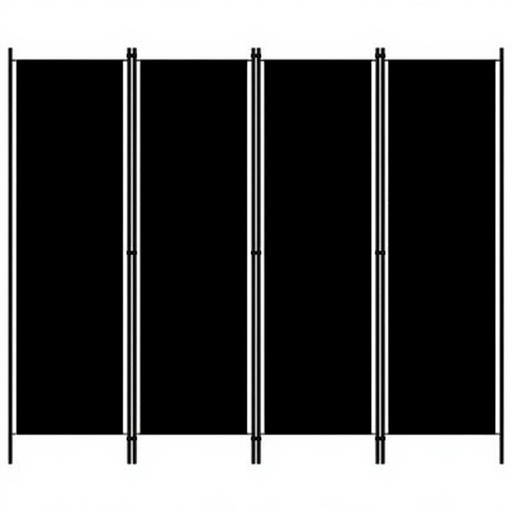
Why it suits this profile: The four fabric panels and black powder-coated iron frame make it a practical choice for dividing space in a bedroom, living room or workspace.
The product description clearly states that the fabric offers privacy but doesn’t block out light completely. This helps you set realistic expectations about how much light will pass through.
Four foldable polyester panels, a powder-coated iron frame and compact storage when folded away.

Why it suits this profile: Bamboo panels, a polished dark brown wooden frame and an Asian-inspired cherry blossom design combine practical room dividing with decorative style for indoor spaces.
The product information specifies indoor use only and recommends cleaning with a dry cloth. This helps prevent the divider being used in unsuitable damp conditions.
Four folding panels with a bamboo and wood construction, standing around 180 cm high and measuring around 200 cm wide when opened.
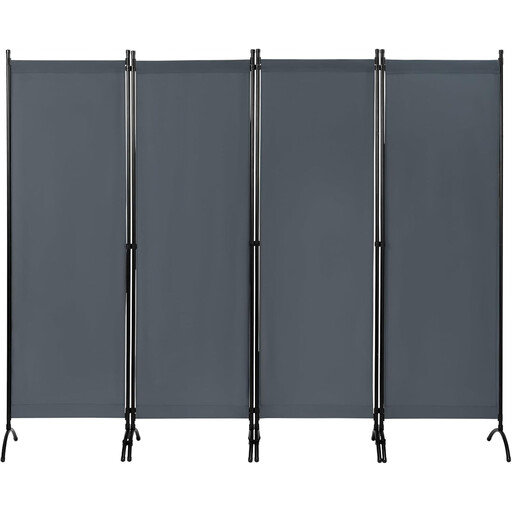
Why it suits this profile: Designed for indoor and outdoor spaces such as living rooms, balconies, patios and gardens, this model can be moved as needed or dismantled for storage.
The product details specify PA-coated polyester at 160 g/m² and a tubular steel frame. This gives you a clearer idea of the materials and their limitations than a vague claim such as ‘suitable for outdoor use’.
Four panels measuring 224 × 182 cm overall, a water-repellent PA coating according to the product details, and portable use without wall mounting.
We’ve put together a complete, regularly updated list of products that meet these strict selection criteria and fully comply with the safety regulations in force in the EU.
Before setting it up, make sure the floor is level and free of trip hazards. Angle the panels of a folding room divider to create a sufficiently wide base. Depending on its construction, a fully extended screen may be less stable than one arranged with a slight fold.
A decorative room divider with a wooden or bamboo frame is often a good fit for a living room. In a bedroom, a close-weave fabric or panel divider can visually separate the sleeping area from the rest of the room. However, a room partition like this isn’t a substitute for a built wall: it will only do so much to reduce sound, odours and air movement.
For outdoor models, it’s best to take the divider down and store it somewhere dry during strong winds, rain or frost. Before buying, also check whether removable fabric panels can be washed and whether spare parts or assembly accessories are included.
Stability depends on the weight, frame, feet, panel arrangement and flooring. A level floor and a slightly folded position can create a wider base. Children and pets shouldn’t pull on or climb the divider.
That depends on the materials and the manufacturer’s instructions. PA-coated polyester fabrics and steel frames are designed for certain outdoor spaces, but should be protected from strong winds and prolonged exposure to rain. Wooden and bamboo models are often intended for dry indoor spaces.
Once folded, these models can be stored against a wall or in a dry cupboard. Check the folded dimensions and weight, and whether the model can be dismantled without tools.