
Lieferung heute & morgen

Qualitätsgarantie

Willkommens-Angebote freischalten: KOSTENLOSE Lieferung | Bis zu 80 % RABATT | Kostenlose 30-Tage-JoyPlus-Testphase
App herunterladen
A room divider is a versatile furnishing element designed to structure living and work environments. Its primary purpose is to partition large spaces into smaller, well-defined zones without requiring any structural modifications. Depending on the design, these partition screens can also serve other functions, such as creating privacy as a privacy screen, offering storage solutions, or acting as a decorative focal point. Selecting the ideal model depends on the specific requirements of both the space and its user.
Your choice of room divider should be based on a careful analysis of its functional and material characteristics. The following criteria are essential for making an informed decision.
Room dividers can be classified into basic categories, each designed for different applications:
The material significantly influences the room divider's durability, maintenance requirements, and suitable placement.
Flexibility is a crucial characteristic. A freestanding room divider requires no wall mounting, allowing for versatile placement. Models with folding mechanisms or a lightweight design can be quickly repositioned or stored away. In contrast, for a living room partition that doubles as a bookshelf, the stability and load-bearing capacity of the shelves are paramount. For tall shelving systems, consider using an additional wall anchor to prevent tipping.
The following selection is based on an analysis of each product's technical specifications and practical value for specific use cases.
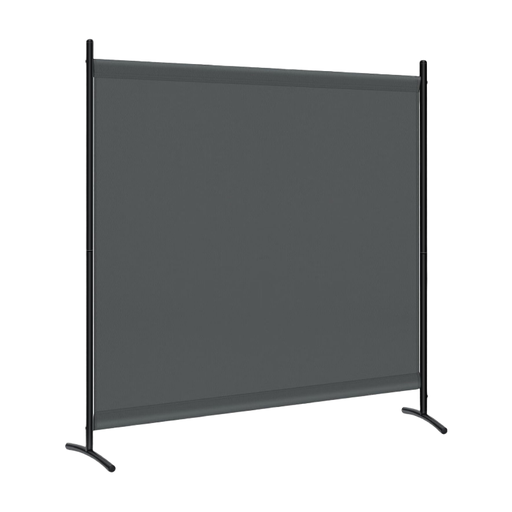
Why we recommend this product: The WOLTU room divider stands out with its combination of weather-resistant 160 g/m? polyester fabric and a powder-coated tubular steel frame. The fabric's PA coating makes it water-repellent and offers sun protection. Thanks to its sturdy yet lightweight design, it is engineered for flexible use both indoors and outdoors.
Pros:
Best for: Individuals who need a functional and robust privacy screen for a balcony, patio, garden, or for temporary partitions indoors.
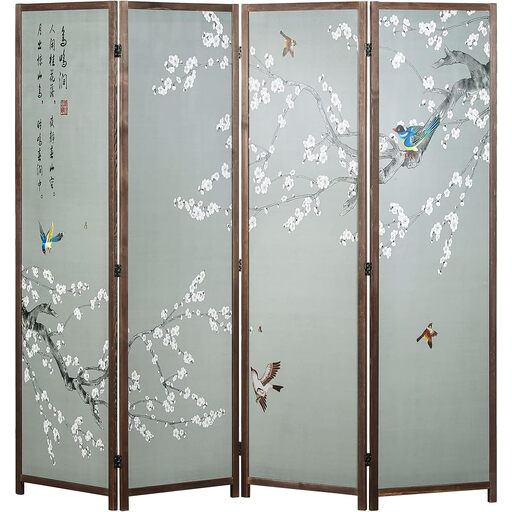
Why we recommend this product: This 4-panel folding screen combines functionality with a striking aesthetic. Its polished wood frame and bamboo panels are decorated with an Asian-inspired cherry blossom motif. Thanks to its dual-action hinges, the screen can be positioned flexibly and folded compactly for storage.
Pros:
Best for: Users looking for a decorative room divider for a living room, bedroom, or office to visually separate areas or create a design statement.
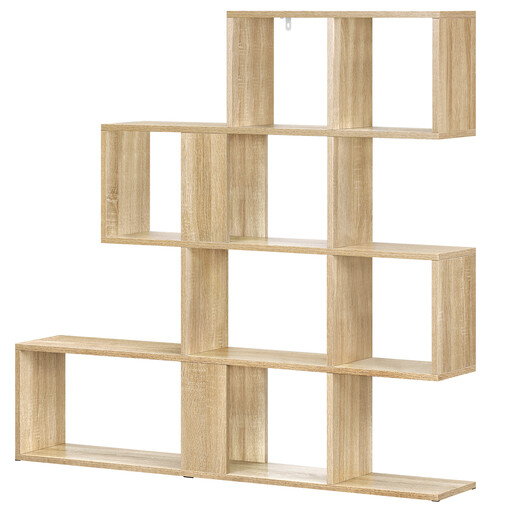
Why we recommend this product: The eSituro shelf is a shelving unit room divider that masterfully combines partitioning and storage in one piece of furniture. It is constructed from engineered wood with a scratch-resistant melamine coating. Featuring 11 open compartments across 4 tiers, it provides generous space for books and other items. Its wide base and included anti-tip kit ensure excellent stability.
Pros:
Best for: Those who want to create a functional partition in living or work spaces while also needing additional, double-sided storage.
If these models aren't the perfect fit for your needs, the market offers a vast array of other options. You can find a wider selection, featuring different materials, sizes, and designs, in our main category.
Discover more room dividers here.
The stability of a freestanding room divider depends on its construction, materials, and the width of its base. Models with a wider base or extended feet offer superior stability. For tall shelving units, using the included anti-tip kit to secure the unit to a wall is highly recommended to prevent it from tipping over. Folding screens achieve maximum stability when positioned in a slight zigzag formation.
Yes, certain models, such as shelving unit room dividers, are explicitly designed for this dual purpose. They combine the function of a partition with open compartments perfect for storing books, binders, or decorative objects. This is an excellent space-saving solution, especially beneficial for smaller apartments or offices.
Weather-resistant materials are essential for outdoor use. Ideal options include rust-proof metals like powder-coated steel or aluminium, paired with synthetic fabrics such as polyester that have a water- and UV-repellent coating (e.g., PA or PU). Untreated wood and engineered wood products are not suitable for long-term outdoor exposure.