
Lieferung heute & morgen

Qualitätsgarantie

Willkommens-Angebote freischalten: KOSTENLOSE Lieferung | Bis zu 80 % RABATT | Kostenlose 30-Tage-JoyPlus-Testphase
App herunterladen
Round baking tins are a kitchen essential in many homes. Yet buying the wrong one can lead to unnecessary expense: a tin may not suit your recipe, the fastening may be unreliable or the coating may not withstand the cleaning method you prefer. So when choosing between a springform tin, Bundt tin, tart tin and tartlet tin, don’t focus on the price or product photos alone.
A 20 cm springform tin is ideal for smaller cakes and households with fewer people. A 26 cm springform tin is a versatile standard size for many recipes. With a 28 cm or 30 cm springform tin, not only does the diameter increase, but you’ll also need considerably more mixture.
A recipe designed for a 26 cm tin won’t always work in a 30 cm tin without adjustments. The mixture may spread more thinly and bake faster. Before buying, compare the diameter, height of the sides and capacity. For example, the models mentioned here range from around 3.4 litres for a 28 cm tin to 4 litres for a 30 cm tin.
A non-stick cake tin can make it easier to release your bake. However, the care it needs depends on the material and the manufacturer’s instructions. Some coated baking tins aren’t dishwasher-safe, while with others only the base can go in the dishwasher.
Metal utensils, scouring pads and harsh cleaning products can damage the surface. So check whether the product information clearly specifies hand-washing, a maximum temperature and any restrictions on using knives.
A leakproof baking tin is particularly important for cheesecake, runny cake batter or quiche. A loose base or poorly fitting rim can lead to mixture leaking out and mess in the oven. The product name alone isn’t a substitute for checking the detailed specifications.
A tin with a removable base makes it easier to release delicate cakes and tarts. With springform tins, also check the fastening, how well the ring and base fit together, and whether the mechanism is explicitly described as leakproof.
Baking tins made from steel or carbon steel are rigid and conduct heat differently from silicone. A heavy steel construction can sit securely on the oven shelf while baking. What matters isn’t just the material listed, but also the material thickness, rim construction and maximum oven temperature.
An enamel base may be scratch-resistant and suitable for cutting or serving directly from the tin. However, this is only the case if the product information specifically says so. If you’re considering a baking tin with an enamel base, also check whether the base is removable and dishwasher-safe.
A ceramic or other coated surface can make it easier to release your bake. The product information should make clear:
The models below are specified as hand-wash only or suitable for limited dishwasher use. That’s an important difference in everyday use compared with a fully dishwasher-safe tin.
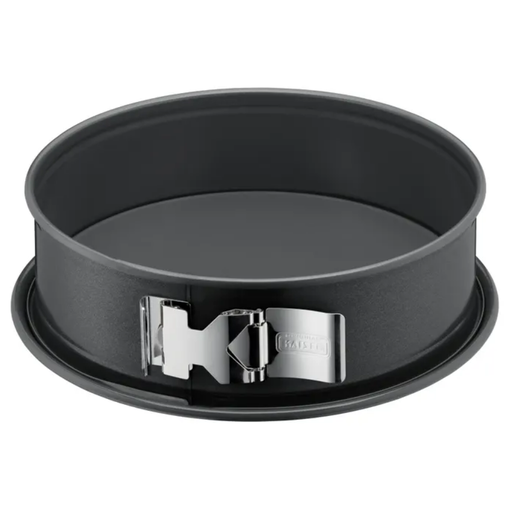
Why it suits this profile: Its 20 cm diameter is a manageable size for smaller households, compact ovens and your first cake recipes.
The product information specifies a SafeClick fastening, a leakproof base and heat resistance up to 250 °C.
Steel construction, KaiRamic coating and a scratch-resistant base; only the base is specified as dishwasher-safe.

Why it suits this profile: The 28 cm diameter, flat enamel base and stated German manufacturing make it a good choice for regular use by families and when entertaining.
The SafeClick mechanism and base described as leakproof help address common problems with unstable springform fastenings.
Steel, KAIRAMIC non-stick coating, scratch-resistant enamel base and heat resistance up to 250 °C.
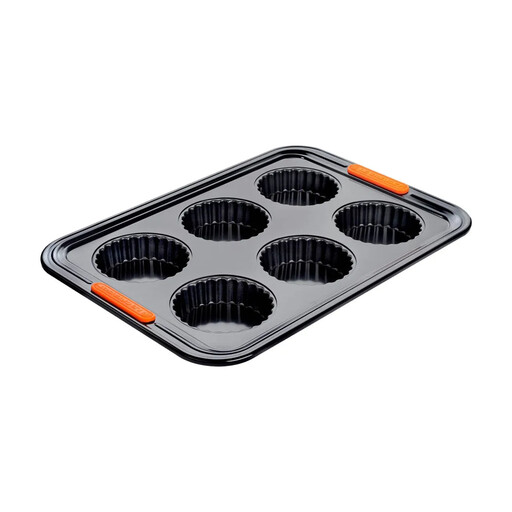
Why it suits this profile: The six individual cavities are designed for individual tarts, quiches, mini pies and desserts.
The tin is designed for individual portions and has a reinforced rim with silicone inserts to help you grip it when removing your bakes.
Carbon steel, non-stick coating and oven-safe up to 240 °C; according to the product information, it is not dishwasher-safe.
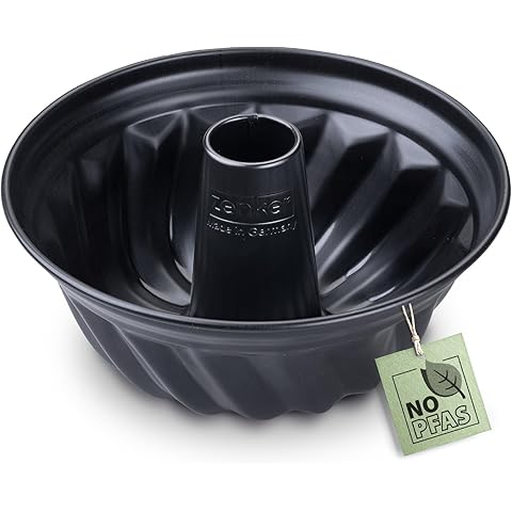
Why it suits this profile: The central tube and high sides are designed for classic Bundt cakes made with a cake batter.
This tin is clearly designed for Bundt cakes rather than shallow tarts, so you can choose the right style of tin for your recipe.
22 cm diameter, 2.8-litre capacity, steel with a non-stick coating and heat resistance up to 250 °C.
We’ve put together a complete, regularly updated list of products that meet these strict selection criteria and the safety regulations applicable in the EU.
Before using round baking tins for the first time, wash them with warm water and mild washing-up liquid. Use a soft sponge for coated tins. Before baking, make sure the springform fastening is fully closed.
Other important points:
A 20 cm springform tin is suitable for smaller cakes. A 26 cm springform tin is a practical middle ground for many standard recipes and family households. A 28 cm or 30 cm tin is a good choice if you regularly bake larger cakes or gateaux.
It depends on the model. With some tins, only the base can go in the dishwasher, while the ring and fastening need to be washed by hand. The manufacturer’s care instructions are therefore more important than the general “non-stick” label.
Its lifespan depends on the material thickness, how often you use it, the temperature and how well you care for it. A steel tin can last a long time if handled properly. However, coatings can be easily damaged by scratches, abrasive cleaners and overheating. Hand-washing and using suitable kitchen utensils can help protect the surface.