
Lieferung heute & morgen

Qualitätsgarantie

Willkommens-Angebote freischalten: KOSTENLOSE Lieferung | Bis zu 80 % RABATT | Kostenlose 30-Tage-JoyPlus-Testphase
App herunterladen
A round cake tin is a staple in many British kitchens. It is suitable for sponge cakes, cheesecakes, cake bases, quiches, tarts and desserts. However, having a wide choice does not automatically make it easier to choose the right product. People often select tins based solely on a non-stick coating, a low price or supposedly easy cleaning. In reality, the technical specifications and the intended use are what matter most.
A 26 cm springform tin is suitable for many standard recipes and is often large enough for a family cake. A 28 cm springform tin offers more surface area, but with the same amount of batter it may produce a flatter cake. A 30 cm springform tin is better suited to larger quantities or recipes specifically designed for this diameter.
If you replace a smaller tin with a larger one, you should keep an eye on the baking time and batter depth. Recipe quantities cannot always be transferred unchanged.
A cake tin with a non-stick coating can make it easier to remove your bake. However, the coating will only remain usable for as long as possible if you avoid using metal knives, forks or sharp-edged baking tools. Care instructions also vary considerably: some tins are not dishwasher-safe, while others allow only the base to be cleaned in the dishwasher.
A ceramic coating is not a licence for aggressive cleaning or sudden changes in temperature either. Check the manufacturer’s instructions on temperature limits and cleaning before buying.
For cheesecakes, moist cake batters and cakes with liquid fillings, a leakproof cake tin is particularly important. A clasp alone does not guarantee a watertight tin, however. The base, sides, seal and correct fit all need to work together. For delicate recipes, it may also be sensible to place a baking tray underneath the tin.
The diameter is only one part of the size specification. A tall tin holds more batter than a shallow round cake tin with the same diameter. For tiered cakes or tall cheesecakes, details such as height and volume are particularly important.
For a cake tin with a removable base, you should also check that the base sits securely and can be removed safely after baking.
A steel cake tin heats up while retaining its shape, making it suitable for even browning. Depending on the design, it may have a PTFE or ceramic coating. Coated steel tins should not be used with metal utensils.
A silicone cake tin is lightweight and flexible, and can make it easier to release baked goods. When filling it, you will often need a sturdy base to prevent the sides from tipping. Before buying, check the maximum permitted temperature, whether it is suitable for oven use and the care instructions.
A Bundt tin is ideal for certain types of cake. Its central tube helps transfer heat to the middle of the bake. However, a Bundt tin is not automatically suitable for liquid, delicate fillings or every type of recipe.
“Oven-safe” does not automatically mean that a tin is suitable for a microwave, hob or naked flame. For the metal tins mentioned here, it is especially important to follow the manufacturer’s instructions. Several models are expressly not intended for induction hobs or direct contact with a flame.
A dishwasher-safe cake tin can save time, but the same rule applies here: for some springform tins, only the base is approved for dishwasher use. Washing by hand with warm water and mild washing-up liquid can help protect both the coating and the clasp.
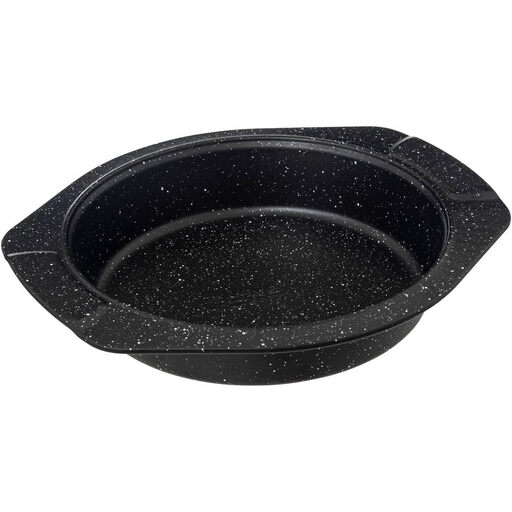
Why this product suits this profile: With a 26 cm diameter and a capacity of 1.9 litres, this round steel tin covers typical cake recipes. It is designed for use in the oven and comes with steel handles.
The diameter, capacity and material are clearly specified, making it easier to compare the tin with recipes you already use.
Steel body, PTFE coating, 1.9-litre capacity and a two-year statutory warranty. Not dishwasher-safe.

Why this product suits this profile: According to the product details, this 28 cm springform tin features a SafeClick closure system, a leakproof rim, a 3.4-litre capacity and heat resistance up to 250 °C.
The closure and leak resistance are explicitly specified. The separate care instructions prevent you from assuming that the entire tin is dishwasher-safe.
Steel construction, cut-resistant enamelled base, non-stick coating and a ten-year guarantee according to the product description. Only the base is intended for dishwasher use.
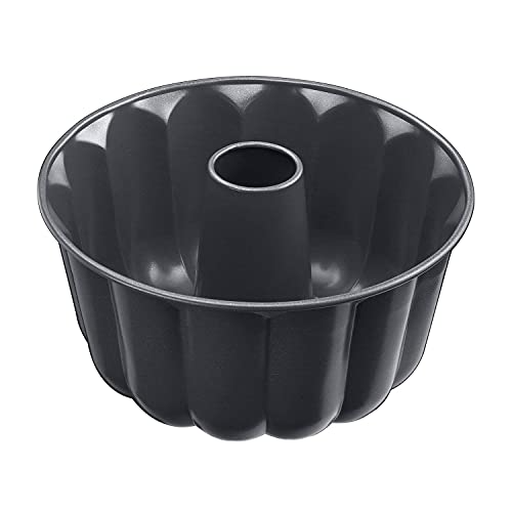
Why this product suits this profile: This steel Bundt tin features a central tube, tall sides, a 3.6-litre capacity and a heat-resistant design suitable for temperatures up to 250 °C.
This tin is designed for Bundt cake recipes and is not presented as a universal springform tin. That reduces the risk of buying the wrong product for specialist baking projects.
Steel with a non-stick coating, enamelled base, dishwasher-safe according to the product details and backed by a ten-year manufacturer’s guarantee.
We have put together a complete, regularly updated list of products that fully meet these strict selection criteria and the safety regulations applicable in the EU.
For many household recipes, a 26 cm springform tin is a good starting point. However, the right size depends on the quantity specified in the recipe and the desired cake height. In a 28 or 30 cm tin, the batter may produce a flatter cake if you use the same quantity.
That depends on the recipe and how you plan to use the tin. Steel retains its shape and supports even browning. Silicone is flexible and can make it easier to release the bake, but it needs a sturdy base when being filled. The temperature and cleaning instructions provided by the relevant manufacturer are decisive.
A leakproof cake tin has a design in which the sides and base close as tightly as possible. This is particularly important for liquid batters and cheesecakes. Before buying, you should consider the type of closure, the base design and the care instructions together.