
Lieferung heute & morgen

Qualitätsgarantie

Willkommens-Angebote freischalten: KOSTENLOSE Lieferung | Bis zu 80 % RABATT | Kostenlose 30-Tage-JoyPlus-Testphase
App herunterladen
A round dining table is often the heart of social gatherings. It fosters communication by allowing everyone to face each other and often appears less imposing in a room than a rectangular model. However, the selection process has its pitfalls, which can quickly turn a supposed design highlight into an impractical nuisance. Before you make a decision, it's crucial to understand the common weaknesses that only become apparent with daily use.
To avoid buyer's remorse, you should focus on objective criteria that guarantee durability and functionality.
The table's size must suit both the number of people and the available space. As a rule of thumb for capacity:
For space planning, you should allow about 60 cm of width per seat. Even more important is the clearance around the table: calculate at least 80 cm from the table edge to the nearest wall or piece of furniture, so chairs can be pushed back comfortably and walkways remain clear.
The material determines not only the aesthetics but also the durability and maintenance required.
The type of base is crucial for stability. A single, narrow pedestal is only stable if it has a very heavy and wide base plate. A design with four legs or a sturdy cross base distributes weight more evenly and provides greater stability, which is especially relevant for larger tabletops with a 120 cm diameter.
Here are some models that, based on their construction and material properties, are suitable for specific user profiles.
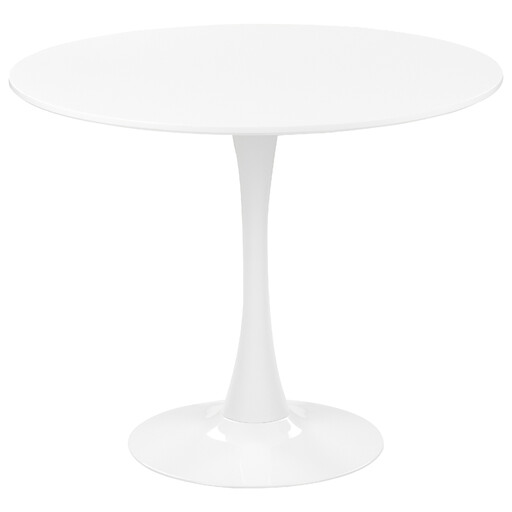
Why This Fits Their Persona: Ideal for small apartments or dining nooks. The 90 cm diameter is perfect for 2 to 4 people without overwhelming the space. Its minimalist design blends seamlessly into modern interiors.
The solid pedestal base with a wide base plate (50 cm diameter) ensures good stability, avoiding the pitfall of an unstable frame. The low-maintenance MDF top is resistant to everyday wear and tear.
Compact dimensions and a universal, modern design. The smooth surface is easy to clean.
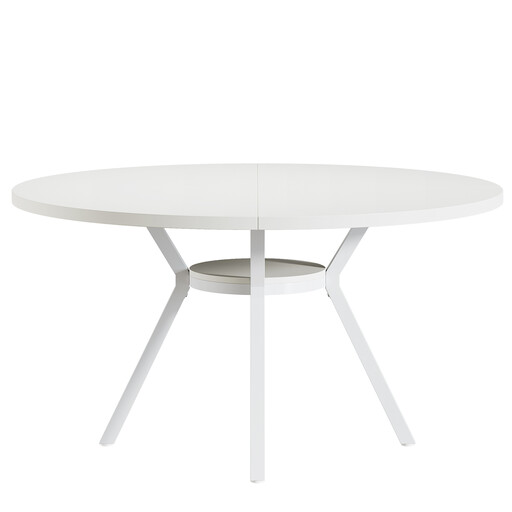
Why This Fits Their Persona: With a 120 cm diameter, this table offers ample space for family meals or game nights. The additional lower shelf is practical for storing placemats, napkins, or decorations.
The X-shaped base made of sturdy steel legs ensures high stability and prevents wobbling. The tabletop is described as heat-resistant and scratch-proof, which counteracts the pitfall of a delicate surface.
Integrated shelf for extra storage and adjustable, non-slip feet to protect the floor.
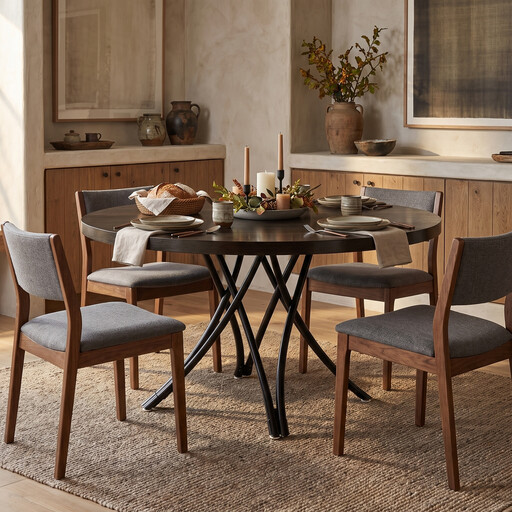
Why This Fits Their Persona: For fans of modern or industrial style. The combination of a black tabletop and the striking metal cross-leg frame makes a bold design statement in the dining room or kitchen.
The sturdy metal cross-leg design offers excellent stability and prevents tipping. The coated engineered wood tabletop is described as wear-resistant and low-maintenance, making it suitable for everyday use.
A strong visual design combined with high stability. The adjustable foot pads are a practical detail for uneven floors.
We have compiled a complete, up-to-date list of products that fully meet these strict selection criteria and rigorous safety standards.
A round dining table for 4 people should have a diameter of at least 90 cm. You will also need about 80 cm of clearance around the table to the nearest wall or piece of furniture. This results in a required total area of approximately 2.50 m x 2.50 m to sit and stand up comfortably.
Yes, a high-quality MDF board with a resistant coating (e.g., melamine resin) is very durable and low-maintenance. It is resilient against most daily stresses like scratches and moisture. However, you should avoid placing hot pots directly on the surface without a trivet.
The tabletop should be cleaned according to the manufacturer's instructions; a damp cloth is usually sufficient. For the metal legs, a dry or slightly damp microfibre cloth is typically enough to remove dust and fingerprints. Avoid using aggressive or abrasive cleaning agents, as they could damage the metal's powder coating.