
Lieferung heute & morgen

Qualitätsgarantie

Willkommens-Angebote freischalten: KOSTENLOSE Lieferung | Bis zu 80 % RABATT | Kostenlose 30-Tage-JoyPlus-Testphase
App herunterladen
A round jute rug can instantly lend natural warmth and a relaxed atmosphere to any room. It's an especially popular design element in Boho or Scandi styles. However, the selection is vast, and not every product delivers on its promise. Before making a decision, it's crucial to understand the most common pitfalls that can lead to a regrettable purchase. This guide will help you separate the wheat from the chaff and find a model that meets your standards in both appearance and quality.
Many buyers focus solely on design, overlooking crucial quality characteristics. This often leads to disappointment when the rug loses its appeal after a short time.
To avoid these mistakes, you should check three key aspects before purchasing. These will help you objectively assess a model's quality and suitability.
The foundation of any good jute rug is its material. A round jute rug made from 100% jute is robust, durable, and fully biodegradable. It is characterised by a firm, slightly coarse texture that provides a pleasant foot massage and creates a natural sense of living.
Blends of jute and cotton, often found in a colourful round rug, offer different advantages. The cotton makes the rug softer and allows for vibrant designs. Here, it's important to pay attention to the ratio of the materials. A high-quality, hand-braided construction ensures that the fibres are tightly bound and the rug retains its shape even with regular use.
Size is crucial for the rug's function and aesthetic. Measure the intended area precisely and visualise the effect. Here are a few reference points:
Based on these criteria, we have identified some models that are suitable for different needs and living styles.
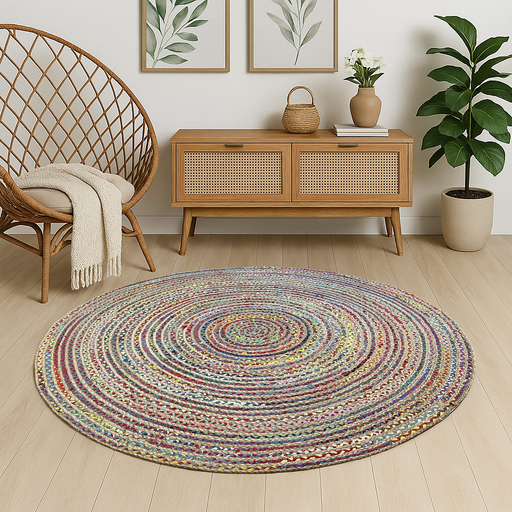
Why This Fits Their Persona: Ideal for anyone seeking a vibrant splash of colour in the round Boho rug style. The combination of jute and colourful cotton threads creates a unique, cheerful look that fits perfectly into creative living rooms or bedrooms.
The material blend of jute and cotton is transparently declared and intentionally serves the colourful design, rather than feigning to be a pure natural product.
Handmade character with a unique braided texture; a vibrant, multi-coloured design that serves as a focal point.
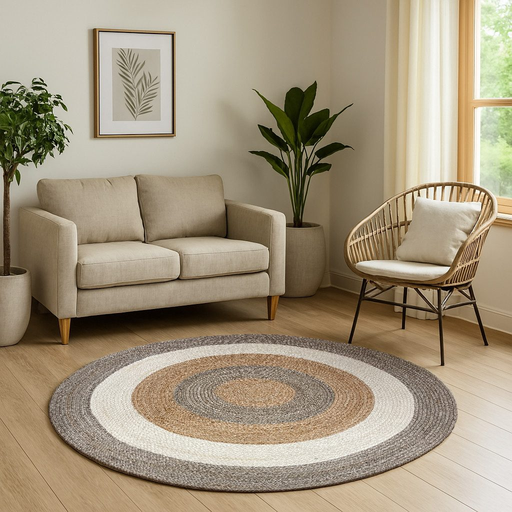
Why This Fits Their Persona: For purists who value authenticity and sustainability. Made from 100% jute, this rug radiates an earthy tranquillity. With a 150 cm diameter, it serves as a substantial centrepiece for living or dining areas in an eco-living style.
This rug bypasses the material trap with its pure jute composition. The handwoven construction is highlighted as a quality feature of a unique piece, not as a flaw.
Made of 100% natural jute fibre; generous diameter for a strong spatial impact.
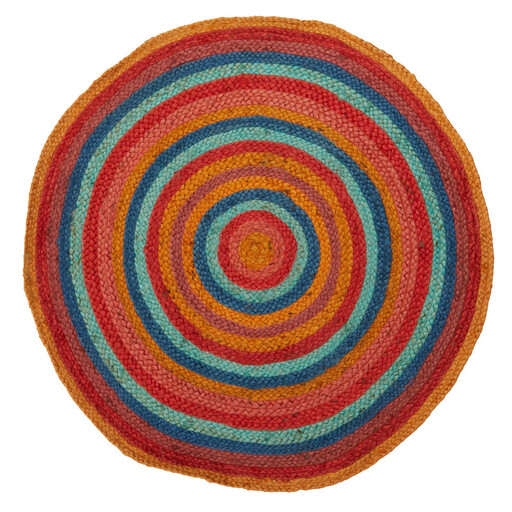
Why This Fits Their Persona: With its 100 cm diameter, this model is ideal for creating targeted accents in entryways, beside the bed, or under a small side table. Its robust, handwoven construction from 100% jute makes it a practical choice.
The handwoven construction from 100% jute directly addresses the pitfall of poor workmanship. Its clearly defined size makes it the perfect solution for smaller spaces, avoiding the "size deception."
Compact size for versatile placement; robust, handwoven construction from eco-friendly jute.
We have compiled a complete, up-to-date list of products that meet these strict selection criteria and quality standards.
How do you clean a round jute rug properly? Caring for jute rugs is straightforward. Regular vacuuming with a smooth nozzle (without a brush attachment) removes loose dirt. Stains should be blotted immediately with a clean, slightly damp cloth. Avoid harsh rubbing and the use of aggressive chemical cleaners, as these can damage the natural fibres.
Does a jute rug shed a lot of fibres? It is normal for a new jute rug to shed some loose fibres, especially initially. This is a natural characteristic of the material and not a quality defect. This "shedding" will diminish over time with regular vacuuming.
Does a round rug fit in any room? Round rugs are extremely versatile. They are excellent for creating soft contrasts in rooms with many straight lines and angular furniture. They can visually define a specific zone, like a reading nook, or serve as a central anchor point under a round table or in the middle of a square room.