
Lieferung heute & morgen

Qualitätsgarantie

Willkommens-Angebote freischalten: KOSTENLOSE Lieferung | Bis zu 80 % RABATT | Kostenlose 30-Tage-JoyPlus-Testphase
App herunterladen
A round rug can bring a seating area together, soften the straight lines in a room or add a small accent beside your bed, armchair or play area. Choosing one may seem straightforward at first, but unclear measurements, unsuitable materials and a lack of guidance on using rugs on smooth floors can easily lead to the wrong purchase.
This buying guide explains what to check before buying a round rug and which styles suit different homes.
A 150 x 150 cm round rug has a diameter of 150 cm. That sounds generous, but it may not be large enough to sit beneath a big dining table with several chairs. On the other hand, this size could work well beside an armchair, under a small side table or in an open area of the bedroom.
Before ordering, mark out the space you have in mind with masking tape or a piece of string. This makes it easier to check that doors, drawers and chair legs have enough room to move.
A fluffy round rug or round shaggy rug feels soft underfoot and adds a cosy touch. However, long fibres can trap more dust and can be harder to vacuum under furniture or in busy areas. In a child’s or teenager’s bedroom, make sure the rug lies flat and consider using a non-slip underlay.
Polypropylene, wool and jute differ in feel, construction and care requirements. An easy-care rug isn’t automatically suitable for every setting. Check the specific manufacturer’s information, pile height, weave and whether the rug can be spot-cleaned.
The commonly searched sizes 100 x 100 cm round rug, 120 x 120 cm round rug and 150 x 150 cm round rug suit different needs:
When choosing a round rug for your living room, plan its position around the sofa, coffee table and walkways. A round rug for your bedroom can sit partly under the bed or be placed beside it as a separate feature.
A polypropylene rug could be a good choice if you’re looking for an easy-care surface and a wider range of colours. According to the product information, the shaggy rugs featured here are made from polypropylene, and the 150 cm diameter options have a stated height of 4 cm.
A round wool rug, or handwoven wool rug, stands out for its natural fibres and handwoven finish. The Wooly rugs are described as being made from 100% virgin wool. They’re reversible and around 1 cm high. Natural fibres may respond differently to their surroundings and how they’re used than synthetic fibres, so be sure to follow the care instructions for each product.
Jute rugs often suit round boho rugs. The ‘Boho Breeze’ version combines jute with coloured cotton yarn in a braided design. Its stated height is 1 cm.
If you’re looking for a rug for underfloor heating, don’t rely on the material alone. Check the specific product information. The models listed below are described in their product details as suitable for underfloor heating.
A suitable non-slip underlay can be useful on smooth floors. It should fit the rug and lie flat without creases. For rugs with a higher pile, also check that doors can open easily and robot vacuums can travel over the rug. Make sure the rug lies completely flat to prevent a tripping hazard.
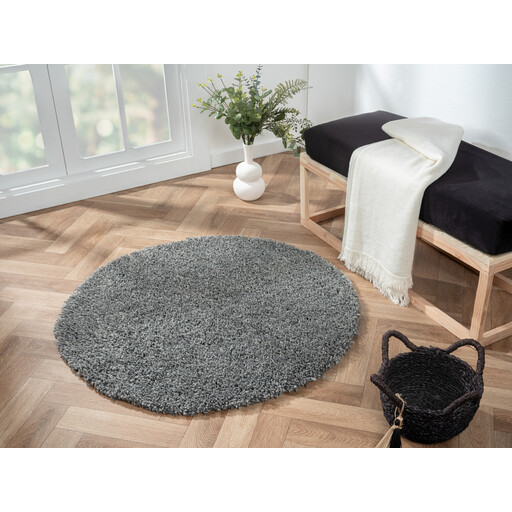
Why it suits this profile: Its compact size works well in smaller spaces, such as beside a bed, in front of an armchair or in a teenager’s bedroom. The plain design pairs easily with a range of furniture.
Its stated diameter of 100 cm reduces the risk of ordering a rug that’s too large for a small room. The product information also says it’s suitable for underfloor heating.
Polypropylene, 100 x 100 cm, 4 cm high and weighs 2 kg, according to the product details.
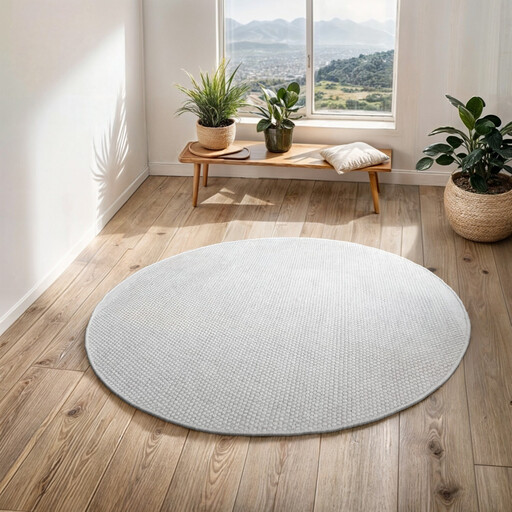
Why it suits this profile: Made from 100% virgin wool and handwoven, this rug is a good fit for calm, understated living rooms and bedrooms. Its neutral colour works well with wood, white and natural shades.
The material, 1 cm height and reversible design are clearly stated. This makes it easier to check whether the rug suits your care and usage needs.
100% wool, handwoven, reversible, 150 x 150 cm and described as suitable for underfloor heating.
Why it suits this profile: This larger round shaggy rug is a good choice for a living room, teenager’s bedroom or central seating area if you’re looking for a soft-looking surface.
The plain surface avoids a bold pattern, while the dimensions, material and pile height are clearly stated. If you’re placing it on a smooth floor, plan to use a non-slip underlay.
Polypropylene, 150 x 150 cm, 4 cm high, net weight 4 kg and described as suitable for underfloor heating.
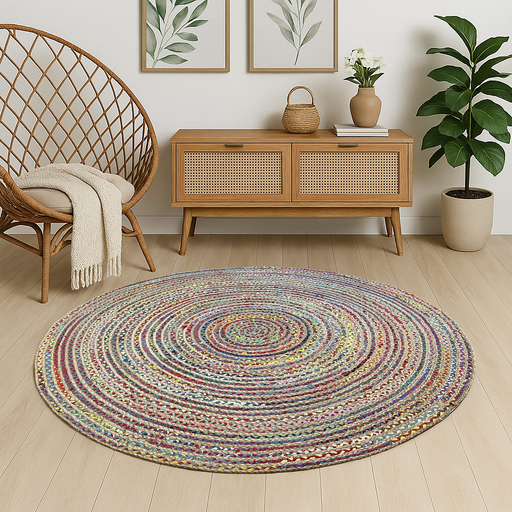
Why it suits this profile: Its round shape, natural jute and coloured cotton yarn make a striking accent in a living room, bedroom or creative living space.
The braided design and combination of materials are clearly described. At 1 cm high, it has a relatively low profile, but you should still check that it lies flat.
Jute, coloured cotton yarn, braided design, 120 x 120 cm and 1 cm high, according to the product details.
We’ve put together a complete, regularly updated list of products that meet these strict selection criteria and fully comply with the safety regulations in force in the EU.
For regular care, a gentle vacuum with a suitable setting is enough for many rugs. If you have a shaggy rug, make sure the brush height is suitable for its pile. Treat stains as soon as possible, following the care label. Don’t soak wool rugs unless the product information specifically recommends doing so.
Before using a rug on underfloor heating, check that the specific model is listed as suitable. If you have children, a non-slip underlay is also a good idea, especially on parquet, laminate or tiled floors.
It depends on your sofa, table and walkways. A 120 cm rug is better suited to compact seating or accent areas, while a 150 cm rug makes a more noticeable centrepiece. For larger seating arrangements, a 200 cm diameter may work well, as long as it doesn’t make the space feel cramped.
Yes, if the manufacturer specifically approves the individual model for use with underfloor heating. The product information for the shaggy and wool rugs mentioned here lists them as suitable. You should also check the pile height, underlay and recommendations from your heating system’s manufacturer.
Its lifespan depends on the material, construction, level of use, cleaning and type of floor. Regular vacuuming, keeping the rug free of creases and using a suitable non-slip underlay can help it stand up to everyday use. It’s not possible to give a reliable general estimate of how long a rug will last without knowing how it will be used.