
Lieferung heute & morgen

Qualitätsgarantie

Willkommens-Angebote freischalten: KOSTENLOSE Lieferung | Bis zu 80 % RABATT | Kostenlose 30-Tage-JoyPlus-Testphase
App herunterladen
A round wooden chopping board can serve several purposes in the kitchen: it can be used for chopping vegetables, bread and fruit, as a round cheese board for guests, or as a decorative wooden serving board. However, appearance is not the only factor to consider when buying one. Some features are prominently highlighted in product descriptions but reveal little about how practical the board is for everyday use.
Typical buying pitfalls include:
A walnut chopping board usually stands out thanks to its darker brown colouring and distinctive grain. It can therefore be used both as a work surface and as a decorative board for bread and snacks. When choosing one, buyers should look for the stated type of wood, the material thickness and a smoothly finished surface.
An acacia wood cheese board often features contrasting grain patterns and works well with rustic or natural table settings. For serving cheese, cured meats, fruit and snacks, a smooth, low-splinter surface is essential.
A round bamboo chopping board may be made from glued bamboo strips or a single continuous piece of bamboo, depending on the design. Botanically, bamboo is not wood, but it is used in a similar way for kitchen boards. Consistent workmanship, sufficient thickness and clear care instructions are the key factors.
A 30 cm chopping board is a good guide for smaller to medium-sized kitchen tasks and for serving. For a substantial meat and cheese platter, a diameter of around 31 to 33 cm can provide more room. At the same time, a larger board requires more storage space and should sit securely on the table or worktop where you intend to use it.
Material thickness affects both weight and handling. The following product details show how much round boards can vary:
After use, cleaning with a damp cloth or sponge, hot water and a small amount of mild washing-up liquid is generally sufficient. The board should then be allowed to dry completely. Upright storage in a dry place is ideal, as this allows air to reach both sides.
Avoid dishwasher-safe claims: Wooden and bamboo boards should not go in the dishwasher unless the manufacturer explicitly states otherwise. This also applies to boards that look particularly robust in product images. A wooden board should likewise not be left in the sink for extended periods.
For raw foods such as meat or fish, a separate, suitable chopping surface is recommended. This means a round cheese board or an acacia wood cheese board can be used mainly for serving and is more likely to remain in good condition.
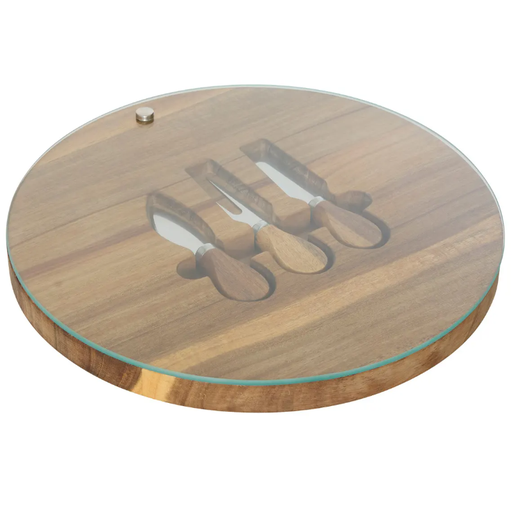
Why this product suits this profile: With a diameter of 30 cm, it is suitable for cheese, cold meats, fruit and smaller snacks in the home.
The acacia wood material and specific diameter are clearly stated, while the care instructions rule out soaking and dishwasher use.
30 cm diameter; natural acacia wood appearance for use as a cheese and serving board.
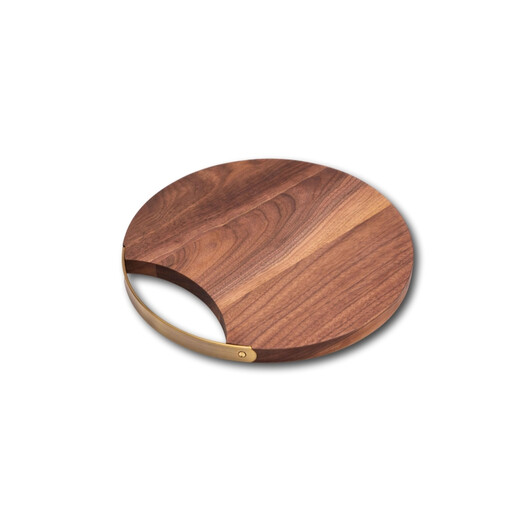
Why this product suits this profile: Walnut, a 31 cm diameter and 20 mm thickness combine a practical work surface with a darker wood appearance.
The product details specify the type of wood, diameter and thickness rather than relying solely on a general quality claim.
Walnut; 310 × 20 mm; handle for easier carrying and hanging.
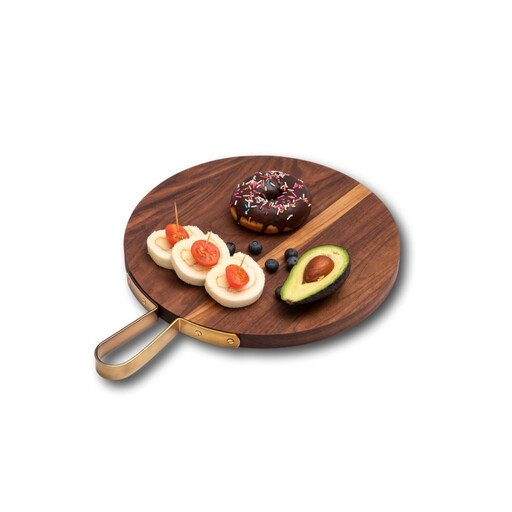
Why this product suits this profile: The long handle makes it easier to carry a prepared board from the kitchen to the dining table or buffet.
The design makes the handle a clearly identifiable functional feature, allowing buyers to compare the required handling with the storage space available at home.
310 × 20 mm; long handle; brown walnut wood appearance.
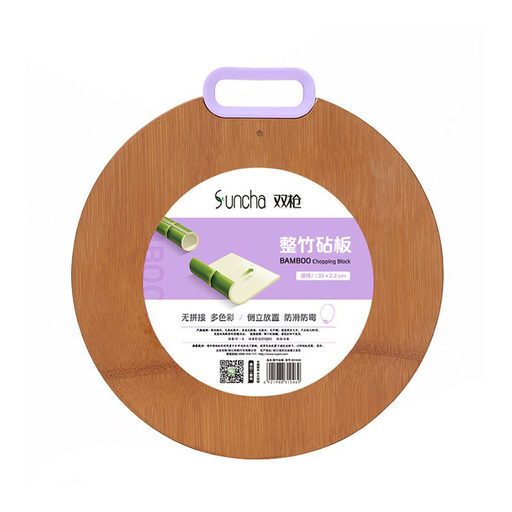
Why this product suits this profile: The 33 cm diameter provides room for larger presentations, while the round shape is suitable for chopping and serving.
The dimensions of 330 × 18 mm are clearly specified. However, it should still be cleaned by hand rather than being left to soak for a long time.
100% natural bamboo material according to the product description; 33 cm diameter; 18 mm thickness.
For chopping vegetables and bread every day, a flat, sufficiently thick work surface is more important than a particularly decorative pattern. If you mainly use the board as a serving platter, you can place greater emphasis on the grain, shape and handle. A wooden chopping board with a handle is practical if it is regularly moved between the kitchen, dining room and patio.
For cafés, restaurants or frequent private gatherings, it is worth planning how many boards you need and what each one will be used for. Separate boards for chopping and serving can make cleaning easier. The work surface should also be large enough without the board overhanging the edges of the table.
We have put together a complete, regularly updated list of products that fully meet these strict selection criteria and the safety regulations applicable in the EU.
Yes, provided that the size, material thickness and care requirements suit how you intend to use it. For vegetables, bread and fruit, choose a stable board with a smooth surface. For raw meat and fish, a separate chopping surface is advisable.
There is no single lifespan that applies in every case. It depends on the type of wood, workmanship, usage and care. Regular drying, storing the board in a dry place, and avoiding soaking and dishwasher cleaning can help extend its useful life.
Ongoing care generally costs very little, as warm water, mild washing-up liquid and a clean cloth are sufficient. With intensive use, a care oil suitable for kitchen wood may occasionally be worth considering. Always follow the manufacturer’s instructions.