
Lieferung heute & morgen

Qualitätsgarantie

Willkommens-Angebote freischalten: KOSTENLOSE Lieferung | Bis zu 80 % RABATT | Kostenlose 30-Tage-JoyPlus-Testphase
App herunterladen
When looking to buy an RTX graphics card, many people first compare CUDA cores, boost clock speed and memory capacity. These specifications are relevant, but on their own they do not reliably identify the right choice. Case dimensions, power supply, monitor resolution and connectivity are equally important in determining whether a graphics card can be used effectively in your own PC.
Our selection is aimed at PC gamers, streamers, content creators and system builders in Germany. The focus is on clear, comparable technical data rather than sweeping performance claims.
A high boost clock sounds like an obvious performance advantage. In practice, however, actual speed also depends on cooling, the power limit, drivers, the game engine and the resolution. Clock specifications can therefore vary between different versions of the same GPU without automatically resulting in a proportional advantage.
A graphics card with GDDR7 offers high memory bandwidth, but memory capacity is a separate factor. 8 GB may be sufficient for Full HD gaming and many QHD setups. For demanding texture packs, 4K gaming, video editing or AI applications, 12 or 16 GB may be better suited to your planned workflow.
High-performance models are often considerably longer and wider than older cards. A 4-slot graphics card may obstruct adjacent expansion slots. In addition, certain RTX 5080 models require a power supply with a recommended output of 850 W, together with a correctly fitted 12V-2x6 connector. With a compact RTX 5060, around 550 W and an 8-pin connector may be sufficient, depending on the model. Before buying, check your power supply, cables and the clearances inside your case.
The GeForce RTX 5050 is positioned for compact systems and moderate gaming requirements. With 3,840 CUDA cores and 8 GB GDDR7, the GeForce RTX 5060 provides a suitable basis for Full HD and many QHD configurations. With 12 GB GDDR7, a GeForce RTX 5070 is suitable for higher graphics settings and more demanding QHD workloads. The GeForce RTX 5080, with 16 GB GDDR7, is aimed at users seeking high frame rates at 4K or looking to run computationally intensive creative applications.
This classification does not replace an individual comparison of the games you play. Ray tracing, texture quality and your desired frame rate have a significant impact on requirements.
Depending on the product, the models in this selection are based on the NVIDIA Blackwell architecture. Features such as DLSS 4, ray tracing and G-Sync are supported depending on compatible games, monitors and drivers. DLSS can change how images are rendered in compatible titles, but it is not a substitute for sufficient raw performance or suitable graphics memory.
If you are looking for a DLSS 4 graphics card or a graphics card with ray tracing, check support in your preferred games and programmes. For creators, Studio drivers, video outputs and memory bandwidth may also be important.
PCIe 5.0 is specified for several current RTX models. Backwards compatibility depends on the motherboard; the card should be installed in a suitable PCIe x16 slot. DisplayPort 2.1b and HDMI 2.1b are useful for modern monitors. However, the maximum resolution and refresh rate also depend on the monitor, cable and any enabled compression methods.
Before placing your order, check the following:
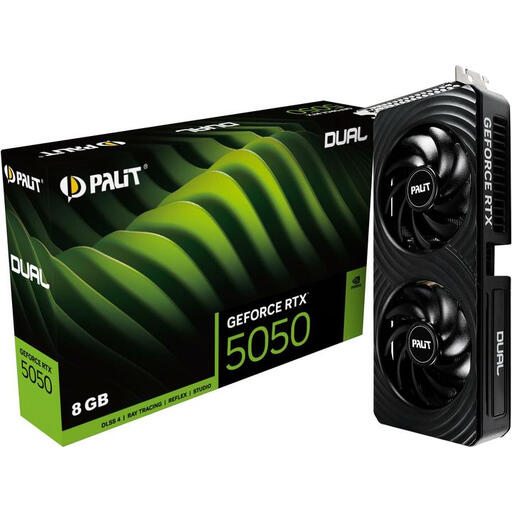
Why this product suits the profile: This 2-slot compact card is 262.1 mm long and has a specified power consumption of 130 W. That makes it easier to install in many standard cases.
Its compact dimensions and single 8-pin connector reduce the risk of overlooking case or power supply requirements.
8 GB GDDR6, 3x DisplayPort 2.1b and 1x HDMI 2.1b; recommended power supply: 450–500 W.
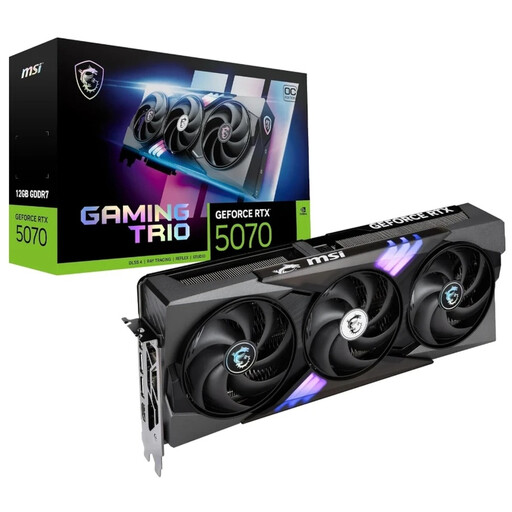
Why this product suits the profile: The combination of 12 GB GDDR7, a 192-bit memory interface and triple-fan cooling is designed for demanding gaming and creator systems.
The memory capacity is not promoted on clock speed alone: 12 GB and 192-bit provide concrete points of comparison for higher resolutions.
Boost clock speed of up to 2610 MHz in OC mode, PCIe 5.0 x16 and 3x DisplayPort 2.1b; dimensions: 338 × 140 × 52 mm.
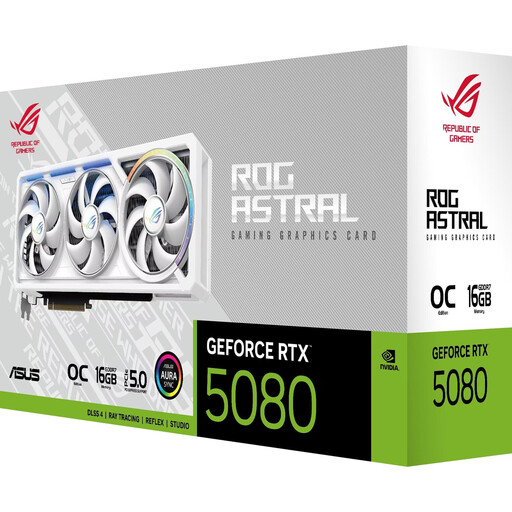
Why this product suits the profile: With 16 GB GDDR7, 10,752 CUDA cores and four fans, it appeals to users who combine high graphics settings with streaming or creative applications.
The key space and power requirements are clearly specified: 3.8 slots, 357.6 mm length, 360 W power consumption and an 850 W recommended power supply.
16 GB GDDR7 with 256-bit and 960 GB/s bandwidth; 3x DisplayPort 2.1b and 2x HDMI 2.1b for up to four monitors.
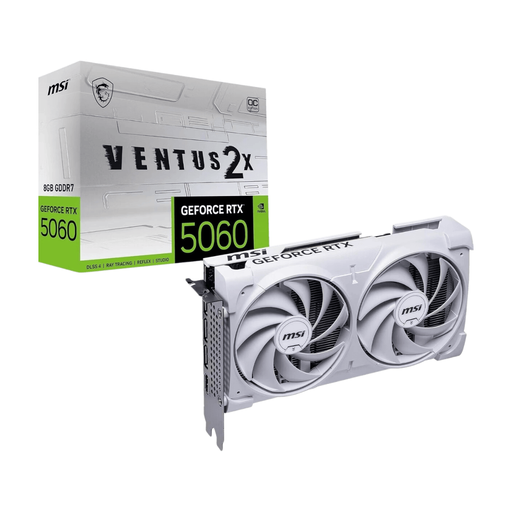
Why this product suits the profile: At 197 mm long, with a 3-slot design and SFF-Ready certification, it is an interesting option for selected compact systems.
The dimensions and recommended power supply capacity of 550 W make it easier to check compatibility before installation. However, the 3-slot height still needs to be taken into account.
8 GB GDDR7, PCIe 5.0, 3x DisplayPort 2.1b and 1x HDMI 2.1b; two fans provide active cooling.
We have put together a complete, regularly updated list of products that fully meet these strict selection criteria and the safety regulations applicable in the EU.
For 4K gaming, 16 GB of graphics memory, high memory bandwidth and sufficient cooling are particularly important in addition to GPU performance. Models such as the GeForce RTX 5080 from this selection feature 16 GB GDDR7 and a 256-bit interface. The actual frame rate depends on the game, use of ray tracing, DLSS support and your chosen settings.
The recommendation depends on the specific model and the PC as a whole. The RTX 5080 cards mentioned require 850 W, while the MSI RTX 5070 requires at least 650 W and the MSI RTX 5060 at least 550 W. A suitably high-quality power supply with compatible, correctly connected cables is essential. Compare the specifications provided by the graphics card and power supply manufacturers.
Service life depends on operating hours, temperature, exposure to dust, power supply quality and continued driver support. A larger card does not automatically remain current for longer. If you want headroom for upcoming games, consider your resolution, memory requirements and planned monitor upgrades rather than comparing the current price alone.