
Lieferung heute & morgen

Qualitätsgarantie

Willkommens-Angebote freischalten: KOSTENLOSE Lieferung | Bis zu 80 % RABATT | Kostenlose 30-Tage-JoyPlus-Testphase
App herunterladen
A rucksack has to juggle several roles in daily life: it needs to safely hold your laptop, clothes or school supplies, sit comfortably when you're commuting, and take up as little space as possible on the go. At the same time, models differ significantly in dimensions, weight, compartment layout and water resistance.
If you only focus on capacity or a flashy design, you'll often miss important details. The tips below will help you objectively compare a suitable travel rucksack, laptop rucksack, business rucksack or school rucksack.
A figure like "40 litres" alone tells you very little about whether a rucksack is suitable as hand luggage. What really matters are the actual dimensions – especially if your hand luggage rucksack needs to fit under the seat or in the overhead locker on a plane.
With expandable models, the depth can change. A rucksack with standard dimensions of 50 × 35 × 15 cm, for example, can grow to 50 × 35 × 20 cm. This extra capacity is handy, but you must check it against the specific airline's rules before you fly.
Polyester with a coating or water-resistant zips can hold off light rain and splashes. However, that doesn't automatically make a rucksack fully waterproof. For longer trips in heavy rain, a rain cover or a separate laptop sleeve is a sensible idea.
Claims about water resistance should refer to specific details like material, coating or protection rating. The Xiaomi Casual Daypack, for instance, is given a protection rating of IPX4. This describes a defined level of splash protection, but it's not an indication that it can withstand prolonged heavy rain or being submerged.
A padded back is useful, but shoulder straps, a chest strap, back length and weight distribution all affect how comfortable a rucksack is to carry. A heavily loaded rucksack of 20 to 40 litres can become uncomfortable despite soft padding if your laptop, books and clothes are jumbled on top of each other.
Different uses call for different guidelines:
When flying, the airline's rules are what count. A model advertised as a cabin rucksack can only be taken on board free of charge if its actual external dimensions meet the conditions of your particular fare.
A lightweight rucksack reduces the weight you're carrying, but that doesn't automatically tell you how much it can bear. So check:
A multi-carry system can be practical for business trips. Stowable shoulder straps stop them from getting caught on the baggage carousel.
A rucksack with a laptop compartment should keep your device separate from the rest of your luggage and be adequately padded. Extra organiser pockets are helpful for documents, chargers and keys. A clamshell design that opens wide makes packing and airport security checks much easier.
Water-resistant materials should usually only be cleaned with a damp cloth and mild detergent. Machine washing, high heat and harsh cleaning agents can damage the coatings, padding and shape of the rucksack.
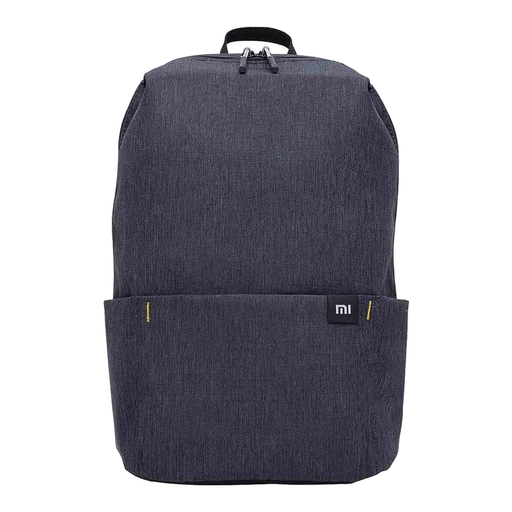
Why does it suit this profile? With 10 litres, this compact rucksack is ideal for city trips, leisure and a light work setup.
The specific volume of 10 litres and dimensions of 34 × 22.5 × 13 cm make its limits clear.
165 g weight, three external pockets, a compartment for a notebook or tablet up to 14 inches and IPX4 splash protection according to the product information.

Why does it suit this profile? For weekend trips and business travel, this travel rucksack offers an expandable main compartment and several carrying options.
Standard and expanded dimensions are listed separately. You should check with your airline before using the expansion on a flight.
850 g weight, 40 litres expandable volume, 90- to 180-degree opening, luggage strap and stowable shoulder straps.
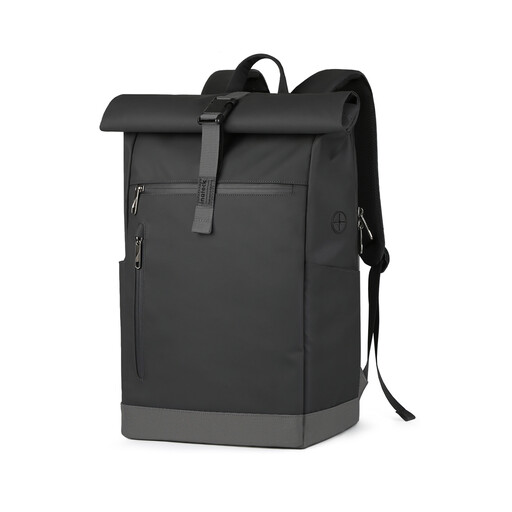
Why does it suit this profile? The roll-top rucksack combines flexible capacity with a laptop compartment for devices up to 17 inches, making it suitable for commuting, university and weekend trips.
The specifications distinguish between 25 and 30 litres, and between roll-top and extended height. The material is described as splash-proof, not fully waterproof.
Two access points, a padded 17-inch laptop compartment, side pockets for a water bottle and umbrella, and water-resistant zips.
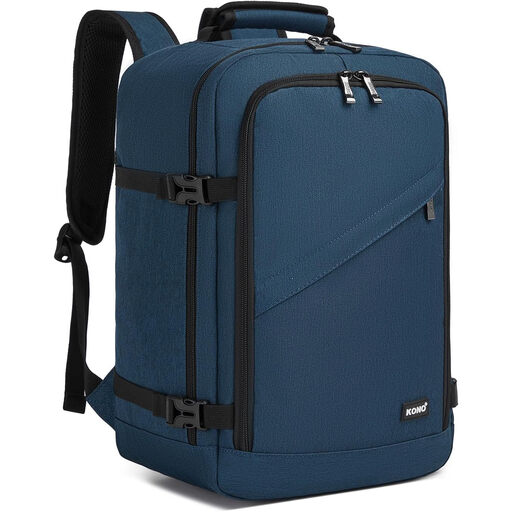
Why does it suit this profile? At 40 × 20 × 25 cm, this cabin rucksack is designed for travellers looking for a compact piece of under-seat luggage.
The external dimensions and capacity of 20 litres are clearly stated. However, you should still check the current fare and baggage conditions before you travel.
500 g weight, luggage strap, chest strap, ventilated back padding and a main compartment that opens wide.
For classic everyday use, an Eastpak Padded Pak’r with 24 litres, a padded back and an A4-compatible main compartment could be of interest. For a laptop-focused office setup, a business model with several organiser pockets, a trolley strap and a padded compartment for 14- to 17.3-inch devices offers more structure. A messenger or briefcase style is particularly useful if you don't necessarily need a rucksack and you frequently switch between carrying it by hand and over your shoulder.
In the full selection you'll find rucksacks for travel, work, school, commuting and leisure. Check the dimensions, compartment sizes and material details before you buy.
For the office, university or commuting, 20 to 30 litres is often enough. If you also need to carry clothes, sports kit or travel items, you can choose a model with 30 to 40 litres. For short trips around town, 10 to 15 litres is usually sufficient.
A water-resistant rucksack will usually protect your belongings from brief splashes or light rain. For longer bike rides in heavier downpours, a waterproof inner compartment, a rain cover or a model that is explicitly designed to be waterproof makes sense. The description should be checked against specific protection ratings.
The lifespan depends on the material, stitching, zips, how much you load it and how you care for it. Don't overload the main compartment, close all zips fully and clean the rucksack according to the manufacturer's instructions. With regular use, you should check the shoulder strap attachments, the base and the zip teeth for visible wear and tear.