
Lieferung heute & morgen

Qualitätsgarantie

Willkommens-Angebote freischalten: KOSTENLOSE Lieferung | Bis zu 80 % RABATT | Kostenlose 30-Tage-JoyPlus-Testphase
App herunterladen
A rug can transform the look and feel of a room, but choosing one involves more than matching a colour or pattern. Many purchasing mistakes happen because dimensions are misjudged, care instructions are overlooked or material specifications are confused with marketing claims. Whether you are looking for a living room rug, runner or bedroom rug, it is therefore worth checking a few practical criteria before buying.
A rug can appear larger in product photos than it will in your own room. Before buying, mark out the intended area on the floor using painter’s tape, newspaper or cardboard. This makes it easier to assess whether, for example, a 200 x 200 cm rug will fit beneath a table, or whether a 150 x 80 cm model is better suited as a small accent, bedside rug or narrow runner.
Doors, drawers and furniture legs also need to be taken into account. In a hallway, a runner should not catch against doors. In the living room, the shape should complement the seating arrangement: a rectangular rug helps structure elongated rooms, while a round rug can work beneath a round table or in a generously sized seating area.
An easy-care rug does not automatically require little attention. High-pile models such as shaggy rugs can retain more dust, crumbs and pet hair. With a wool rug, natural fibres and irregular woven textures can affect how it should be cleaned. For households with children or pets, a low-pile rug is often easier to vacuum than a model with a very deep pile.
Always check the specific material information and recommended cleaning method. “Vacuum clean” or “shake out” are different care instructions from machine washing or professional cleaning.
Not every rug is automatically suitable for use with underfloor heating. Look for an explicit statement from the manufacturer. For the shaggy and wool models presented here, compatibility is specified in the respective product descriptions. The rug should also avoid unnecessarily restricting heat transfer. An anti-slip underlay can improve stability, but it must likewise be approved for use with underfloor heating.
A wool rug offers a natural look and a textured surface. Models made from 100% virgin wool, such as “Wooly Oasis” and “WoolHeaven”, are described as handwoven and finished in a natural cream-beige shade. Wool can be an appealing choice for living rooms and bedrooms when a natural tactile feel is desired.
A jute rug complements Scandinavian, rustic and nature-inspired interiors. According to the product data, the “Lola” model is made from jute and has a robust texture. Jute should primarily be cleaned without water and protected from prolonged exposure to moisture.
Cotton and Chindi fabrics often allow for colourful patterns and artisanal textures. “Ashraf” is listed as a handwoven Chindi rug made from cotton. With handwoven rugs, slight variations in colour and pattern may occur as a result of the production process.
Polypropylene is a synthetic fibre used in the “My Shaggy” models. With a pile height of 4 cm, the surface is considerably deeper than that of a low-pile rug. This affects its appearance, underfoot feel and cleaning requirements.
The pile height should suit the area in which the rug will be used:
A round rug measuring 150 x 150 cm or 200 x 200 cm describes a circular surface. For rectangular products, the length and width are provided. Check the product details carefully, as the order of the dimensions may vary depending on how the shop displays them.
A cream-coloured rug reflects light and pairs well with wood, beige, grey or black accents. Light colours do, however, show marks more quickly. Chindi rugs with yellow detailing create a more pronounced colour accent, while natural wool and jute tones tend to make a more understated impression.
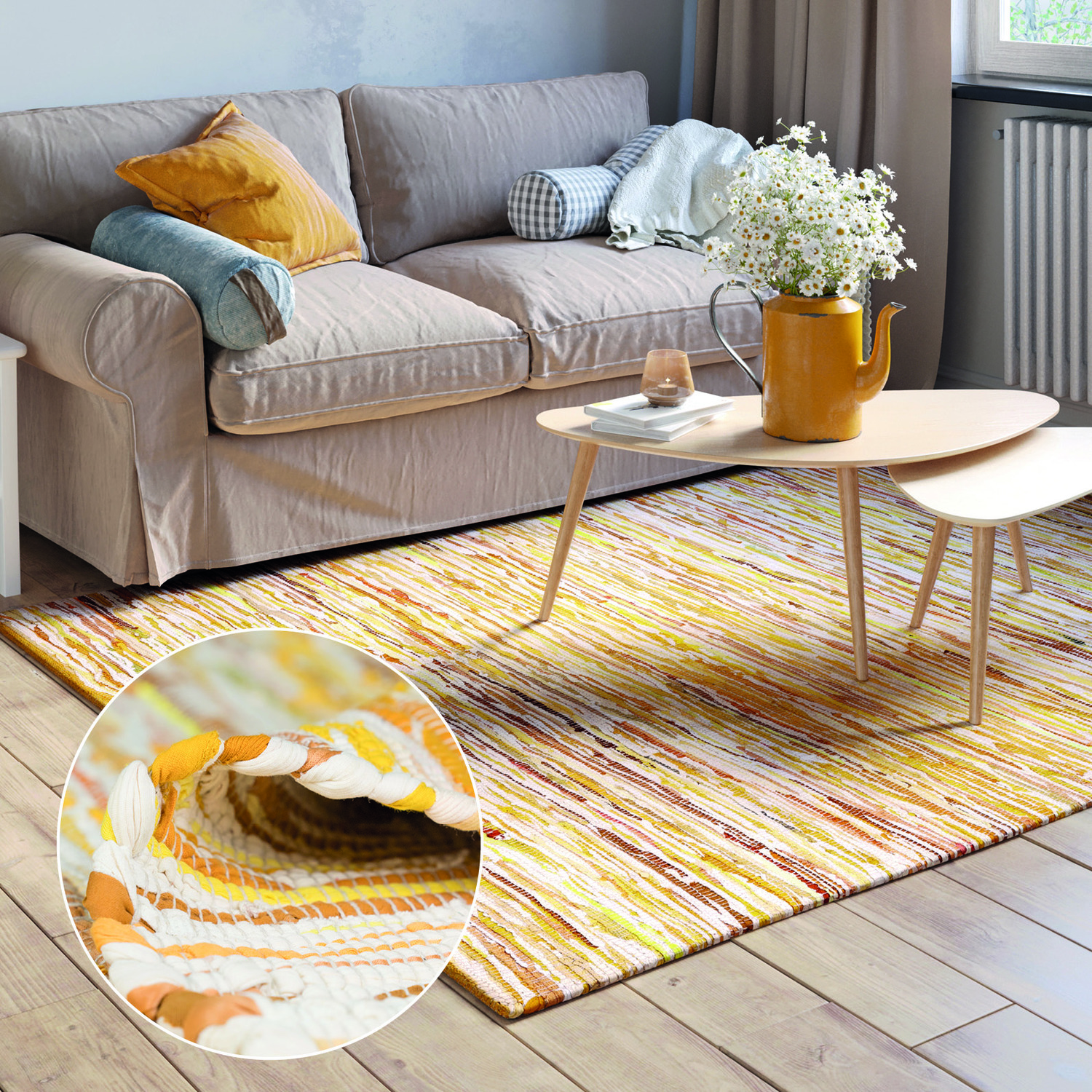
Why this product suits the profile: The compact format is well suited to smaller living areas, hallways or as a colourful accent beside a bed or sofa.
The stated dimensions and flat construction make planning easier. According to the product description, it can be cleaned by vacuuming or shaking it out.
Handwoven cotton construction according to the product data; 150 x 80 cm; yellow-mixed pattern.
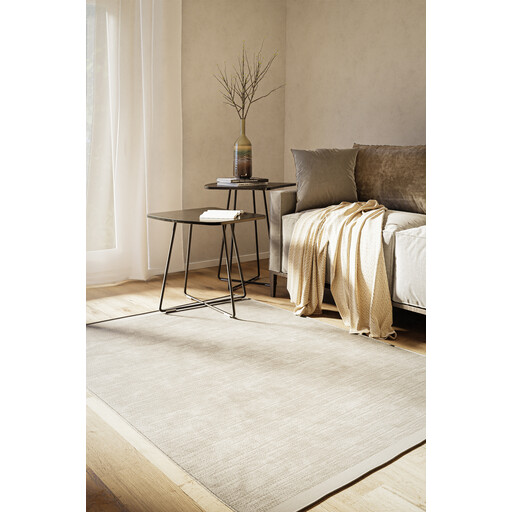
Why this product suits the profile: The square dimensions and natural tone complement spacious living rooms as well as Scandinavian, modern or rustic interiors.
The material is specified as 100% virgin wool. This makes the fibre composition easier to verify than general descriptions such as “natural material”.
Handwoven according to the description; 200 x 200 cm; 1 cm height; cream-beige, flecked natural look.
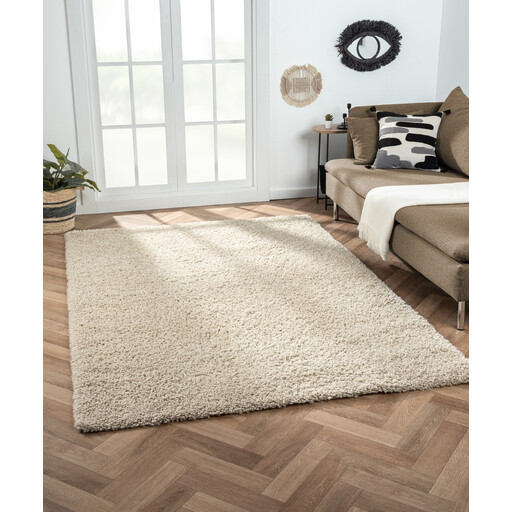
Why this product suits the profile: The generous dimensions cover a substantial area in the living room. According to the product information, this polypropylene rug is suitable for use with underfloor heating.
The product data clearly states the material, length, width and height. Due to its 4 cm height, you should nevertheless check door clearance and ensure that your robot vacuum can pass beneath it.
230 x 160 cm; polypropylene; 4 cm height; suitable for underfloor heating according to the supplier.
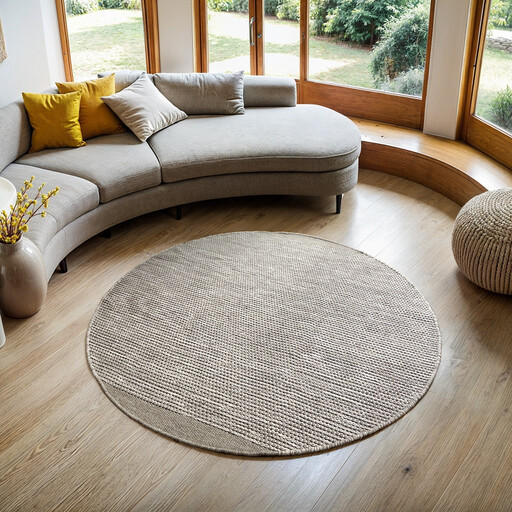
Why this product suits the profile: A round rug can visually define a dining area, a small seating corner or an entrance.
The product data specifies 150 x 150 cm, a height of 1 cm and a total weight of 2.4 kg/m². According to the description, the model is suitable for underfloor heating and robot vacuums.
Handwoven Chindi construction according to the product description; cream colour; low 1 cm height.
We have put together a complete, regularly updated selection of products that fully meet these strict criteria and the safety regulations applicable in the EU.
Place a rug only on a clean, dry and level floor. On smooth tiles, parquet or laminate flooring, a suitable anti-slip underlay can be a practical choice. It also helps reduce creasing and can protect the floor beneath the rug. If you have underfloor heating, the underlay must be approved for this application.
Vacuum regularly using a setting appropriate for the material. With handwoven products, use the brush function carefully. Spilled liquids should be absorbed as quickly as possible with an absorbent cloth. Jute and wool should not be left saturated for extended periods. Because of its longer fibres, a shaggy rug often requires more thorough cleaning than a flat model.
Also check the packaging information. Some rugs are delivered folded or rolled in a space-saving format. Creases may reduce within a few days after the rug has been laid out. Heavy furniture should only be placed once the rug is completely flat.
That depends on the seating arrangement and the available space. Measure the area and mark it out on the floor first. A rug should either accommodate the front legs of all relevant furniture or be deliberately used as a smaller, standalone accent. A 200 x 200 cm model is suitable for larger, square areas, while 150 x 80 cm is better suited to smaller zones or as a short runner.
In many everyday situations, a low-pile rug is easier to vacuum than a shaggy rug. The decisive factors are the material, pile height, weave and the manufacturer’s specific care instructions. Light cream and natural-toned surfaces can make visible marks more apparent.
Only if the manufacturer explicitly confirms that it is suitable. Also check the material thickness, backing and underlay. For the products mentioned above, compatibility with underfloor heating is stated in the respective product descriptions; the information on the product page and the instructions for your heating system remain authoritative.