What should you look for when buying?
For a rugby night in a bright living room, the light falling on the screen, the right projector placement and the complete setup are all important considerations.
| What matters |
What to check before buying |
Who should pay particular attention? |
| Picture visibility in ambient light |
Check the light falling on the screen at viewing time, screen size, how brightness is measured and the suitability of the screen surface. |
If you watch in daylight and can’t fully darken the screen area, visibility is your main concern. Around 29% of consumers rank this as their top buying priority. |
| Placement and screen size |
Compare the projector’s distance from the screen and your desired image width with the specific model’s throw ratio. |
If there’s very little space behind the sofa, you need a projection type that suits the space you have. Around 23% of consumers prioritise placement and the screen size they can achieve. |
| Fast-paced play |
Check frame interpolation and available picture modes, and make sure the connection works with your intended TV or streaming source. |
If you want to follow fast runs and camera pans clearly, motion handling deserves particular attention. Around 18% of consumers put this first. |
| Viewing and sound for guests |
Check how the picture looks from seats at the sides, as well as the screen’s viewing angle and the audio connections. |
If several guests will be watching from different seats, visibility and suitable sound for the group matter. Around 18% of consumers prioritise this need. |
| Complete setup |
Factor in the screen, any required mount and an external source device, including how everything will connect. |
If you want to get all the components together before kick-off, the cost and effort of the complete system are key. Around 12% of consumers put this first. |
Projectors at Joybuy
A selection of Joybuy projectors for watching rugby in a bright living room, including models for limited space and ultra-short-throw setups.
 No image available
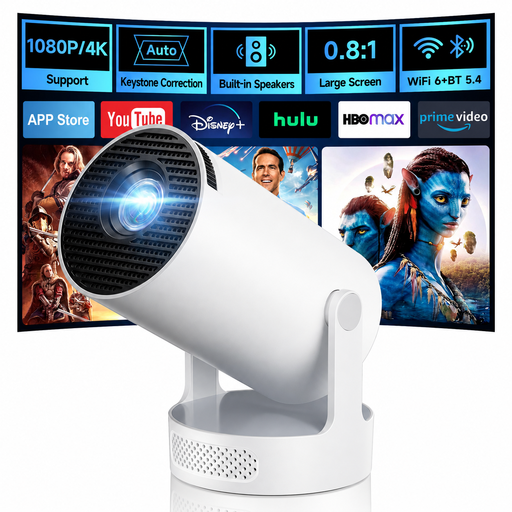
Philoent ultra-short-throw projector
The ultra-short-throw design may suit you if you want to place the projector close to the screen; make sure you have a surface suitable for this type of projection.
The product title lists 4K/1080P support, Wi-Fi 6, Bluetooth 5.4 and automatic keystone correction.
View at Joybuy
 No image available
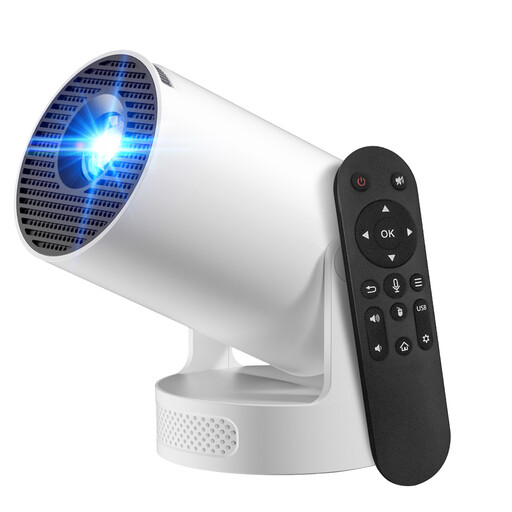
Projector with built-in apps
If you plan to use an external HDMI source or TV stick, check that the listed connections and compatibility match your source device.
The product title lists a screen size of 50–200 inches, 50–100% digital zoom, 180° rotation and compatibility with HDMI, TV sticks, USB drives, iOS, Android and laptops.
View at Joybuy
No image available
White video projector
Before buying, check that the screen size, connections and placement suit the rugby broadcast you plan to watch and the room you’ll be using.
View at Joybuy
 No image available
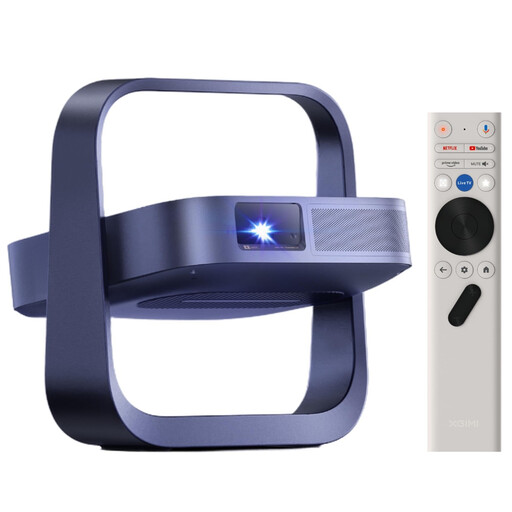
XGIMI Elfin Flip 1080p laser projector
The portable design may be useful if you want to use the projector in different places, indoors or outdoors. Its stated brightness alone doesn’t guarantee a particular level of contrast in a bright living room.
The product title lists 1080p, RGB triple laser and 1,600 ISO lumens.
View at Joybuy
 No image available
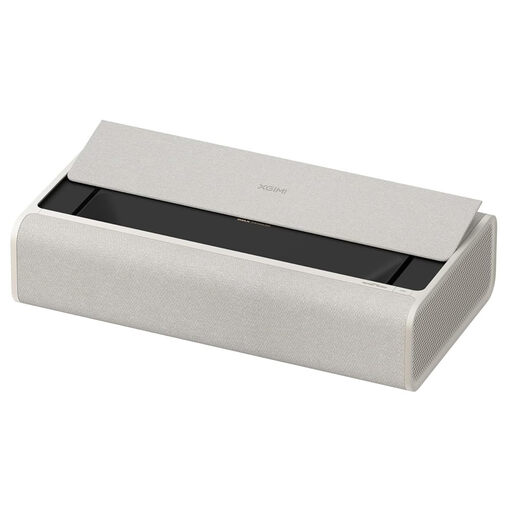
XGIMI Aura 2 4K ultra-short-throw laser projector
The ultra-short-throw design suits a position close to the screen; check that any screen you plan to use is compatible. Its brightness figure alone doesn’t guarantee a particular level of contrast in ambient light.
The product title lists 4K and 2,300 ISO lumens.
View at Joybuy
Frequently asked questions
Are 3,000 lumens or more enough for a bright living room?
Not on their own. Ambient light on the screen, screen size, the screen itself and the picture mode you actually use all affect how the image looks. Also compare how brightness is measured rather than treating ANSI and ISO figures as equivalent.
Can I use any ALR screen with an ultra-short-throw projector?
No, you should check that it’s suitable for the specific type of projection. Epson describes the ELPSC36 as designed for Epson ultra-short-throw laser projectors; this doesn’t prove it will work with every other projector.
What should I test before the first rugby night?
Measure the distance from the projector to the screen and the image width you want, check the alignment and assess the picture from the seats at the sides too. Connect the source device you plan to use and test the picture mode and sound before the broadcast; the inputs you need vary by model.
Which safety marking matters for a projector sold in Germany?
Depending on the applicable EU regulations, electrical and electronic devices may need to meet requirements for CE marking. Within its remit, the German Federal Network Agency checks matters including markings, device identity, manufacturer details and German-language instructions. CE is a manufacturer’s declaration, not an independent quality mark for picture performance.
Can I return a projector bought online if the picture isn’t right for my room?
In Germany, consumers buying online generally have a 14-day right to cancel, starting from receipt of the goods; exceptions and the terms of the specific purchase should be checked. The consumer advice centre notes that you must notify the other party to the contract when cancelling, and that this is separate from your rights when goods are faulty.


