
Lieferung heute & morgen

Qualitätsgarantie

Willkommens-Angebote freischalten: KOSTENLOSE Lieferung | Bis zu 80 % RABATT | Kostenlose 30-Tage-JoyPlus-Testphase
App herunterladen
A reliable light source is indispensable in demanding environments. Whether on a construction site, while camping, or as a precaution for a power outage, a rugged LED lantern must do more than just shine brightly. However, the market is filled with products whose promises often don't hold up to reality. Many lanterns advertised as "durable" turn out to be a poor investment at the first sign of stress. This guide will show you what to look for to find a long-lasting and dependable lamp.
Before we delve into the crucial features, it's important to understand the typical flaws often hidden behind glossy marketing.
shockproof lamp requires a housing made of high-quality materials like aluminium or impact-resistant polymer, often supplemented with rubberised protective elements.LED work light or emergency lamp offers balanced performance with multiple light modes to prioritise either brightness or maximum runtime as needed.To make an informed decision, you should examine three core technical parameters. These define the actual durability and real-world usability of a lamp.
The longevity of a lantern starts with its housing. Models made from anodised aluminium or polycarbonate offer high foundational stability. However, the crucial factor is the IK impact resistance rating. This code (e.g., IK08) indicates the impact energy the housing can withstand. A lamp with a certified IK rating has been tested for its impact resistance according to a standardised procedure. Rubberised edges and a shock-absorbing head are other features that distinguish a job site lamp or a high-performance LED camping lantern.
The IP (Ingress Protection) rating is an international standard that classifies the degree of protection a housing provides against the ingress of foreign objects (first digit) and water (second digit).
waterproof IP67 certified lantern is therefore fully suitable for use in extreme weather conditions and dusty environments like construction sites.Light output is measured in lumens (lm). While 300–500 lumens are sufficient for most applications as an LED work light, efficiency is just as important. Look for models with at least two brightness levels: a bright mode for maximum illumination and an energy-saving mode for the longest possible runtime. A battery-powered LED lantern using standard AA or D-cell batteries offers the advantage that replacements are widely available, which is crucial for unforeseen, extended use as an emergency lamp.
Based on the criteria mentioned, we present a model suitable for users who make no compromises on reliability.
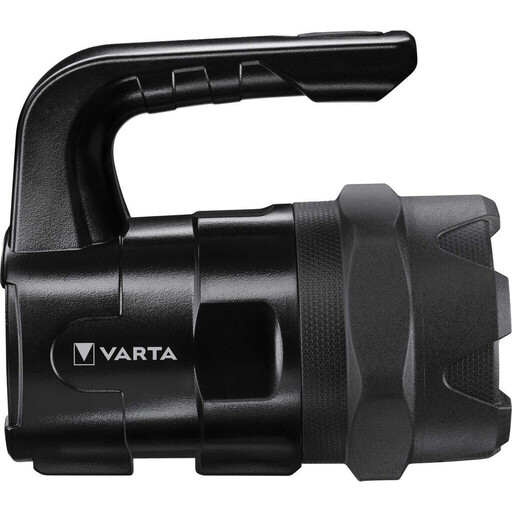
Why this model is a great fit: Ideal for tradespeople, security services, and outdoor enthusiasts who need an extremely durable light source they can rely on in any situation. The construction is designed for maximum resilience.
The aluminium housing with rubberised elements and the certified impact resistance (IK08, drop-proof from 4 metres according to the manufacturer) refute vague promises of durability. The IP67 certification ensures genuine protection against water and dust.
Offers a high light output of 400 lumens with a beam distance of up to 400 metres. Two light modes allow for a balance between brightness and a long runtime of up to 85 hours.
We have compiled a complete, up-to-date list of products that fully meet these strict selection criteria and German safety regulations.
An IP67 certification means the lantern is dust-tight (first digit 6) and protected against temporary immersion in water up to a depth of one metre for a maximum of 30 minutes (second digit 7). This makes it ideal for use in heavy rain, near bodies of water, or in very dusty environments.
The IK rating is a crucial indicator of a lamp's mechanical resistance. While many products can survive falls from a low height, a high IK rating like IK08 guarantees that the device can also withstand harder impacts, such as those encountered on construction sites or during outdoor activities. It is objective proof of a truly shockproof lamp.
For an emergency lamp or an LED camping lantern, models that run on standard batteries (e.g., AA or D) are often the most practical choice. These batteries are readily available worldwide. Alkaline batteries offer a good balance of performance and shelf life. For regular use, rechargeable NiMH batteries can be a cost-effective and more eco-friendly alternative.