
Lieferung heute & morgen

Qualitätsgarantie
App herunterladen
Kategorien
A rugged smartphone is engineered for operating conditions where conventional mobile phones reach their limits. The design of these devices aims for maximum resilience against physical impacts such as drops, vibrations, water, and dust. Professionals in trades, construction, and agriculture, as well as outdoor enthusiasts, have specific demands for the reliability and functionality of their mobile devices. This article analyses the technical parameters relevant for selecting a suitable model for 2026.
The selection of a rugged smartphone should be based on an analysis of objective technical specifications. The following criteria are crucial for evaluating performance and durability.
A device's resilience is classified through standardised tests.
For use away from power sources, battery life is a critical factor. A smartphone with a large battery features capacities often well over 10,000 mAh. This allows for multi-day use without recharging. Pay attention to the charging power (specified in watts), which determines how quickly the battery is ready for use again. The OTG (On-The-Go) function also allows the smartphone to be used as a power bank to charge other devices.
System performance is essential for the smooth operation of apps and demanding applications.
In addition to standard cameras, some rugged smartphones offer specialised modules. A phone with a night vision camera uses infrared sensors to capture monochrome images and videos even in complete darkness. This is of high practical value for night-time inspections, wildlife observation, or security applications.
Based on the technical criteria mentioned above, we present three models that are suited for different requirement profiles due to their specific features.
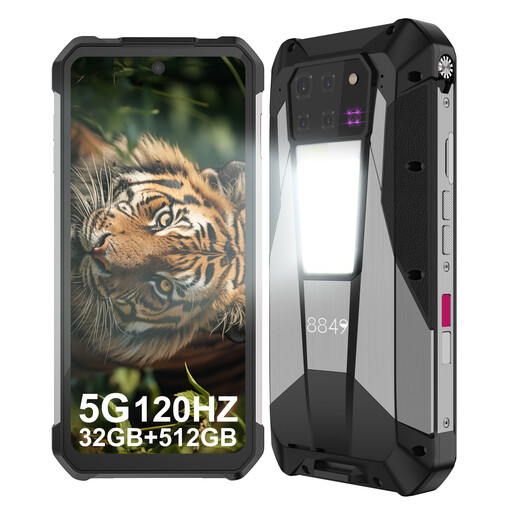
Why we recommend this product: The Unihertz Tank 3 Pro is designed for maximum autonomy and performance. Its 23,800 mAh battery capacity is a standout feature, enabling extremely long operational times. Combined with the powerful Dimensity 8200 processor and comprehensive 5G connectivity, it targets users with the highest demands for performance and independence from the power grid. An integrated projector also provides a special additional feature for presentations or entertainment.
Pros:
Who it's for: Individuals who work or travel for extended periods without access to a power source, such as long-distance travellers, expedition members, or personnel on remote construction sites. Also suitable for users who require the highest level of processing power and storage in a rugged chassis.
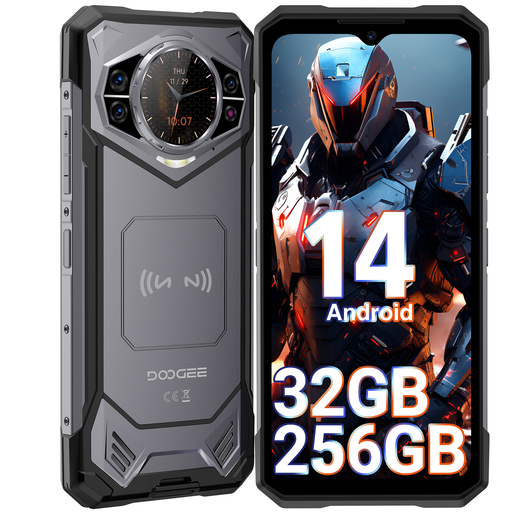
Why we recommend this product: The DOOGEE S200 combines IP68/IP69K and MIL-STD-810H robustness with modern smartphone features. The 1.32-inch rear AMOLED display is a unique selling point, allowing quick access to notifications, the time, and calls without having to activate the main display. This saves energy and enhances practical usability in daily life. Its features, including Android 14, a 120 Hz display, and a 100 MP camera, make it a versatile construction site phone.
Pros:
Who it's for: Tech-savvy users looking for a durable smartphone for daily use who don't want to sacrifice modern conveniences like a high-resolution display and innovative extra features. Ideal for tradespeople and outdoor athletes.
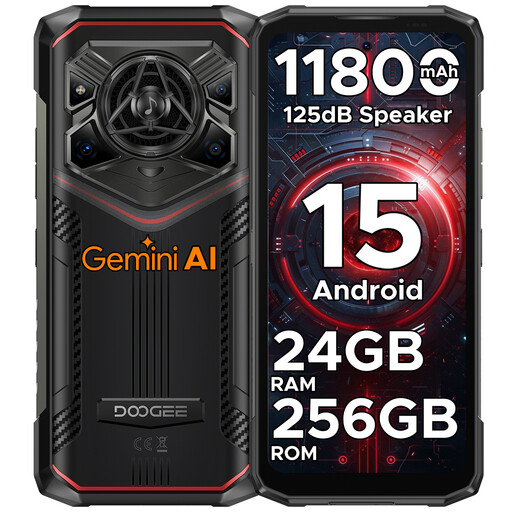
Why we recommend this product: The DOOGEE Blade 20 Pro addresses a specific need: maximum volume in noisy environments. Its 125 dB speaker with 3.5W of power ensures that calls and notifications are heard even on construction sites or around running machinery. The large 11,800 mAh battery capacity and practical triple card slots (Dual SIM + microSD) complete the package as a functional work tool.
Pros:
Who it's for: Users who work in extremely noisy environments, such as construction workers, factory workers, or event technicians. The combination of high volume, long battery life, and rugged construction makes it a reliable tool for professional use.
The models presented here represent a selection for specific requirement profiles. The market offers a wide range of devices with different focuses, whether on camera technology, battery size, or form factor. For a more comprehensive overview and additional models, we recommend taking a look at our main category for rugged smartphone.
1. What distinguishes a rugged smartphone from a normal smartphone with a protective case? A rugged smartphone is designed from the ground up for resilience. The housing is reinforced, ports are sealed, and internal components are shock-absorbed. This integrated design is verified by official certifications like IP68/IP69K and MIL-STD-810H. A separate case offers only limited, non-certified protection and does not prevent the ingress of water or fine dust into the device's ports.
2. What should I look for in the battery capacity of a construction site phone? Capacity is measured in milliampere-hours (mAh). For a construction site phone that needs to last a full workday or longer without charging, values from 8,000 mAh upwards are recommended. Models with over 10,000 mAh often provide a runtime of several days with normal use. Also, consider the fast-charging function (in watts) to avoid long charging times, as well as the OTG function to charge other devices if needed.
3. Is a 5G outdoor phone a sensible choice for hiking in Germany? 5G network coverage in Germany is continuously expanding, but it is not yet universally available in remote rural or mountainous regions. Nevertheless, a 5G outdoor phone is a future-proof investment. In areas with 5G reception, you will benefit from significantly faster data connections. Where 5G is not available, the device automatically falls back to the well-established 4G/LTE network, ensuring connectivity is maintained at all times.