Which equipment is right for you?

Photographers capturing distant colliery details

If, for example, you want to frame a headgear closely from an accessible vantage point, compare the optical telephoto reach of the complete camera and lens combination. Nikon and Panasonic list different focal-length ranges for their bridge cameras.

Photographers capturing both the site and its details

If you want to photograph both the exterior of a colliery and individual structures on a day out, check whether a fixed zoom covers both angles of view or whether you’ll need two suitable lenses for an interchangeable-lens camera. Canon lists an RF-S 18–45 mm kit lens and a separate RF-S 55–210 mm telephoto lens for the EOS R50.

Photographers who want a portable kit

If you’ll be walking between different vantage points and want to carry as little as possible, the weight of the ready-to-use kit matters more than the camera body alone. OM SYSTEM lists the weights of its camera body and telephoto lens separately.

What should you look for when buying?

Consideration What to check when buying Who is it important to?
Capturing distant structures Compare the optical focal length in full-frame equivalent terms and the stabilisation; consider digital zoom separately. If I want to frame a headgear closely from an accessible vantage point, the optical telephoto range matters to me. Around 33% of consumers prioritise capturing distant details.
Photographing the whole site and its details Check the shortest and longest ends of the optical focal-length range and, for interchangeable-lens cameras, the mount and what’s included. If I want to photograph both the colliery site and individual structures on a day out, I need suitable angles of view for both. Around 27% of consumers put this combination of wide views and details first.
Carrying equipment between vantage points Compare the body or camera with its battery and memory card, as well as every lens you’ll need, on a like-for-like basis. If I’m changing locations on foot, I want to know I can carry all my equipment, rather than just compare the weight of a light body. Around 20% of consumers prioritise a portable kit.
Photographing in fading light Consider the maximum aperture at the telephoto end you’ll be using, stabilisation and a steady shooting position. If I want to take photos in lower light, I need to consider the specific shooting conditions as well as the reach. Around 20% of consumers prioritise these lighting conditions.

Camera and location buying pitfalls

  • Confusing digital zoom with extra optical telephoto reach

    Nikon distinguishes between the COOLPIX P1100’s optical range of up to 3000 mm full-frame equivalent and its digitally extended Dynamic Fine Zoom. These figures describe different types of zoom.

    Start by comparing the optical reach, then check sample images to see whether the framing will work for the subject you want to photograph at your location.

  • Assuming a short kit zoom is all you need for distant details

    The EOS R50 kit listed by Canon includes an RF-S 18–45 mm lens; the RF-S 55–210 mm is described as a separate telephoto lens.

    Check exactly what’s included and whether the kit comes with a suitable telephoto lens for your subjects.

  • Comparing the weight of the camera body alone

    With interchangeable-lens cameras, you’ll need to add the lenses to the body weight. OM SYSTEM lists the OM-5 Mark II at 418 g including battery and card, and the M.Zuiko 75–300 mm II separately at 423 g; Sony lists the E 70–350 mm at 625 g.

    Compare the weight of every component you plan to take for wide views and telephoto shots.

  • Assuming the same photography rules apply at every colliery

    The Zollverein Foundation has different rules for private, editorial and commercial photography on its site. These rules don’t automatically apply to other collieries.

    Before you visit, check the access and photography rules for the specific site, as well as how you plan to use your images.

Key camera brands at a glance

Nikon

The COOLPIX P1100 is a bridge camera with a fixed zoom, letting you switch between angles of view without changing lenses.

  • Nikon lists an optical range of 24–3000 mm full-frame equivalent for this model.
  • The additionally advertised range of up to 6000 mm uses digital Dynamic Fine Zoom. Nikon lists the weight as around 1.4 kg; these reach figures are not an independent sharpness test on colliery subjects.

Panasonic

According to Panasonic, the LUMIX DC-FZ82D combines a wide angle of view and telephoto reach in one bridge camera.

  • Panasonic lists a 20–1200 mm full-frame equivalent range and an optical image stabiliser.
  • The focal-length range describes the angles of view available, not the level of detail you’ll get at a specific location.

Canon

The EOS R50 can be considered as an interchangeable-lens camera with a shorter RF-S zoom and a suitable telephoto lens.

  • Canon lists a kit with an RF-S 18–45 mm lens and a separate RF-S 55–210 mm telephoto lens for APS-C cameras in the EOS R series.
  • An offer that includes only the 18–45 mm lens won’t give you a complete solution for distant details. Check the mount and what’s included in the full kit.

Sony

The α6700 and E 70–350 mm G OSS offer an expandable APS-C system setup for telephoto photography.

  • Sony lists the E 70–350 mm as offering a 105–525 mm full-frame equivalent range on APS-C.
  • Sony lists the telephoto lens at 625 g. You’ll need to factor in a suitable wider angle of view for expansive shots.

OM SYSTEM

The OM-5 Mark II and M.Zuiko 75–300 mm II offer a system setup with a telephoto lens for shooting from different outdoor vantage points.

  • OM SYSTEM lists the telephoto lens as offering a 150–600 mm full-frame equivalent range and weighing 423 g; the body weighs 418 g including battery and card.
  • You’ll need to factor in the telephoto lens separately. The weather sealing specified by OM SYSTEM for the body can’t automatically be assumed to apply to every lens combination.

Related products from Joybuy

The Joybuy products below are digital cameras for photography, with the zoom features stated in their respective product names.

Komery W6 digital camera with 12x optical zoom

Komery W6 digital camera, 12x optical zoom

The stated optical zoom is a useful feature if you want to switch between different framings.

The product name also mentions 4K, 64 MP and Wi-Fi.

View at Joybuy

KOMERY G7 5K digital camera with 18x zoom, white

KOMERY G7 5K digital camera, 18x zoom, white

The product name mentions 18x zoom but doesn’t specify that it’s optical. Check the difference if optical reach is important to you.

The product name also mentions 80 MP.

View at Joybuy
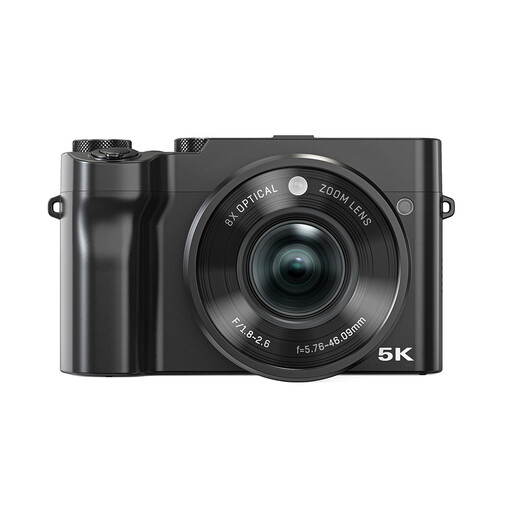
Songdian 5K digital camera with 8x optical zoom, black

Songdian 5K digital camera, 8x optical zoom, black

The product name specifies optical zoom for switching between framings, but it doesn’t give a specific focal length.

The product name also mentions 64 MP and a dual-lens design.

View at Joybuy
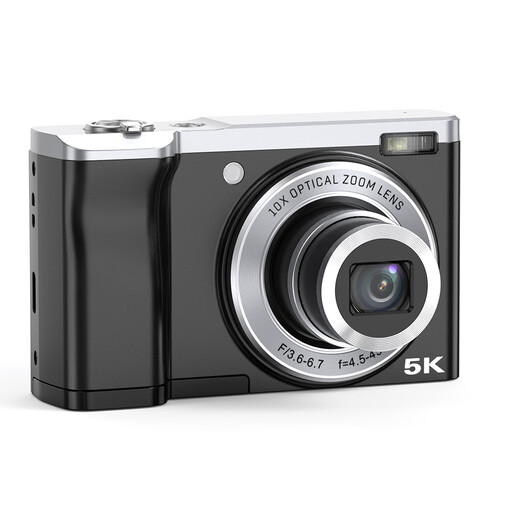
Songdian 5K digital camera with 10x optical zoom, black

Songdian 5K digital camera, 10x optical zoom, black

The stated optical zoom may be useful for switching between different framings; compare the specific focal length with the subject you want to photograph.

The product name also mentions 56 MP and front and rear cameras.

View at Joybuy

Frequently asked questions

Is the short zoom lens supplied with an interchangeable-lens camera enough for distant headgear details?

A short kit zoom won’t necessarily cover distant details. The EOS R50 kit listed by Canon includes an RF-S 18–45 mm lens; Canon lists the RF-S 55–210 mm as a separate telephoto lens. Compare the focal-length range actually included with the framing you want.

What should I try when using a long telephoto focal length?

Check the framing from your intended vantage point and keep the camera as steady as possible. If your model allows it, compare shots taken with and without the stabilisation you plan to use. A stated focal length or stabilisation alone can’t guarantee a sharp image of a distant subject.

Who should I contact if something is faulty, and is a guarantee the same as a warranty?

For a consumer purchase, your statutory rights are against the seller; a guarantee is separate and voluntary. The consumer advice centre recommends keeping the seller’s details and your purchase documents, and checking any additional guarantee terms separately.

Can I photograph a Ruhr-area colliery from the outside and publish the pictures?

Under the conditions set out in § 59 UrhG, it is permitted to photograph works that are permanently situated on public paths, roads or squares; for buildings, this applies to their external appearance. This doesn’t override the access rules for a specific site or remove the need to check rules relating to identifiable people: under § 22 KunstUrhG, consent is generally required to distribute or publicly display their images. Any exceptions must be considered separately.

Do I need permission to take photographs at Zollverein?

According to the Zollverein Foundation, private photography on the site is generally free and doesn’t require permission, although there are exceptions for certain types of photography. Permission isn’t required for editorial photography in the freely accessible outdoor areas, but the Foundation asks you to register. Permission is required for images intended for commercial publication; private drone photography isn’t permitted there. These rules don’t automatically apply to other collieries.