Photographing large colliery buildings
If you’re standing close to a façade or headgear, the right wide angle is important to fit your subject into the frame from where you can stand.


Start by choosing a compatible lens with the angle of view you need from where you’ll actually be standing. When photographing large buildings from close by, an ultra-wide-angle lens may matter more than a new camera body. Then compare stabilisation for stationary subjects, the weight of the complete setup and, in changeable weather, the protection offered by both body and lens. A manufacturer’s stabilisation figures are no guarantee of a sharp shot every time.
If you’re standing close to a façade or headgear, the right wide angle is important to fit your subject into the frame from where you can stand.
When shooting stationary outdoor subjects without a tripod, stabilisation can help reduce camera shake. It can’t replace correct exposure or freeze movement in the frame.
If you’ll be carrying a camera and lens over longer distances, consider the weight of the complete setup. In changeable weather, the protection ratings for both parts matter.
A good fit if: You want to pair a relatively lightweight body with a similarly weather-protected wide-angle lens for longer walks.
Bear in mind: OM SYSTEM lists the body at 418 g with battery and card, and the M.Zuiko 8–25 mm F4.0 PRO at 411 g. Check the weight of the complete kit and any additional accessories.
A good fit if: You’re looking for an APS-C camera with a compatible ultra-wide-angle lens for expansive outdoor subjects.
Bear in mind: Canon lists the R7 at 32.5 megapixels; the RF-S 10–18 mm has a maximum aperture of F4.5–6.3.
A good fit if: You want to pair a stabilised body with the XF10–24 mm F4 R OIS WR for wide outdoor views.
Bear in mind: Fujifilm lists the body at 491 g. The lens’s weather protection rating doesn’t automatically mean the camera has equivalent protection.
A good fit if: You already use a Nikon Z full-frame system, or want to build one with a suitable ultra-wide-angle lens.
Bear in mind: Nikon lists the Z6III at 24.5 megapixels; the NIKKOR Z 14–30 mm F4 S is a separate lens. Check the total weight and what’s included.
These percentages are a rough guide to consumers with different main priorities when choosing a camera for handheld outdoor photography at a colliery.
| Buying priority | What to check when buying | Who should pay particular attention? |
|---|---|---|
| Angle of view for large structures | Check the focal length, sensor format and mount, and whether the lens you want is actually included. Compare the angle-of-view specifications: OM SYSTEM lists an equivalent focal length range of 16–50 mm for the 8–25 mm; Fujifilm lists 15–36 mm for the XF10–24 mm. | If I’m standing close to a large façade, I need a wide enough angle of view to photograph the building from where I can stand. This would be the top priority for around 31% of consumers. |
| Sharp handheld shots in low light | Check the stabilisation in the specific body and lens, as well as the maximum aperture. OM SYSTEM lists up to 7.5 stops of Sync-IS and Fujifilm up to 7.0 stops. These manufacturer figures aren’t directly comparable success rates. | When photographing stationary buildings at dusk, I want to reduce camera shake; stabilisation won’t freeze people moving in the scene. Around 31% of consumers would prioritise sharp handheld shots in low light. |
| Equipment weight | Compare body weights on a like-for-like basis and add the lens you plan to use. OM SYSTEM lists the OM-5 Mark II at 418 g with battery and card; Canon lists the EOS R7 at 612 g with battery and card. In both cases, remember to add the lens. | On longer walks, I want to be able to carry the camera and lens without considering only the body weight. Around 23% of consumers would make carrying weight their top priority. |
| Protection in changeable weather | Check the protection ratings for the body and lens separately. OM SYSTEM lists both the OM-5 Mark II and the M.Zuiko 8–25 mm F4.0 PRO as IP53; this isn’t a guarantee of protection against every kind of moisture or for every combination. | If I’m taking photos in uncertain weather, I want to know whether both parts of my planned setup have suitable protection ratings. Around 15% of consumers would prioritise weather protection. |
A body on its own doesn’t determine how much of a façade or headgear will fit into the frame from where you’re standing. Choosing the right wide-angle lens is a separate consideration.
Decide on the angle of view and mount before buying, then check which lens is included in the specific offer.
The stated performance may depend on the lens being used and the shooting conditions. Stabilisation compensates for camera movement, not for people moving in the scene.
Compare the manufacturers’ respective conditions and check image sharpness as you shoot. Moving subjects need an appropriate shutter speed.
The attached lens adds weight and has its own protection rating. A camera body’s stated weather sealing doesn’t automatically mean the lens is protected too.
Compare the complete setup you plan to use and check the specifications for both components.
The Zollverein Foundation has different rules depending on the purpose of the photography and which areas are accessible. Section 59 of the German Copyright Act (UrhG) does not grant permission to enter restricted areas or override the rules set by the site operator.
Before taking photos, check your purpose, the location you can access and the rules that apply at that particular site.
A fee may apply to commercial photography at Zollverein, depending on how the images will be used; the Foundation does not give a flat rate.
A Micro Four Thirds setup for mobile outdoor photography with a suitable wide-angle lens.
An APS-C EOS R system built around the EOS R7 and a compatible RF-S wide-angle lens.
An X System setup pairing the X-S20 with a stabilised wide-angle zoom lens.
A full-frame Z system built around the Z6III, with a separate ultra-wide-angle lens.
A full-frame E-mount option pairing the α7 IV with a compatible 16–35 mm F4 wide-angle zoom.
Here you’ll find handheld cameras and camera kits with wide-angle, action or 360-degree shooting features. These products differ from a traditional mirrorless camera with a separately chosen ultra-wide-angle lens, so check that each format suits the colliery scenes you want to capture.
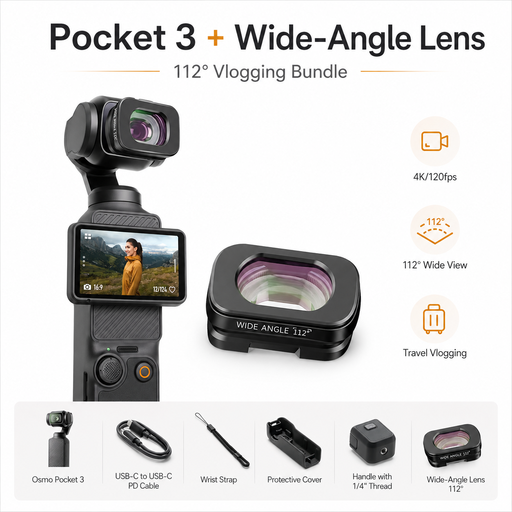 No image available
The included wide-angle lens is designed for expansive outdoor scenes, according to the product description. Check whether the Pocket camera format suits the way you like to shoot.
1-inch CMOS sensor; 4K/120fps; mechanical 3-axis stabilisation; magnetic lens attachment; approximately 112° angle of view according to the product description.
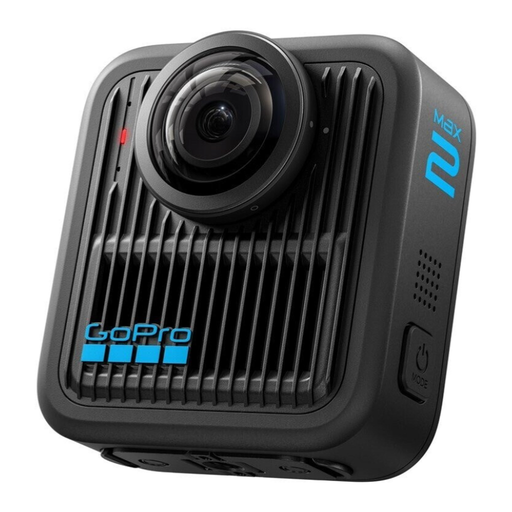 No image available
A 360-degree camera could suit you if you want to capture everything around a subject and choose the framing later.
8K 360° video; 29-megapixel 360° photos; replaceable lenses; image stabilisation according to the product description. For conventional framing, the listing says you can edit your footage afterwards using the GoPro Quik app.
 No image available
This kit includes a zoom lens, making it an option if you want to adjust the framing for outdoor views. Check whether its focal length range is wide enough for where you plan to shoot.
24.2-megapixel sensor; Sony E-mount; optical image stabilisation according to the product description; 16–50 mm zoom lens. The product description says the camera is not water-resistant.
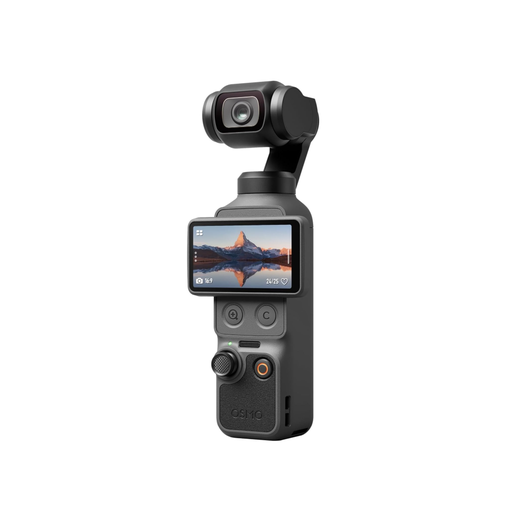 No image available
This compact gimbal camera is an option for handheld shooting if you’re not looking for a traditional camera and lens setup.
1″ CMOS; 4K/240fps; mechanical 3-axis stabilisation; 2× lossless zoom; 107 GB of built-in storage; 2″ rotating screen.
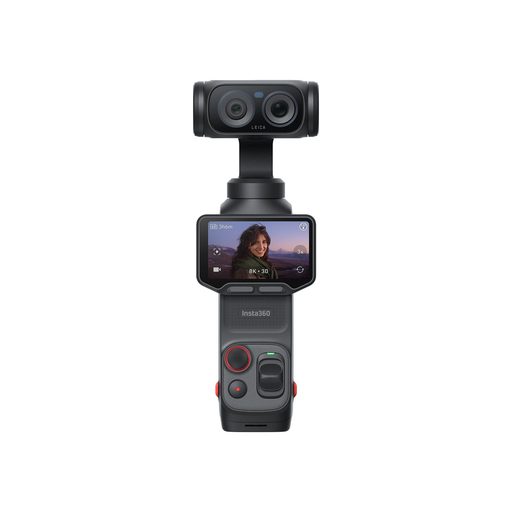 No image available
The dual-lens system could suit you if you want to switch between wide views of buildings and closer details.
1-inch main sensor; telephoto lens with up to 6× lossless zoom; mechanical 3-axis stabilisation; detachable touchscreen with remote control up to 20 m, according to the product description.
According to the Zollverein Foundation’s published rules, you can take personal photos in the outdoor areas without permission or fees. Exceptions include wedding shoots and productions involving substantial technical equipment or personnel. These site rules don’t automatically apply to other collieries.
The Zollverein Foundation says that editorial photography in the freely accessible outdoor areas does not require permission, but asks you to register by email. Photography for commercial publication does require permission; whether a fee applies depends on how the images will be used.
No. Under certain conditions, Section 59 of the German Copyright Act (UrhG) applies to works permanently situated beside public paths, roads or squares; for buildings, it applies only to their exterior. It does not grant a general right to enter private land or override a site operator’s photography rules.
Before you head out, check the protection ratings for the body and attached lens separately, then follow the relevant manufacturers’ care instructions. The OM-5 Mark II’s IP53 rating doesn’t automatically apply to every other lens.
Check whether the offer includes a compatible wide-angle lens. If not, factor one in separately when making your choice. If something is faulty, remember that statutory consumer rights against the retailer are separate from a voluntary manufacturer’s warranty; Germany’s Verbraucherzentrale explains the difference.