If you’re looking for classic rusks to enjoy with coffee, without added sugar, a variety labelled accordingly is a good starting point. Still, check the sugar content per 100 g and the ingredients list: ‘No added sugar’ does not mean ‘sugar-free’. If gluten-free or high-protein options are your priority, other varieties may suit you, but you’ll need to weigh up their ingredients and other nutritional values separately.
Which rusks may suit you
Coffee drinkers keeping an eye on added sugar
If you’d like classic rusks with your coffee and want to avoid added sugar, check the information on the pack alongside the ingredients list and the ‘of which sugars’ value per 100 g. A variety with no added sugar can still contain sugar.
People looking for gluten-free rusks
Start by checking the gluten-free labelling. A low sugar value won’t answer this question; it’s also worth checking the ingredients and any other relevant allergen information.
People interested in high-protein options
If you’re looking for a protein-rich crunchy snack to enjoy with coffee, you can compare suitable options with classic rusks. Energy, fat and any sweeteners are also among the nutritional and ingredient details to consider when deciding.
What to look for when buying
First, decide whether less added sugar, a gluten-free option or a high-protein snack is your main priority for coffee time. Then compare the information per 100 g and the ingredients of the rusks you’re considering.
| Criteria |
What to check when buying |
Who it matters to |
| Sugar content |
Check ‘of which sugars’ per 100 g and read the ingredients list; don’t treat ‘no added sugar’ as the same as ‘sugar-free’. |
I’d like classic rusks without added sugar with my coffee, but I also want to know how much sugar I’ll actually be eating. That’s why around 50% of consumers put sugar information first. |
| Gluten and allergens |
Check the gluten-free labelling, ingredients and any ‘may contain’ information on the current pack. |
If I need to avoid gluten or certain allergens, the labelling determines which variety may be suitable for me. This requirement takes priority for around 30% of consumers. |
| Protein and other nutritional values |
Compare protein, energy and fat per 100 g, and check the ingredients list for sweeteners if needed. |
For my coffee break, I’m looking for a high-protein option rather than classic rusks, and I want to take its other nutritional values into account too. Protein is the main priority for around 20% of consumers. |
Common selection mistakes
-
Assuming ‘no added sugar’ means ‘sugar-free’
Rusks can still contain sugar even if no sugar has been added. So the claim on the front of the pack is no substitute for checking the nutritional information.
Check ‘of which sugars’ per 100 g and read the ingredients list before comparing varieties.
-
Focusing only on ‘reduced sugar’
A reduction compared with a reference product doesn’t tell you how much sugar is in the rusks you’re considering buying.
Compare the stated value per 100 g with rusks of the same product type. The number of slices you eat also affects how much you consume.
-
Judging a speciality option by just one feature
Brandt’s Protein Crunch Kakao contains sweeteners; the variety is also listed as containing 490 kcal and 23 g of fat per 100 g. Schär gluten-free rusks, listed by REWE, contain 1.8 g of salt per 100 g, as well as sugar and rice syrup.
First decide which feature matters most to you. Then check the other nutritional information and ingredients for the specific variety.
-
Overlooking pack information and toppings
Allergen information varies between varieties. At coffee time, the number of slices you eat and any sweet spread will also affect your total sugar intake.
If allergens are a concern, check the current pack and include toppings and portion size in your comparison.
Brands and product ranges at a glance
The information below applies to the specific rusks mentioned, not to every product from each brand.
Brandt
Brandt offers both classic branded rusks with no added sugar and the high-protein Protein Crunch Kakao variety.
- REWE lists the branded rusks with no added sugar as containing 4.5 g of sugar and 14 g of protein per 100 g.
- These branded rusks contain wheat and soya; according to REWE, they may contain traces of egg, milk and sesame. The Protein Crunch variety contains sweeteners.
Schär
The Gluten Free rusks listed by REWE are an option if gluten-free is your main priority.
- REWE labels this variety gluten-free, lactose-free and vegan, and lists 4.4 g of sugar per 100 g.
- The ingredients include sugar and rice syrup. REWE also lists 1.8 g of salt per 100 g and says the product may contain traces of soya.
GUT&GÜNSTIG
The conventional rusks listed by EDEKA provide a comparison if you’re looking at the sugar content of different varieties.
- EDEKA lists 12.4 g of sugar per 100 g for these rusks.
- The ingredients include sugar, sweetened condensed skimmed milk and invert sugar syrup, among other things. Check the information on the specific pack.
GOLDÄHREN
The rusks from ALDI SÜD are another conventional variety to compare pack information with.
- ALDI SÜD lists 14 g of sugar per 100 g on its product page.
- According to ALDI SÜD, the rusks may come from different suppliers, so the nutritional information can vary. Always check the pack of the product you choose.
Rusks at Joybuy
This selection features wholemeal rusks with no added sugar as a possible accompaniment to coffee. To check the sugar content and any relevant allergens, refer to the information on the current pack.
 No image available
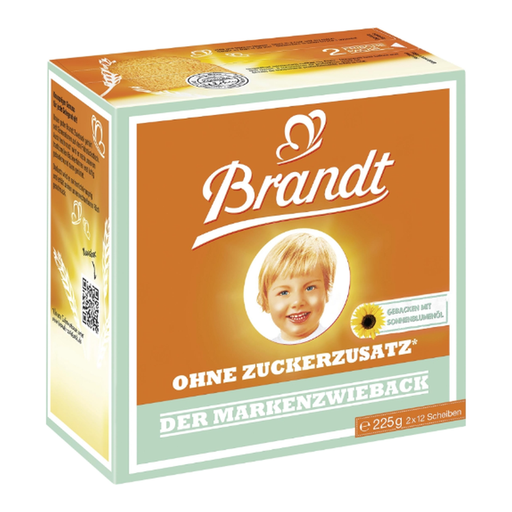
Brandt wholemeal rusks with no added sugar, 225 g
For coffee time when you’re looking for wholemeal rusks with no added sugar. Check the current pack for the sugar content per 100 g, ingredients and allergen information.
View at Joybuy
Frequently asked questions
Does ‘no added sugar’ mean the same as ‘sugar-free’?
No. Rusks with no added sugar can still contain sugar. For example, Brandt branded rusks with no added sugar, listed by REWE, contain 4.5 g of sugar per 100 g. So check the nutritional information as well as the claim.
What does ‘reduced sugar’ tell you about rusks?
It describes a comparison, not the sugar content of an individual portion. When comparing varieties for coffee time, check ‘of which sugars’ per 100 g across the same product type, and take into account how much you’ll actually eat.
How much sugar is there in each slice of Brandt branded rusks with no added sugar?
REWE lists 0.4 g of sugar per slice, weighing around 9.4 g, for the Brandt branded rusks with no added sugar sold there. If you eat several slices, the total amount adds up; add the sugar content of any sweet spread too.
Are gluten-free rusks automatically free from added sugar?
No. Schär Gluten Free rusks, listed by REWE, are labelled gluten-free and contain 4.4 g of sugar per 100 g, but the ingredients list includes sugar and rice syrup. Check the gluten-free labelling and sugar information as separate buying criteria.


