Organisers catering for allergies
If you’re providing snacks for guests with different dietary requirements, make sure the allergens in every type you choose are clearly identified – especially if the rusks are served unpackaged.


Classic rusks can be served as a dry snack during a conference break, but they’re not a universally suitable choice for every guest. Wholemeal rusks, a variety with no added sugar or lactose-free rusks can cater for different preferences. Whichever type you choose, check the specific ingredients and allergen information, and make sure it’s practical to serve.
If you’re providing snacks for guests with different dietary requirements, make sure the allergens in every type you choose are clearly identified – especially if the rusks are served unpackaged.
They’ll want to know whether a variety is wholemeal or has no added sugar. These two features address different needs; when considering sugar, it’s also worth checking the figure in the nutritional information.
If guests won’t all be helping themselves at the same time, the pack size and any individually sealed inner packs can help you decide how much to open and serve at each break.
First, establish which ingredients matter to your guests. Then choose the varieties you want and check which pack format will work best for serving them.
| What matters | What to check when buying | Who it matters most to |
|---|---|---|
| Allergens and suitability | Ingredients, declared allergens and precautionary allergen statements for each variety; make sure the information can be matched to the rusks when serving them unpackaged. | When I’m catering for guests with different requirements, I want clear allergen information for every variety I serve. This would be the main reason for choosing a product for around 33% of consumers. |
| Added sugar and sugar content | Claims that there is no added sugar, the ingredients list and the sugar value per 100 g in the nutritional information. | For my refreshment station, I’d also like to offer a variety with no added sugar, without describing it as sugar-free. Around 27% of consumers would put this preference first. |
| Wholemeal | Wholemeal labelling and the ingredients of the specific variety; check allergens even for wholemeal rusks. | If I want to offer a wholemeal variety alongside classic rusks, this should be clear from the product label. Around 20% of consumers would prioritise wholemeal. |
| Packaging and serving | Pack weight and any stated portion count or sealed inner packs. | When there are several breaks, I want to top up as needed rather than open everything at once. This serving consideration would be the main concern for around 20% of consumers. |
These options aren’t mutually exclusive: wholemeal rusks can also be made with no added sugar. None of these labels replaces checking the ingredients and allergens on the specific pack. For planning quantities, REWE lists 48 portions in a 450-g pack of Brandt Markenzwieback; ALDI Nord describes GOLDÄHREN rusks as coming in three sealed inner packs. The key is to check that the pack format suits the way you plan to serve them.
According to EDEKA, GUT&GÜNSTIG classic rusks contain, among other ingredients, wheat, barley malt extract and milk. Other varieties may have different ingredients and precautionary allergen statements.
Keep the current ingredients and allergen information to hand for every variety you actually serve. A lactose-free or no-added-sugar claim doesn’t mean the product is free from other allergens.
These terms don’t mean the same thing. REWE lists 4.5 g of sugar per 100 g for Brandt Markenzwieback with no added sugar.
Alongside the claim, check the ingredients list and the sugar value per 100 g. Don’t describe a product as sugar-free if it’s only labelled “no added sugar”.
Wholemeal describes a grain characteristic, not whether a product is suitable for every guest with a sensitive digestive system. The ingredients and allergens in wholemeal rusks must also be right for your particular choice.
If appropriate, offer wholemeal as an additional option without making claims about digestion.
If breaks are staggered, inner packs can make it easier to top up as needed. Any rusks served unpackaged must still be clearly linked to their allergen information.
Use the pack information to plan how much you need, and open inner packs as required. Keep the product name and relevant allergen information available where the rusks are served.
Keeping track of unpackaged food and topping it up takes extra organisation; opening only what you need can help reduce avoidable leftovers.
Brandt offers classic rusks as well as wholemeal, lactose-free and no-added-sugar varieties. REWE, for example, stocks classic 450-g packs and varieties in 225-g packs.
EDEKA describes a 450-g pack of GUT&GÜNSTIG classic rusks containing three 150-g inner packs.
ALDI Nord lists GOLDÄHREN rusks in a 450-g pack with three sealed inner packs.
These products include wholemeal rusks, classic rusks in a twin pack and a no-added-sugar wholemeal variety for conference breaks. Choose a pack size and product labelling that suit your guests and the way you plan to serve them.
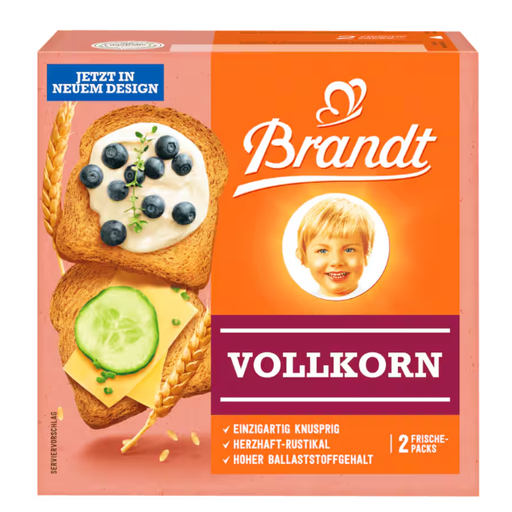 No image available
An option if you’d like to offer a wholemeal variety alongside classic rusks.
Pack size: 225 g. Check the ingredients and allergen information on the specific pack before serving.
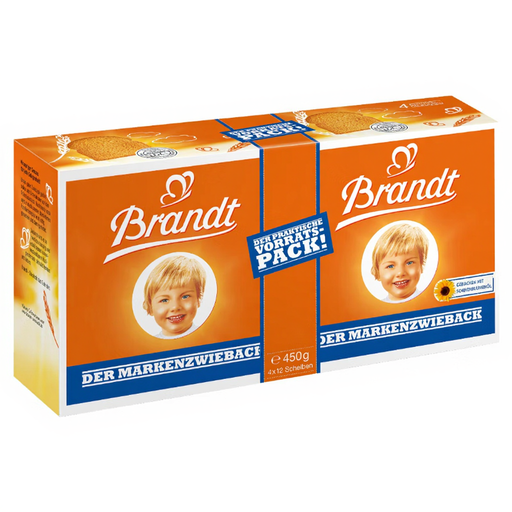 No image available
For serving classic rusks from two packs during a break.
Pack size: 2 × 225 g; this doesn’t mean the rusks are individually wrapped in portions. Check the ingredients and allergen information on the packs you buy before sharing details with guests.
No image available
For a break-time selection where you’re looking for both wholemeal and no added sugar.
Pack size: 225 g. “No added sugar” doesn’t mean “sugar-free”; check the sugar value per 100 g, as well as the ingredients and allergens on the specific pack.
No. The term “rusks” doesn’t tell you whether they’ll suit an individual guest. Wholemeal varieties shouldn’t be presented as a solution for digestive issues either; if you’re catering for allergies or intolerances, the ingredients and allergens in the specific product are what matter.
No. “No added sugar” and “sugar-free” mean different things. REWE lists 4.5 g of sugar per 100 g for Brandt Markenzwieback with no added sugar; for other varieties, check the value in the nutritional information.
If breaks are staggered, try to open only the inner packs you need and make sure each variety served can be matched to its allergen information. ALDI Nord describes GOLDÄHREN rusks as coming in three sealed inner packs; whether this format suits your event depends on how much you plan to serve.
Yes. The Federal Ministry of Agriculture, Food and Home Affairs notes that allergen information must also be provided for unpackaged food. If you’re serving rusks unpackaged at a conference, guests should be able to access the information for the specific variety on offer.